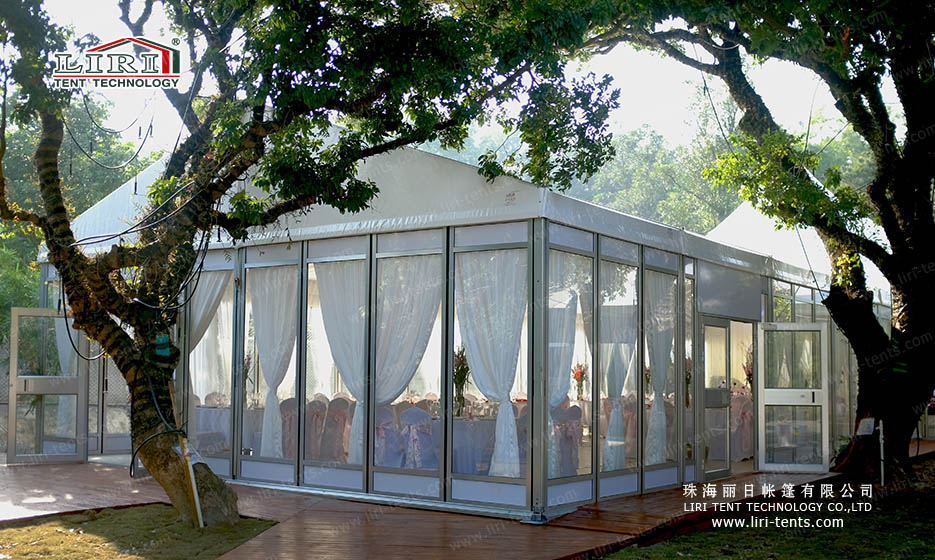
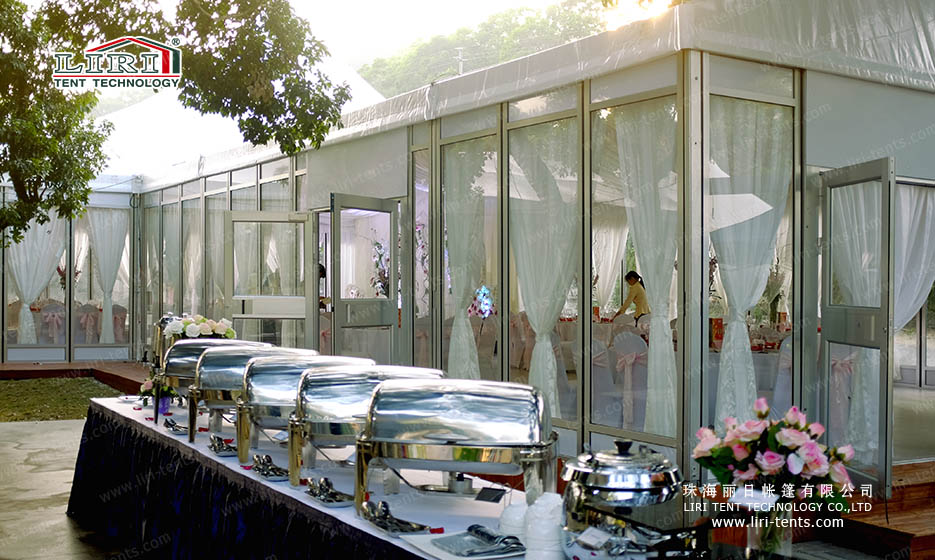
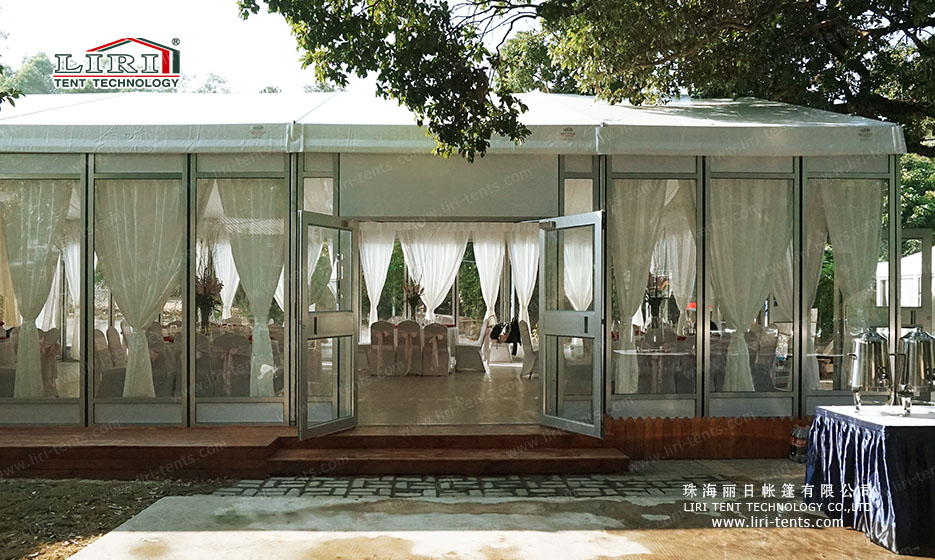
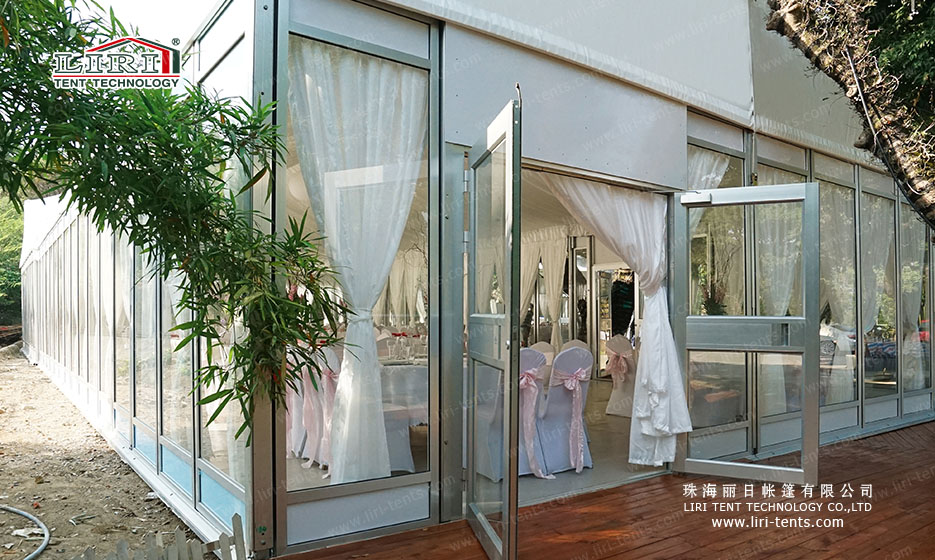
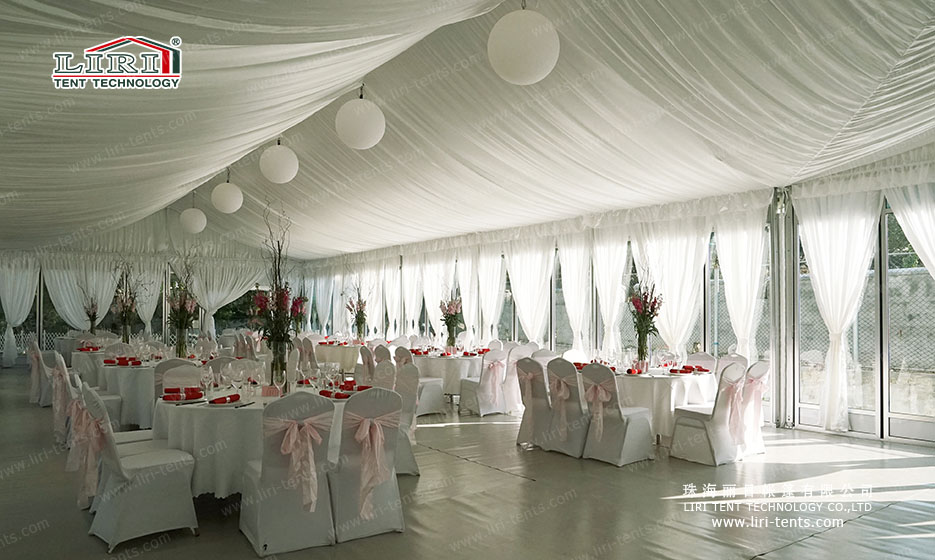
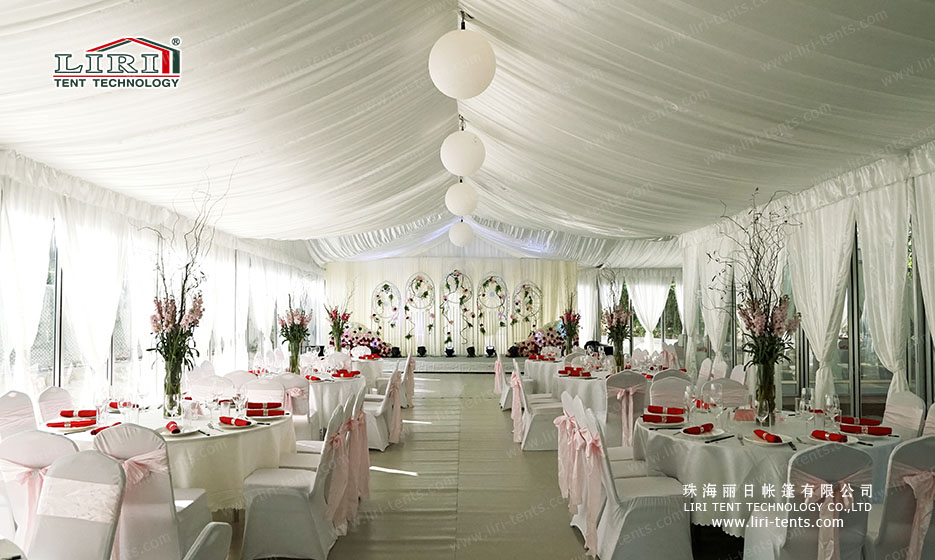
Weddings stretch budgets. Surveys from the wedding industry show that roughly a quarter of couples in the United States go into debt to cover the cost of their celebration. Yet plenty of couples with a tight budget still pull off a unique, memorable outdoor wedding without draining their savings. The difference usually comes down to a handful of smart decisions made early in the planning process — especially around the tent.
A tent rental is one of the largest line items in an outdoor wedding budget, but it is also the area where informed choices save the most money. Here are the three factors that matter most, plus a few bonus tactics that experienced planners use to keep costs in check without making the event look stripped-down.
Plan Around the Weather — It Affects the Quote
Nothing drives up a tent rental quote faster than last-minute weather contingencies. If you book a basic frame tent and then, two days before the event, need to add heavy-duty sidewalls, flooring, and climate control because the forecast flipped, you will pay a premium — both in rush fees and in limited availability.
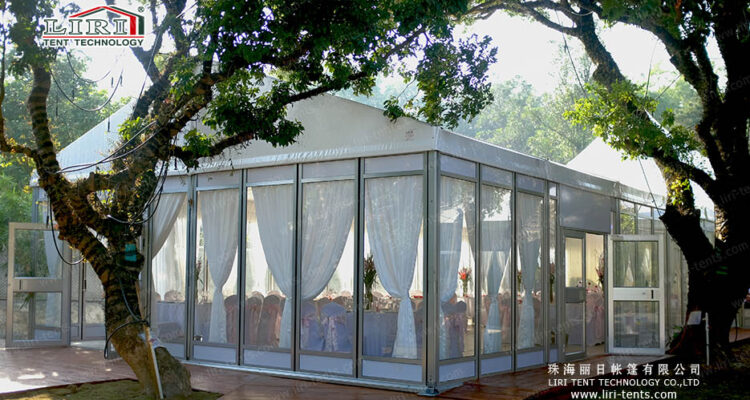
The smarter play is to plan for the likely conditions from the start. If your date falls during a rainy stretch, spec a wedding marquee with clip-on PVC sidewalls and a raised floor system in the original contract. The per-item cost is lower when bundled, and the supplier can allocate equipment ahead of time rather than scrambling. For hot-weather weddings, ventilation and cooling equipment should be part of the initial quote — portable AC units and exhaust fans placed around the tent perimeter keep guests comfortable without blowing out the budget at the eleventh hour. For cold-season events, double-layer roofing and forced-air heating units cost more upfront than a bare frame, but they are far cheaper than renting them as emergency add-ons.
A wedding where guests stay comfortable is never remembered as a cheap wedding. It is remembered as a well-planned one.
The Roof Shape Determines the Price Tier
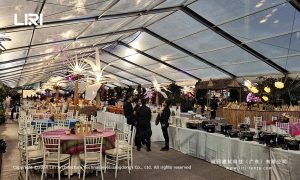
Most couples never think about tent roof profiles until they see a catalog. The variety is surprising: transparent roofs, peaked roofs, dome roofs, polygon roofs, pagoda roofs, and curved arcum profiles. Each shape carries a different structural requirement, which directly affects the rental price.
A standard A-frame or high-peak tent with a white PVC roof is the most economical option — the frames are standardized, the fabric is produced in volume, and setup crews know the system inside out. Transparent roofs and dome structures step up in cost because they use specialty materials (clear PVC panels or polycarbonate sections) and often require custom engineering. Polygon and pagoda tents sit in the middle — more distinctive than a basic frame but still using modular components that keep labor costs reasonable. Wedding marquee suppliers with a deep inventory can typically show you three or four roof options at different price points for the same guest count. Ask for that comparison — you might find that a high-peak tent with strategic lighting and drapery looks just as polished as a more expensive structure.
An experienced tent supplier can configure different tent styles at reasonable prices because they understand which designs share components and which require bespoke fabrication. A wedding tent that looks custom does not necessarily need to be custom-built.
Rent, Do Not Buy — The Numbers Make It Obvious
Unless you plan to host weddings as a business, buying a wedding tent for a single event makes no financial sense. A mid-size frame tent suitable for 150 guests runs several thousand dollars to purchase; renting the same tent for a weekend costs a quarter to an eighth of that figure. This is the single most impactful money-saving decision in outdoor wedding planning.
Wedding planning agencies and tent suppliers both offer rental services. Once you communicate your design brief — guest count, site dimensions, preferred style — a competent team can have the structure proposed, engineered, and installed within a matter of days. The rental package typically includes delivery, professional installation by a trained crew, on-call support during the event, and dismantling afterward. When you factor in the labor and logistics that ownership would require, renting is not just cheaper — it is enormously more practical.
Whether you are planning for 60 guests, 200 guests, or 500, a rental program scales cleanly. Tent systems are modular: adding bays extends the structure length without changing the engineering, so a supplier can quote a 60-person setup and a 500-person setup using the same base components. The per-guest cost actually drops as the tent gets larger because the fixed costs — delivery, crew minimums, site prep — spread across more attendees. For couples weighing a outdoor wedding tent rental, the math strongly favors going bigger on the guest list if the venue size allows it.
A Few More Ways to Trim the Budget
Beyond the big three, several smaller decisions quietly add up. Choose a site that is flat and accessible — uneven terrain that needs extensive leveling or a remote location that requires a crane for setup will inflate the quote noticeably. Book during the off-peak season when demand is lower and suppliers are more willing to negotiate on package pricing. And consider outdoor wedding tent packages that bundle lighting, flooring, and sidewalls — the bundled rate is almost always lower than ordering each item separately. A bit of flexibility on dates and a straightforward site can take a surprising amount off the final invoice.
Wedding Tent Series Specifications
| Span Width | Eave Height | Ridge Height | Bay Distance | Main Profile |
| 10m | 3.88m | 5.53m | 5m | 204x120x4mm (4-channel) |
| 12m | 3.88m | 5.83m | 5m | 204x120x4mm (4-channel) |
| 15m | 3.88m | 6.3m | 5m | 204x120x4mm (4-channel) |
| 16m | 4m | 6.5m | 5m | 204x120x4mm (4-channel) |
| 18m | 3.88m | 6.9m | 5m | 204x120x4mm (4-channel) |
| 20m | 3.88m | 7.1m | 5m | 204x120x4mm (4-channel) |
| 20m | 6m | 9.22m | 5m | 204x120x4mm (4-channel) |
| 21m | 3.88m | 7.25m | 5m | 204x120x4mm (4-channel) |
| 25m | 3.88m | 7.88m | 5m | 204x120x4mm (4-channel) |
Frequently Asked Questions
How much does it cost to rent a wedding tent for 150 guests?
A standard frame tent for 150 guests (roughly 15m x 20m) typically rents for $2,000-$5,000 depending on location, season, and included accessories. Adding flooring, lighting, sidewalls, and climate control can bring the total to $5,000-$10,000. Off-peak season rentals often come in 20-30% lower.
Do I need to book a tent rental months in advance?
For peak wedding season dates, booking three to six months ahead is wise — popular suppliers fill their calendars quickly. For off-peak dates or smaller setups, four to six weeks of lead time is usually sufficient. Last-minute bookings are possible but limit your options on tent style and size.
Can the same tent work for both ceremony and reception?
Yes, and this is one of the more effective ways to control costs. A single large clear-span tent can be divided with drapery or temporary walls — one half set for the ceremony, the other for dining. During cocktail hour the crew flips the ceremony side into a dance floor. This eliminates the need for two separate structures.
What is included in a standard tent rental package?
A typical package covers the tent frame and roof fabric, delivery, professional installation, and dismantling. Sidewalls, flooring, lighting, heating/cooling, and decorative elements like linings and drapery are usually priced as add-ons. Always confirm the full list of inclusions in writing before signing.
Does tent size affect the per-person cost?
Counter-intuitively, a larger tent often costs less per guest. The fixed costs — crew transport, equipment delivery, site preparation — stay roughly the same whether you are setting up a 10m tent or a 25m tent. The additional bays add incremental cost, which spreads thinner across more guests.