People often ask me what the single biggest game-changer is when planning an outdoor wedding in Mexico. Is it the flowers? The lighting? No. Nine times out of ten, it’s the roof over your head — or more specifically, the wedding tent you choose to house the event.
I recently wrapped up a stunning destination wedding at a private estate just outside of Guadalajara. It was a classic “love at first sight” venue with massive old-growth trees and colonial architecture. But, as is always the case with open-air estates, the logistics were a nightmare. The ground was uneven, and we needed to house 250 guests for dinner without obstructing the view of the centuries-old chapel.
This is where we decided to bring in a pair of aluminum orangery tent structures. And honestly? It changed how I think about outdoor wedding venues entirely.
The Structure Choice
Why Clearspan Design Changes Everything
We installed two separate but adjoining structures: a 30m main hall and a secondary 25m space for the lounge and dancing. We went with a clearspan tent design for a very specific reason — the lack of internal poles.
If you’ve ever been to a wedding where a pole blocks your view of the head table or the dance floor, you know the frustration. For couples paying premium rates for a luxury outdoor wedding, an obstructed line of sight is simply unacceptable. With the clearspan design, we had a completely unobstructed 30-meter width — every guest had a perfect view of the ceremony, the speeches, and the first dance.
Beyond aesthetics, the clearspan structure also simplified floor planning dramatically. Round tables, long banquet setups, dance floors with DJ booths — everything fit without compromise because there were no poles dictating the layout. Event planners, take note: this alone saves hours of logistical headache.
Modular Construction and Installation Speed
One thing I did not expect was how fast everything went up. The entire installation was completed in just under 48 hours. The aluminum orangery tent uses a modular, bolt-together system — no heavy machinery tearing up the client’s lawn, no concrete footings, and no permanent alteration to the property.
For estate owners and venue managers, this is a critical selling point. A traditional brick-and-mortar orangery addition would cost upwards of $80,000–$150,000, require months of construction, and lock you into a permanent structure. An aluminum modular orangery delivers the same architectural presence at a fraction of the investment — and can be reconfigured or relocated as the business evolves.
Internal Link: If you are evaluating permanent vs. temporary wedding structures, read our Luxury Wedding Tents: The Future of Resort Revenue.
The “Glass” Effect
Transparent PVC Roof Panels vs. Traditional Canvas
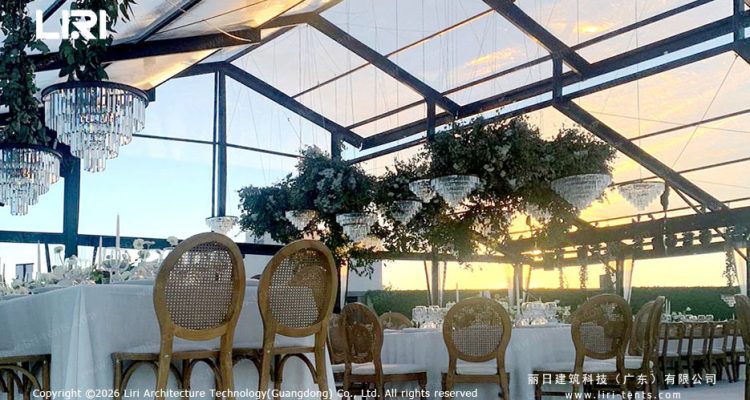
For this Mexico wedding, the couple wanted something modern that didn’t feel like a “big top” circus tent. We opted for a glass tent style using high-grade, transparent PVC roof panels paired with sleek black aluminum framing.
Here is what surprised me: the transparent panels are not purely aesthetic. They serve a functional role. At a recent industry conference, a structural engineer from Tension Structures Division of IFAI pointed out that transparent PVC membranes used in tension structures typically offer 85–92% light transmission while blocking over 95% of UV radiation. Translation: guests feel like they are outdoors without the sun damage or heat build-up.
The black framework against the white drapes and the greenery of the estate was striking. But the real magic happened at sunset. Because the roof was transparent, guests could watch the sky change colors from pink to deep purple — without feeling the heat or the sudden evening breeze. It created the perfect outdoor wedding venue vibe: immersive, but safe.
Lighting Design Through a Transparent Roof
A practical lesson I learned: you need to rethink your lighting plan when working with a transparent ceiling. Uplighting against traditional white canvas creates a soft ambient glow. Under a clear PVC roof, the same fixtures behave differently — the light passes through or reflects more directly.
I recommend working with a lighting designer who has experience with transparent event structures. At this wedding, we used dimmable warm-white LED uplights positioned at the base of each aluminum frame column, creating a cathedral-like vertical accent that highlighted the orangery’s architecture. Overhead string lights were suspended from the horizontal cross-beams rather than from the roof panels, avoiding visual clutter against the transparent surface.
The result? During daylight, the structure felt like an open-air garden pavilion. After dark, it transformed into a luminous jewel box visible from across the estate.
Internal Link: Looking for transparent roof options? See Transparent Top Canopy Tent for Outdoor Weddings.
Luxury and Stability
Wind Load Engineering and Safety Standards
There is a common misconception that tents are “temporary” — and therefore flimsy. When you are working with a properly engineered aluminum orangery tent system, that could not be further from the truth.
In the Guadalajara region, sudden wind gusts are a real concern. The aluminum framing we used was engineered for wind speeds up to 55 mph (approximately 88 km/h). To put that in perspective: that is Tropical Storm force. The rigidity of the aluminum structure, combined with proper anchoring systems, gave the clients genuine peace of mind.
I always advise planners to ask manufacturers three questions before booking any event structure:
1. What is the engineered wind load rating for this specific model and size?
2. What anchoring method do you recommend for this terrain — ballast weights, ground stakes, or concrete anchors?
3. Can you provide a structural engineering certificate for the local permitting authority?
A reputable tent manufacturer will answer all three without hesitation. If they hesitate, walk away.
How Aluminum Orangery Tents Compare to Other Wedding Tent Types
I have planned weddings under almost every tent type available, so here is my honest comparison:
| Tent Type | Best For | Limitations |
|---|---|---|
| Aluminum Orangery | Luxury weddings, estate venues, 100–500 guests | Higher upfront cost than pole tents |
| Geodesic Dome | Intimate weddings, glamping, 50–150 guests | Curved walls make traditional decor tricky |
| Frame Tent | Any size, any terrain, most budget-friendly | Less architectural character |
| Tipi / Sailcloth | Bohemian, rustic, woodland themes | Limited climate control in extreme weather |
| Traditional Marquee | Classic garden parties, 50–200 guests | Guy ropes require extra footprint |
The orangery hits a sweet spot: it carries the architectural gravitas of a permanent structure with the flexibility of a temporary installation. For couples who want luxury without legacy, it is the strongest option on the market.
Internal Link: Considering a geodesic dome instead? Read Geodesic Domes for Luxury Weddings.
Practical Considerations for Wedding Planners
Cost Breakdown: Aluminum Orangery vs. Traditional Venues
Let me be transparent about the numbers. A premium aluminum orangery tent installation for a 250-guest wedding typically falls into the $8,000–$18,000 range, including delivery, professional installation, flooring, lighting rigging, and breakdown.
Compare that to a comparable luxury indoor venue — a historic ballroom or high-end hotel — where venue rental alone frequently runs $10,000–$25,000 before a single centerpiece is placed. And those venues book 12–18 months in advance. With a tented wedding, the venue is wherever you want it to be: a family estate, a vineyard, a beachfront, a mountain overlook.
For venue operators and resorts, the ROI calculation is equally compelling. Adding an aluminum orangery to your property creates a premium wedding venue that can operate at 70%+ margins after the first season. The American Rental Association reports that event tent rentals have seen 8–12% annual growth, with luxury clearspan structures leading the category.
Site Requirements and Preparation
The site for this wedding required careful preparation. The ground was uneven — a common issue with historic estates. Here is what our checklist looked like:
- Leveling: The installation team used adjustable base plates on each aluminum column to compensate for up to 30cm of grade variation. No earth-moving required.
- Flooring: We installed a modular wooden subfloor over the tent footprint, creating a perfectly level surface for tables and dancing. Side note: always budget for flooring — it is often the single largest add-on line item, but it makes or breaks the guest experience.
- Power and Climate: For a 250-guest dinner in Mexico’s summer, we ran two portable AC units with discreet ducting. The transparent PVC roof adds passive solar gain, so climate control is non-negotiable in warm months. Conversely, in cooler seasons, the greenhouse effect becomes an asset — something to factor into your seasonal planning.
Climate Considerations for Different Regions
The same aluminum orangery tent that works flawlessly in Mexico’s dry heat needs different handling in humid Florida or windy coastal California. Here are region-specific notes from my experience:
- Humid climates (Southeast US, Caribbean): Add sidewall ventilation panels and industrial-grade dehumidifiers. The transparent roof traps moisture if airflow is insufficient.
- Coastal/windy regions: Upgrade to reinforced anchoring and consider solid sidewalls on the windward face. The clearspan design handles wind better than pole tents, but sidewalls catch wind like a sail.
- Cooler climates (Northeast US, Northern Europe): The greenhouse effect of transparent PVC is your friend during daytime. Add insulated sidewalls and radiant heaters for evening comfort.
Internal Link: Planning a winter or cool-season wedding? See Frame Marquee Layout Tips for Your Dream Wedding.
Frequently Asked Questions
How long does it take to install an aluminum orangery tent?
A standard 30m × 20m aluminum orangery tent can be professionally installed in 24–48 hours, depending on site conditions, flooring requirements, and climate control setup. The modular bolt-together design eliminates the need for heavy machinery or concrete foundations.
Can an aluminum orangery tent handle rain and wind?
Yes. Professionally engineered aluminum orangery tents are rated for wind speeds up to 55–65 mph (88–105 km/h) and feature fully waterproof PVC roof panels with integrated drainage channels. Always confirm the manufacturer’s specific engineering certificate for your region’s requirements.
What is the price difference between renting and buying an aluminum orangery tent?
A single-event rental for a 30m structure typically ranges from $8,000 to $18,000 (including installation, flooring, and breakdown). Purchasing the same structure outright generally costs $35,000–$70,000. For venues hosting 5+ weddings per season, purchasing typically breaks even within 12–18 months.
Does the transparent roof make the tent too hot in summer?
High-grade transparent PVC panels block over 95% of UV radiation while allowing 85–92% visible light transmission. Combined with proper ventilation and air conditioning, the interior stays comfortable even in warm conditions. The greenhouse effect is most noticeable in direct midday sun; strategic sidewall openings or shade sails can mitigate this.
Can I customize the size and layout of an aluminum orangery tent?
Absolutely. Aluminum orangery tent systems are fully modular. Structures can be extended in length and width in 3m or 5m increments. Multiple units can be linked together to create separate zones for ceremony, dining, lounge, and dancing. Custom door placements, sidewall configurations, and flooring options are standard.
Final Thoughts: Is an Aluminum Orangery Tent Right for Your Wedding?
At the end of the night, as the party moved to the dance floor under that transparent roof, I looked around and realized we had achieved what every planner wants: the guests forgot they were in a tent. They were simply in a beautiful space, under the stars, celebrating.
An aluminum orangery tent is not the cheapest option, and it is not the simplest. But for couples who prioritize architectural presence, unobstructed views, and the freedom to choose their own venue — it is, in my experience, unmatched.
Planning your own outdoor wedding? We design custom aluminum orangery tent layouts based on your venue, guest count, and vision. Share your details and receive a free venue layout within 48 hours — no deposit, no commitment.
Internal Link: Ready to explore your options? Browse our full range of wedding tent structures →
Comparing orangery options for a wedding project? Browse wedding marquee styles, then review the Wedding Tent Price guide to align your preferred finish level with a realistic project brief.
Orangery planning support
Use this review as support for the Orangery owner
Architectural intent
Record the facade rhythm, entry sequence, glass and solid-wall balance, floor level, interior finish, lighting concept, and reception zoning that create the Orangery character. These choices should serve the venue plan rather than turn this review into a second product owner.
Project-specific confirmation
Ask the planner and supplier to confirm site levels, door positions, guest and service routes, wall interfaces, flooring transitions, climate requirements, installation access, and evening operation for the actual project.