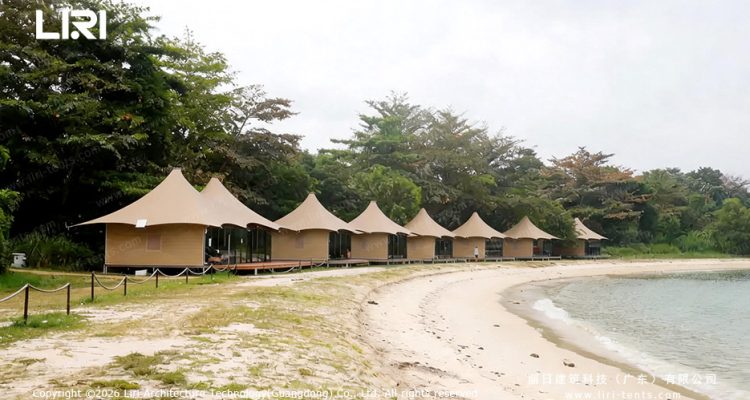
An Indian-style glamping tent is a semi-permanent aluminum-frame structure that combines the silhouette of a traditional Indian wedding tipi with the engineering of a modern resort pavilion. Unlike white pole tents that read “temporary,” these units feature peaked roofs, draped fabric ceilings, and tensioned PVC sidewalls that hold their shape through monsoon seasons. They are designed to serve double duty — as wedding reception halls during the day and luxury glamping suites at night.
One beachfront resort in Singapore installed 15 units in 14 days and has since run them through multiple tropical storm seasons without a single structural issue. This case study walks through the tent design, material selection, deployment timeline, and the revenue logic that makes these structures a repeat purchase for hospitality operators across Southeast Asia.
The Frame: 6061-T6 Aluminum with a Timber Look
Every tent in this lineup uses 6061-T6 aluminum alloy — the same grade used in commercial aircraft structures. The extrusion gets a wood-grain powder coat that reads as dark teak from five feet away but weighs about a third of what real timber framing would require. The benefit here is twofold: the wood aesthetic sells the “boho-luxury” look that wedding planners and Instagram-driven guests expect, and the aluminum means no rust, no rot, and no replacement cycle the way steel or actual wood demands.
The peaked roof design serves a structural function beyond aesthetics. At a 35-degree pitch, wind hits the tent and splits — half going over, half deflecting sideways — rather than pushing against a flat surface. Combined with ground-screw anchors driven 1.2 meters into compacted sand, the frame is rated for sustained winds of 100 km/h (62 mph), which covers the worst of Singapore’s northeastern monsoon. Water runoff follows the roof pitch directly into integrated gutters along the eaves — no pooling, no sagging, no middle-of-the-night bucket brigade.
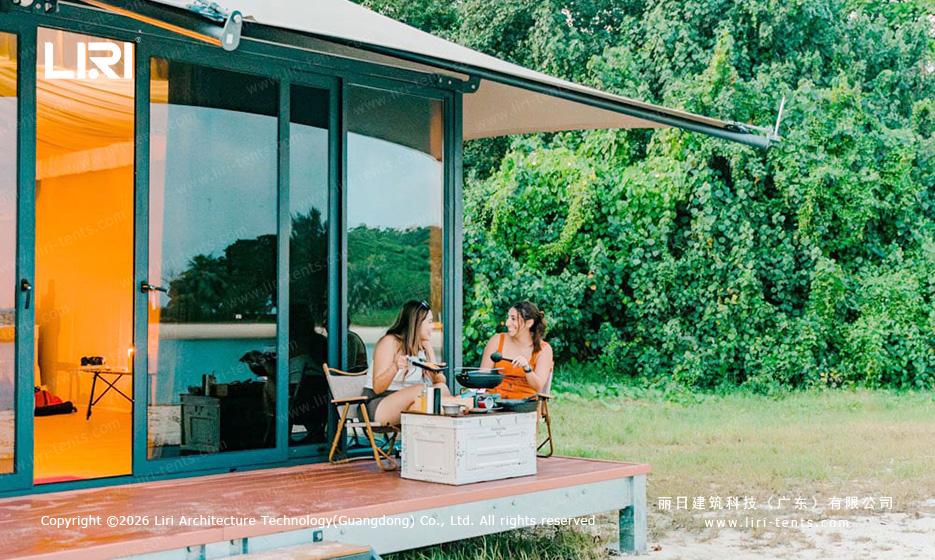
Units sit on elevated modular decks approximately 30 cm (1 ft) above grade. During high tide and heavy rain, groundwater saturates the sand but never reaches the deck surface. The decking uses pre-cut composite boards on a subframe that slots into the tent’s base channels — zero concrete, zero permanent footprint.
The Canopy: Dual-Layer PVC That Breathes and Glows
The fabric system uses two separate layers, each with a distinct job:
- Outer skin: 850 g/m² PVC-coated polyester, tensioned across the frame with integrated tension straps. UV-stabilized at the polymer level — not a surface coating that peels after 18 months. Rated for B1 fire retardancy (European standard), meaning it self-extinguishes within seconds if exposed to flame. The Singapore units have been through multiple tropical seasons with zero discoloration and zero seam separation.
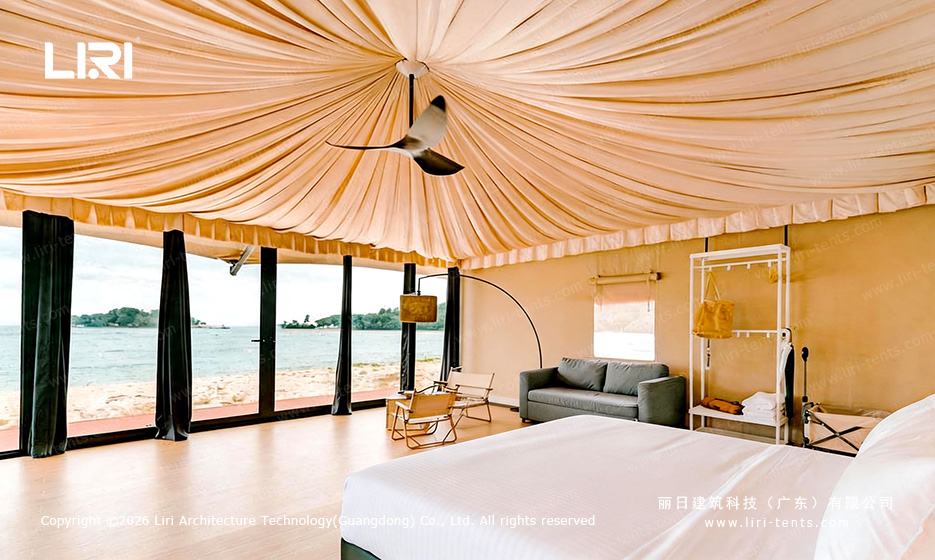
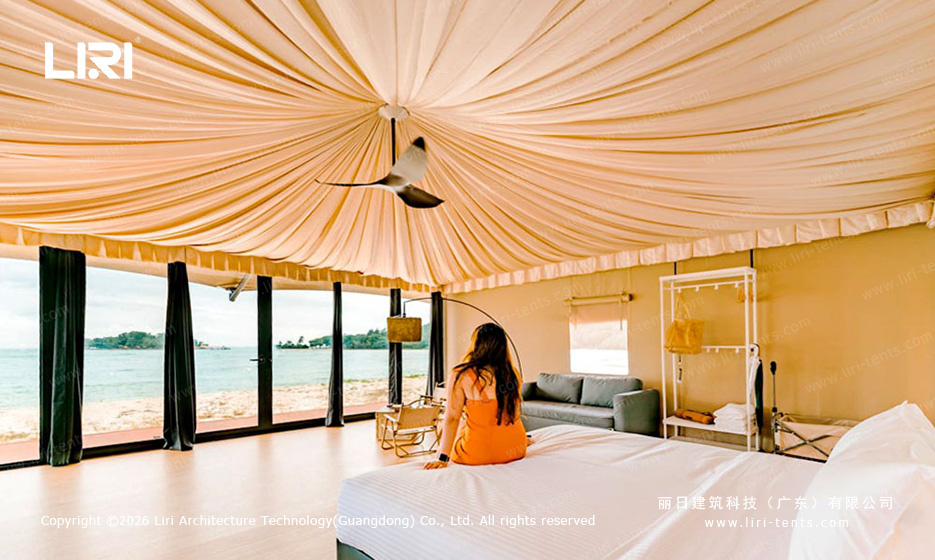
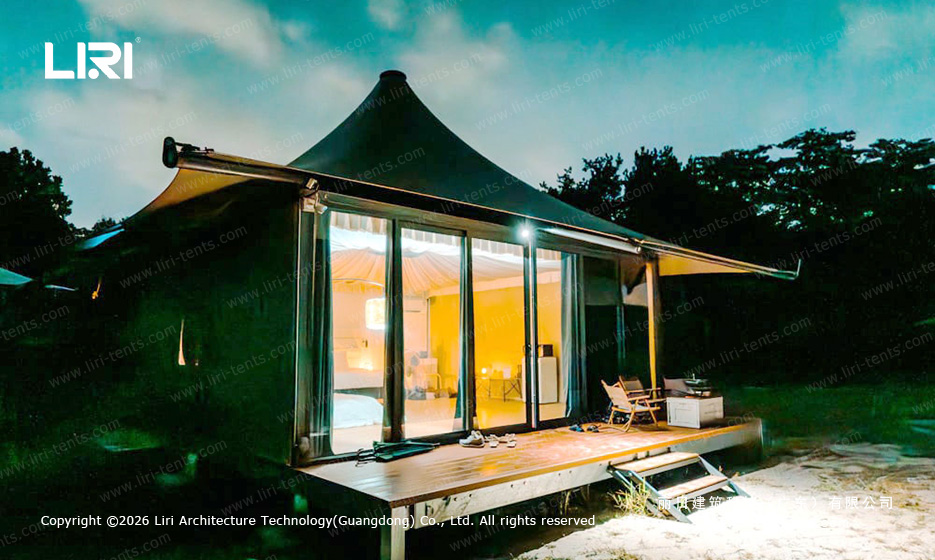
- Inner liner: A lighter, draped fabric that hangs from the frame interior — this is what creates the “wedding tipi” ceiling effect. When lit from behind with warm LED strip lighting, the liner glows evenly rather than showing hot spots. From the beach at night, the entire tent reads as a softly lit lantern.
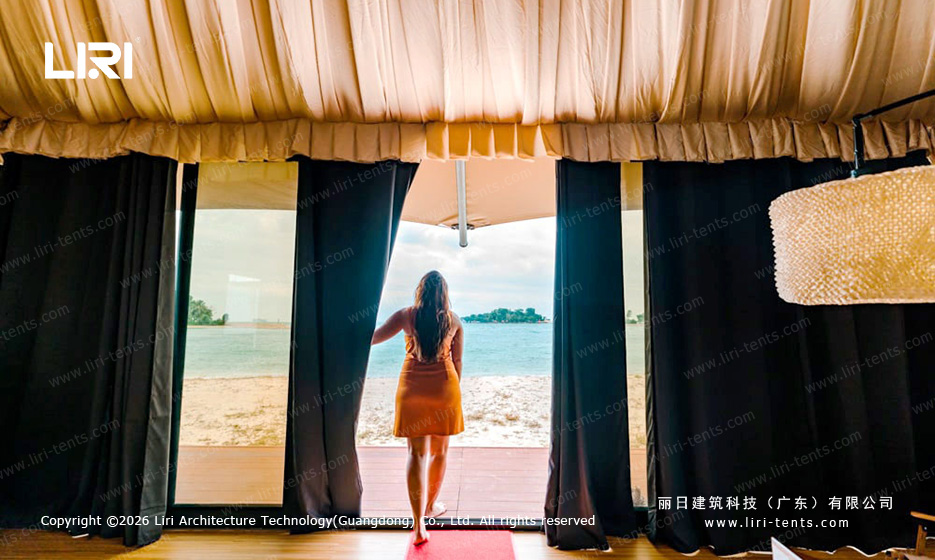
The sidewall configuration is modular. Standard units use solid PVC panels for privacy on three sides, with the ocean-facing wall swapped to clear PVC panels that function as floor-to-ceiling windows. The arched openings on the long sides stay open during fair weather to let the sea breeze move through — the tent does not trap heat the way a fully sealed structure would. When heavy rain blows in, the sidewalls zip down in under 90 seconds.
Singapore Deployment: 15 Units, 3 Configurations, 14 Days
The resort runs a mixed layout that covers three distinct revenue scenarios:
| Configuration | Dimensions | Capacity | Use Case |
|---|---|---|---|
| Multi-peak event tent | 6 × 12 m | 80 seated guests | Wedding receptions, beachfront dining, DJ/dance floor |
| Single-peak suite | 6 × 6 m | 2 guests + ensuite | Premium glamping accommodation, honeymoon suite |
| Compact suite | 5 × 5 m | 2 guests | Overflow rooms, couple bookings, wedding party spillover |
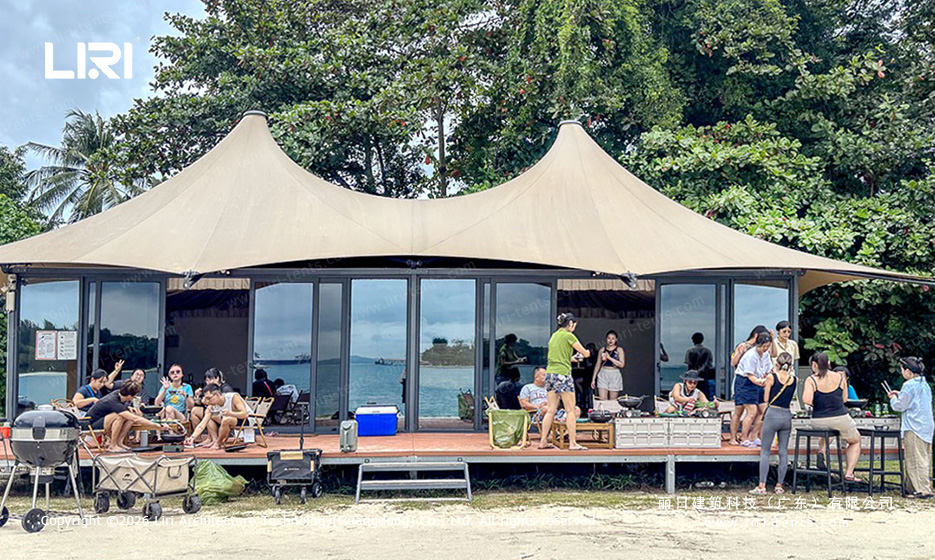
Installation timeline: A crew of three assembled all 15 units in 14 calendar days, working daylight hours with no heavy machinery. The process:
- Days 1-3: Site survey, ground-screw anchoring, modular deck assembly
- Days 4-8: Frame erection — aluminum profiles slot-and-pin, no welding
- Days 8-12: Canopy tensioning, inner liner hanging, electrical/lighting runs
- Days 12-14: Interior fit-out — furniture, linens, bathroom pods, climate control
A single 6×6 m unit takes a practiced crew under two hours from flat-pack to standing. The multi-peak 6×12 m takes roughly four hours because the ridge beam requires an extra pair of hands.
This speed matters for resort operators. A wedding booking that comes in six weeks out can trigger a tent expansion without disrupting existing reservations. The resort does not need to block off construction zones for months the way a permanent structure would require.
The Revenue Logic: Why Resorts Are Choosing Semi-Permanent Over Permanent
A concrete-and-steel ballroom on the beach is a multi-year project requiring environmental impact assessments, coastal construction permits, and foundation work that disrupts the very view guests pay for. An aluminum-frame tent system installed on ground screws does not trigger the same regulatory category in most jurisdictions — it is classified as a temporary structure, even when it stays up for years.
The numbers that matter for a resort operator:
- CapEx comparison: A 6×12 m wedding tent with lining and decking runs roughly 15-20% of the cost of a comparable built structure, including installation.
- Time to revenue: 14 days from order to first paying event vs. 18-24 months for construction.
- Depreciation flexibility: Tents can be depreciated as equipment (typically 5-7 years) rather than real property (27.5-39 years under U.S. tax code, varies by country).
- Relocation optionality: If the resort sells or rebrands, the tents move. A building does not.
- Seasonal capacity: Add units for peak wedding season (November-February in Singapore), remove during monsoon troughs if desired.
The Singapore resort reports that its tent-based wedding packages command a premium of 25-40% over their indoor ballroom pricing — not because the tent costs more to operate, but because “beachfront under canvas” sells as a luxury experience that traditional ballrooms cannot match. Wedding planners specifically search for “Indian-style tent wedding Singapore” and “glamping resort venue” — exactly the keywords that bring direct-booking traffic.
FAQ
Q: How do these tents hold up in beach storms and monsoon conditions?
The 6061-T6 aluminum frame is engineered with a 35-degree roof pitch that splits wind rather than resisting it head-on. Ground-screw anchors reach 1.2 meters into compacted sand. The Singapore installation has weathered multiple northeastern monsoon seasons with sustained winds of 80-100 km/h and zero structural issues. The PVC canopy is tensioned to shed water directly into integrated gutter channels — no pooling, no leaks at seams.
Q: What is the lead time from order to a fully operational glamping site?
Manufacturing takes 4-6 weeks depending on customization (fabric color, printed branding, window configuration). On-site installation for a 15-unit mixed layout runs approximately 14 days with a 3-person crew. A single 6×6 m suite can be assembled in under two hours once the crew is practiced. The process requires no concrete, no heavy equipment beyond a ground-screw driver, and no specialized construction permits in most jurisdictions.
Q: Can I mix different tent sizes and styles on a single property?
Yes — the frame system is fully modular across all sizes. A typical wedding resort layout uses 2-3 multi-peak tents (6×12 m each) for ceremony and reception spaces, then fills the remainder of the property with single-peak suites (6×6 m and 5×5 m) for guest accommodation. All units share the same anchoring system, decking interface, and electrical connection standard. Future expansion simply means ordering additional modules — the infrastructure scales linearly.
Planning a beach resort expansion or a glamping venue that needs to generate revenue fast? We handle site assessment, structural engineering, full installation, and ongoing support. If your property sits on sand, soil, or grass and you want wedding-ready structures that hold up under monsoon conditions without concrete foundations, contact us for a tailored proposal.