The ceremony happens inside a glass-walled cone at sunset. Forty guests sit in two curved rows.
Behind them, through floor-to-ceiling panels, the dunes glow amber and gold. There is no backdrop curtain — the desert is the backdrop. After the vows, everyone walks fifty meters to a cluster of egg-shaped cocoon suites where the wedding party changes for dinner. The same tent system that held the ceremony now houses the guests.
This is what a destination wedding tent resort looks like when you stop thinking of tents as temporary covers and start treating them as permanent venue infrastructure.
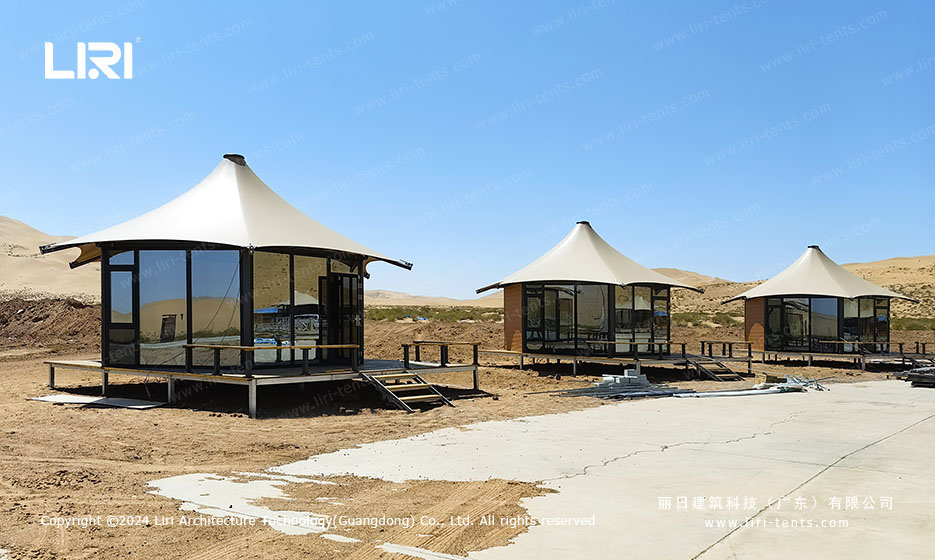
Three glass-wall conical wedding tents on wooden decks — ceremony-ready structures anchored in desert terrain
A Wedding Venue Without Walls
Two structure types share one site, each playing a distinct role in the wedding experience.
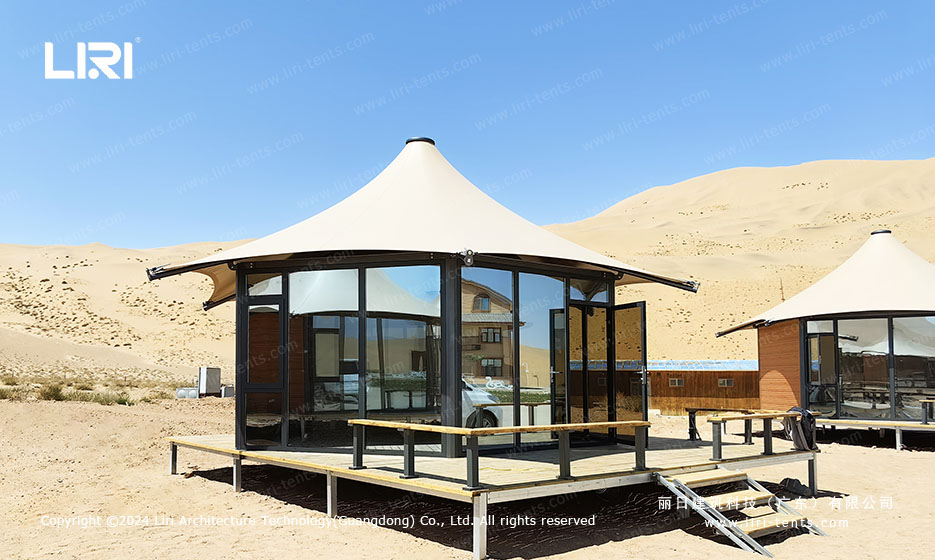
A single conical tent with full-height glass panels — natural light floods the interior for daytime ceremonies
The glass cone tents serve as ceremony and reception spaces. The faceted glass walls erase the boundary between inside and outside. For a wedding planner, that means no decoration budget spent on backdrops — the landscape does the work. The raised wooden deck functions as a ceremony platform, dance floor, or dining terrace depending on configuration. A single unit holds 40 to 60 guests seated, or roughly double that standing for a cocktail reception.
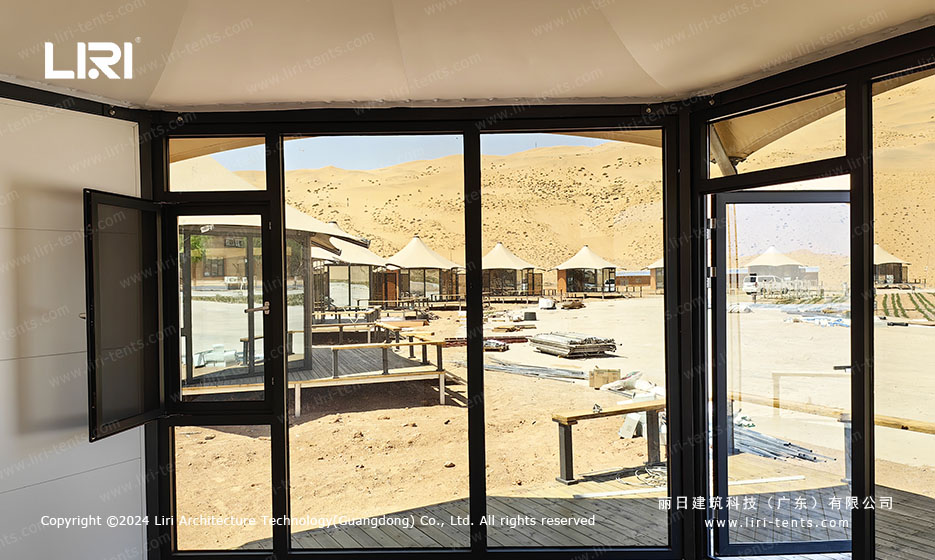
Looking out through the glass cone interior — desert landscape becomes the ceremony backdrop
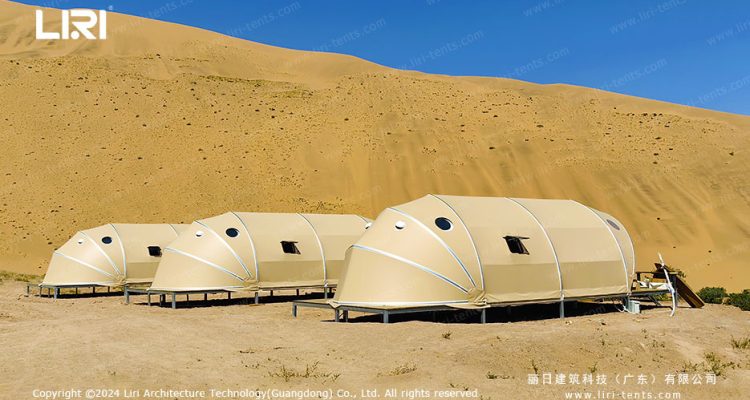
Across the site, the cocoon pods handle bridal preparation suites and guest accommodation. Their curved fabric interiors feel intimate and enclosed — the opposite of the glass cones. The soft textile lining absorbs sound, so a bridal party preparing inside hears conversations, not echoes. Each pod has a framed doorway, a private deck, and full climate control ducted through the raised floor. These are not camping units with upgraded bedding. They are hotel rooms with tent exteriors.
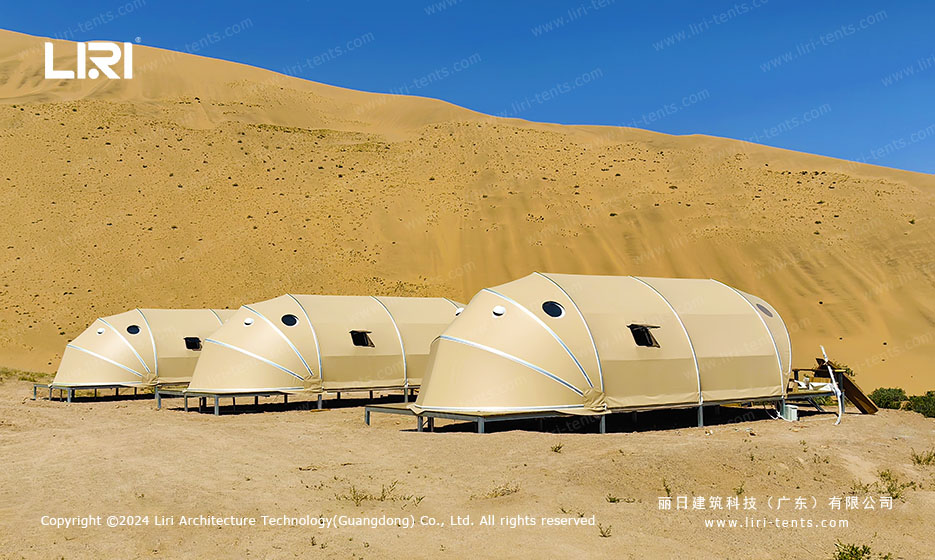
Three cocoon pod suites with curved fabric exteriors — bridal prep rooms and wedding guest accommodation
A resort operator running destination weddings needs the contrast: glass for gathering, fabric for retreating. Guests spend the afternoon in the bright cone, then retire to the cocoon. The two formats work together because they were designed to. For a closer look at how this format pairing works at scale, our guide to modular wedding tents for luxury venues covers the full layout logic.
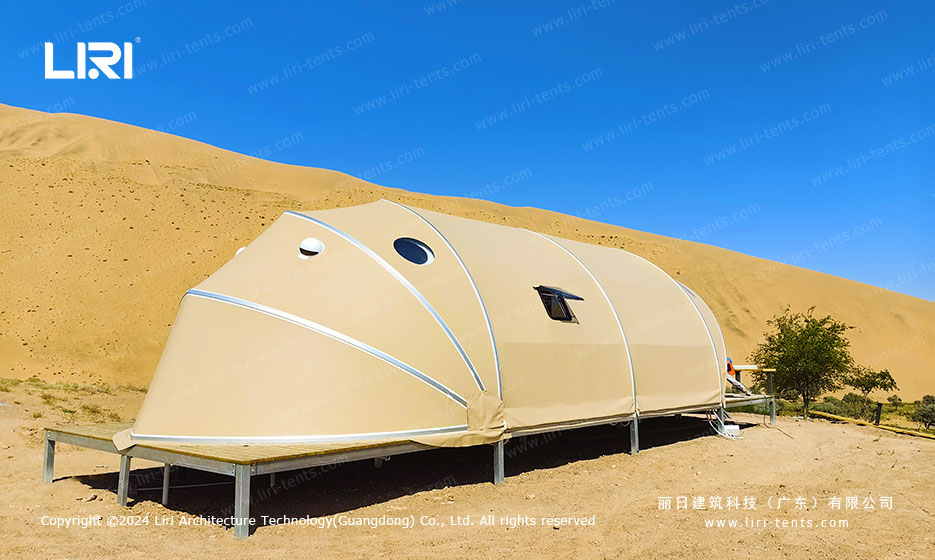
Close-up of a single cocoon pod — the curved, organic form creates a retreat-like atmosphere for wedding guests
Built for Desert Wedding Logistics
Destination weddings in remote environments face one operational reality: there is no backup venue. If the structure fails, the wedding fails. The engineering has to cover wind, temperature, and deployment speed — all at once.
The frame across both tent types is 6061-T6 aluminum, assembled with bolted connections. Three numbers matter for desert wedding operations:
- 100 km/h sustained wind rating. Desert microclimates can shift within hours. The anchoring system uses deep screw piles driven into sand — no concrete blocks, no guy ropes running across the ceremony lawn.
- B1 fire-rated PVC membrane on the cocoon pods and roof sections. With lighting rigs, catering equipment, and dozens of guests inside, fire certification is not optional for a venue operator.
- Zero-permanent-foundation deployment. The entire venue platform rests on weight-distribution plates. After the wedding season ends, the site returns to its original condition. This matters for permits on protected desert land, where concrete footings would trigger months of environmental review.
A wedding tent planning timeline shrinks from years to weeks when the venue does not require excavation.
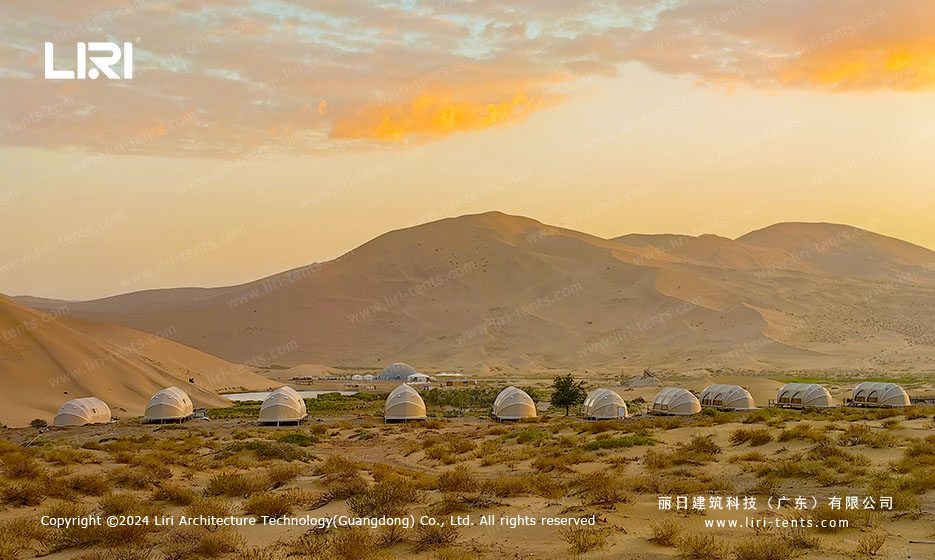
Aerial panorama at sunset — the full resort spread with dozens of tent structures across the desert landscape
The Resort Wedding Business Case
A permanent desert wedding venue built with structural tents flips the traditional hotel investment model.
Start with a single glass cone for ceremonies and six cocoon pods for accommodation. That is enough for an intimate wedding package of 30 to 40 guests. Add more pods, a second ceremony cone, and a central reception marquee as bookings grow. The assets are portable — if a new desert location opens up two seasons later, the entire venue relocates without rebuilding.
A glass-walled ceremony tent at sunset is a product no brick hotel can replicate. Couples pay for the view, the exclusivity, and the novelty — not for marble floors and chandeliers. The per-square-meter build cost of a tent venue is a fraction of permanent construction, but the nightly wedding package rates compete with established resorts.
Desert wedding seasons cluster in cooler months. A tent venue can close during summer extremes without a mortgage on an empty building. The tent assets are maintained, not occupied, during the off-season. This is fundamentally different from a hotel that must fill rooms year-round to service construction debt.
For operators comparing venue formats, the luxury wedding marquee with glass features represents the entry point — single-structure deployment for pop-up wedding venues. The desert resort model here scales that same principle to a full destination operation.
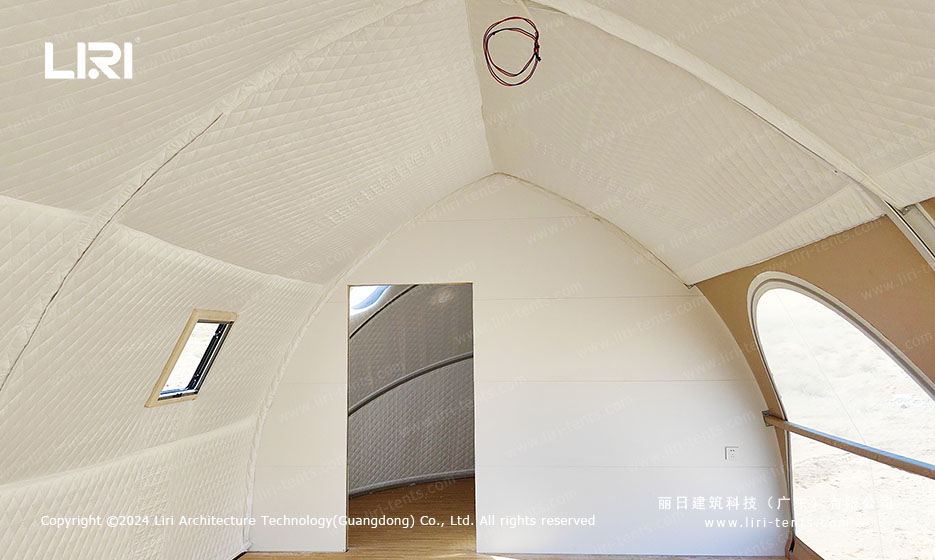
Inside a cocoon pod — soft textile lining creates an intimate bridal suite atmosphere, no exposed frame
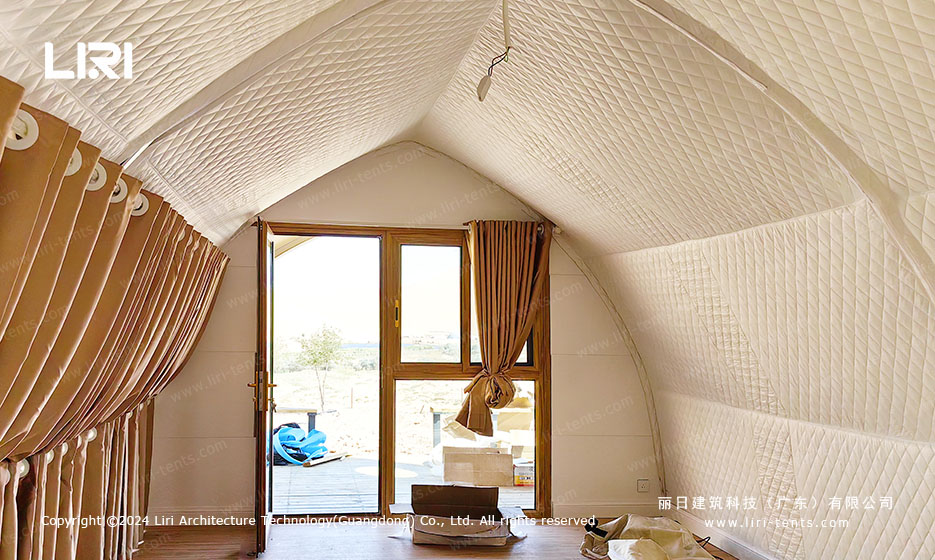
Curtain-framed doorway with desert beyond — the luxury hotel room experience delivered through tent architecture
FAQ
How many guests can a single glass cone tent accommodate for a wedding ceremony?
40 to 60 seated for a ceremony layout with aisles. Standing cocktail reception: roughly 100. For larger weddings, two cones can be linked via a covered walkway to create separate ceremony and reception zones — same frame system, same deployment crew, one build window.
What kind of permits does a tent-based wedding venue need compared to a permanent building?
Tent structures typically fall under temporary structure permits, which process in weeks rather than months. The key factor is the zero-concrete foundation system — most environmental and building regulations classify this as a removable installation. Every jurisdiction is different, but the difference in approval timelines between a tent venue and a concrete building is consistently measured in seasons, not days.
Can the cocoon pods really function as year-round wedding guest accommodation?
With the double-layer insulated membrane, integrated HVAC, and full plumbing routed through the raised floor deck, these units meet the same habitability standard as a 4-star hotel room. They are not seasonal. The 15-year service life of the aluminum frame means the structure outlasts multiple rounds of interior refresh — the frame is the asset, the soft finishes are consumables.
A destination wedding venue built from structural tents is not a compromise between permanent and temporary. It is a strategic asset that opens for bookings in one season, expands in the next, and relocates when the market shifts — all without concrete, without multi-year construction, and without the debt load of a fixed building.
Planning a desert wedding venue or resort expansion? Browse our full range of wedding tent structures or learn about our approach to engineered tent manufacturing. For site-specific wind ratings and layout consultation, get in touch.
Planning a desert wedding venue or resort expansion? Start with the Wedding Tent Planning guide, then use the Wedding Tent Price guide to prepare a practical budget brief.