How a 25-Meter Clear-Span Tent Transformed a Shanghai Plaza
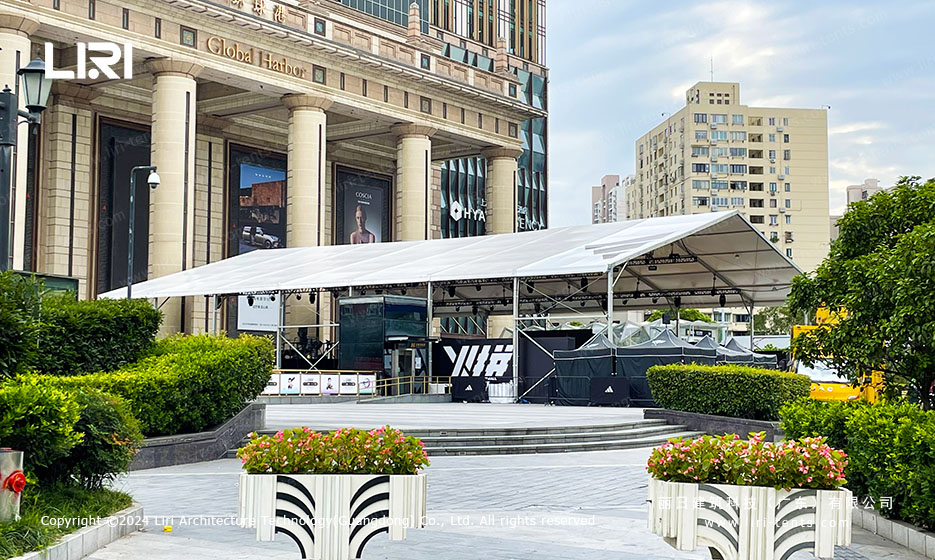
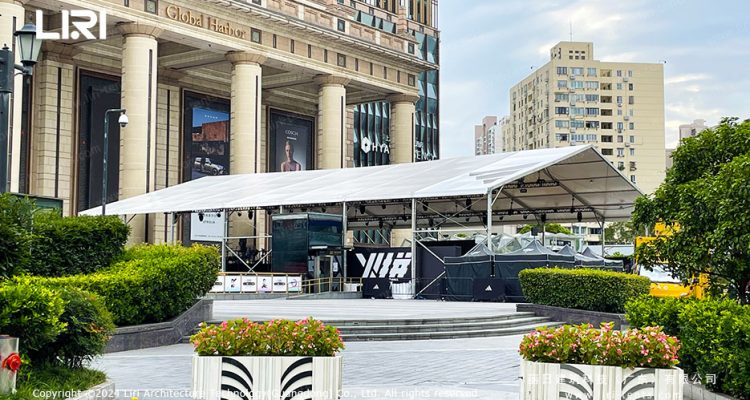
A busy commercial district in Shanghai needed a temporary venue that could seat hundreds of guests under a single roof. The solution came in the form of a 25-meter clear-span tent erected directly in front of a major shopping complex. The structure turned an open plaza into a fully enclosed event space within two days, proving that clear span wedding marquee designs work just as well for urban weddings as they do for commercial activations.
The tent covered roughly 625 square meters of floor area. Inside, crews installed a raised wooden platform, full overhead lighting rigs, and a central stage. The result was a polished interior that felt nothing like a temporary structure. Couples planning an outdoor celebration in a city center often face the same challenge: how to create an intimate atmosphere without permanent construction. This installation shows exactly what is possible.
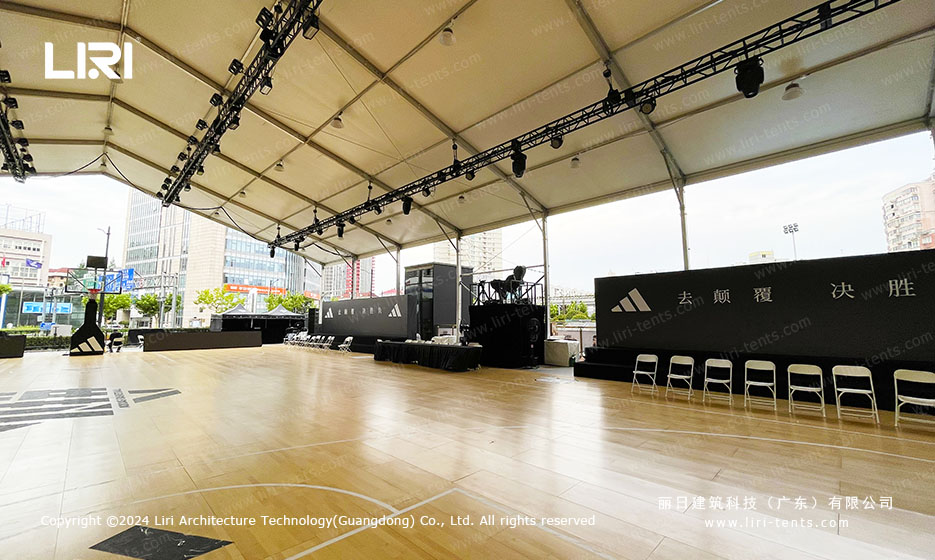
The frame relied on an aluminum alloy skeleton with a double-coated PVC roof. Engineers chose a gable width of 25 meters with no internal poles, leaving the entire floor plan open for seating, dance floors, or catering stations. The sidewalls used modular glass panels that could be removed in sections, allowing natural ventilation during setup and full enclosure during events. This level of flexibility is why many venues now source aluminum frame wedding tents for seasonal installations.
Wind load calculations for the site reached 0.5 kN per square meter, well within the frame’s rated capacity. Ballast blocks anchored the base plates instead of ground penetration, protecting the plaza’s stone surface. The same approach works for heritage properties or hotel gardens where drilling is prohibited. Event planners and wedding coordinators increasingly look for large wedding event structures that leave no trace after removal.
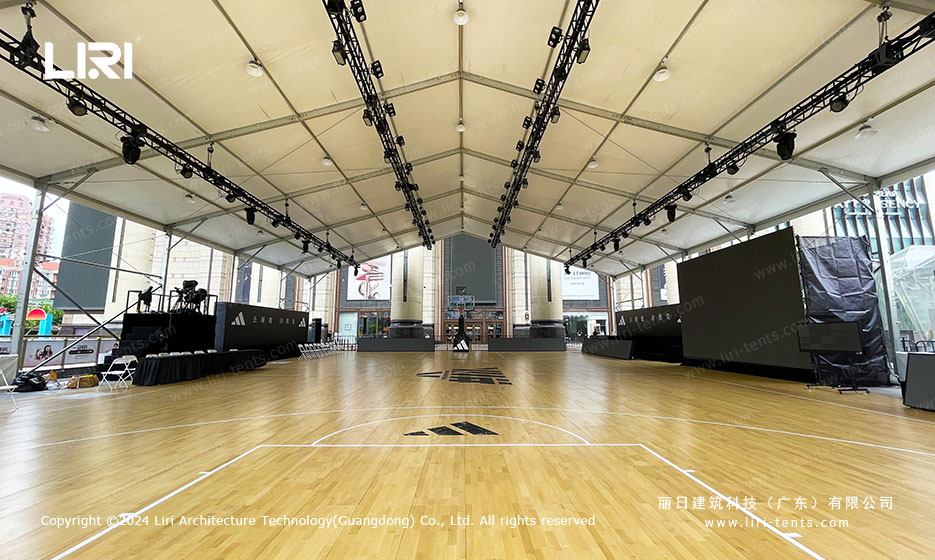
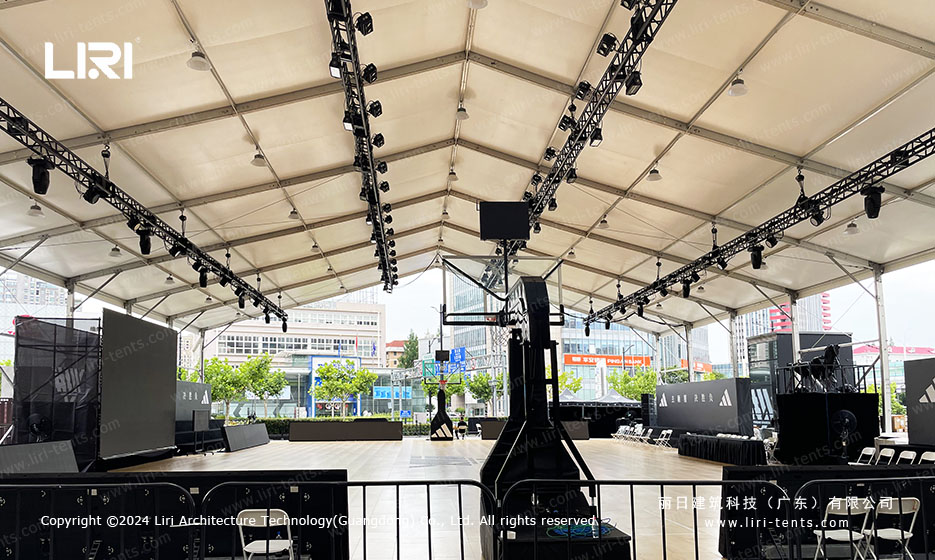
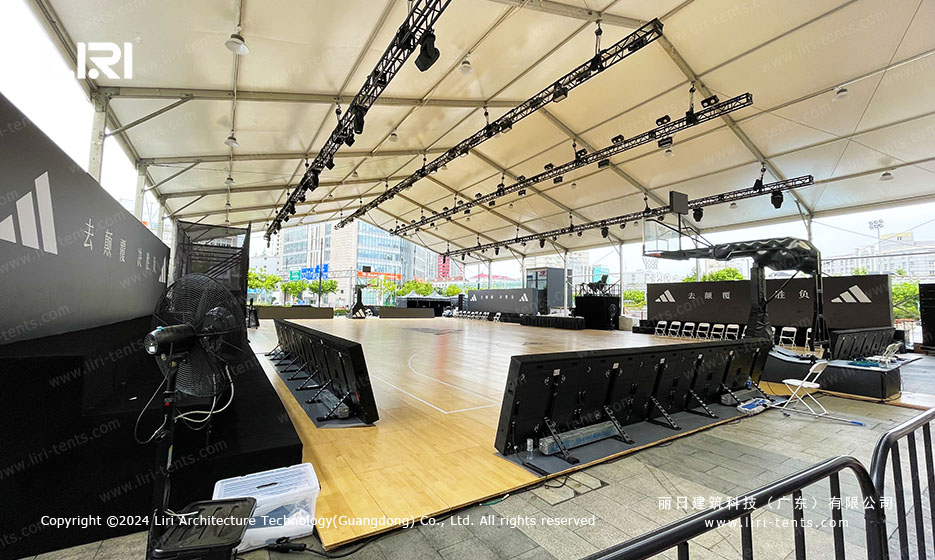
The interior layout demonstrated how versatile a single tent can be. One half of the floor held a regulation basketball court with branded backboards and court markings. The other half served as a spectator lounge with tiered seating, LED screens, and a catering zone. For a wedding reception, the same footprint could host a seated dinner for roughly 400 guests, a live band, and a dance floor without crowding. Venues that serve both corporate and private events need exactly this kind of adaptability.
Lighting played a major role in the atmosphere. Overhead trusses carried moving-head spotlights, PAR cans, and a central video wall. The tent’s white PVC lining reflected light evenly across the space, reducing the number of fixtures needed by roughly 30 percent compared to an open-air setup. For evening weddings, this same reflective quality helps string lights and uplighting create a warm glow without excessive power draw. Planners who value both aesthetics and budget often search for luxury wedding tent rentals that include integrated lighting support.
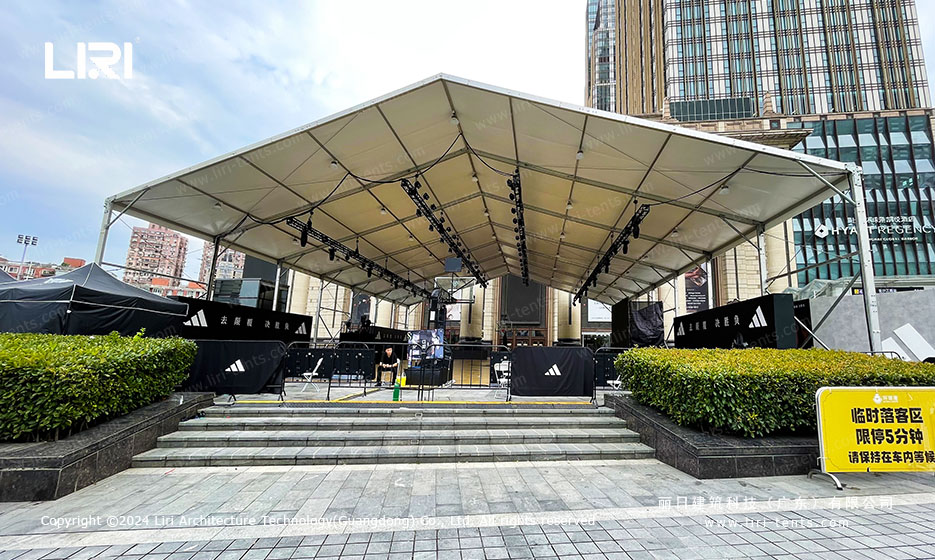
The exterior finish matched the upscale surroundings. The roof line sat low enough to avoid sight-line complaints from neighboring buildings, yet high enough inside to clear a full lighting rig. The white fabric appeared clean and bright against the stone plaza, giving the structure a pavilion-like presence rather than a warehouse feel. Wedding photographers often note that a tent’s exterior color matters for daytime shots, and the matte white finish here performed well in direct sunlight without glare.
Setup and teardown efficiency mattered for this urban location. The entire installation took 48 hours from arrival to handover, and removal was scheduled for 24 hours after the event concluded. Modular frame sections bolted together with hand tools, meaning no welding or heavy cutting on site. For wedding venues that host seasonal celebrations, this speed translates to longer rental seasons and less downtime between bookings. Buyers looking for wedding marquee options with fast turnaround times often prioritize bolt-together aluminum systems over heavier steel alternatives.
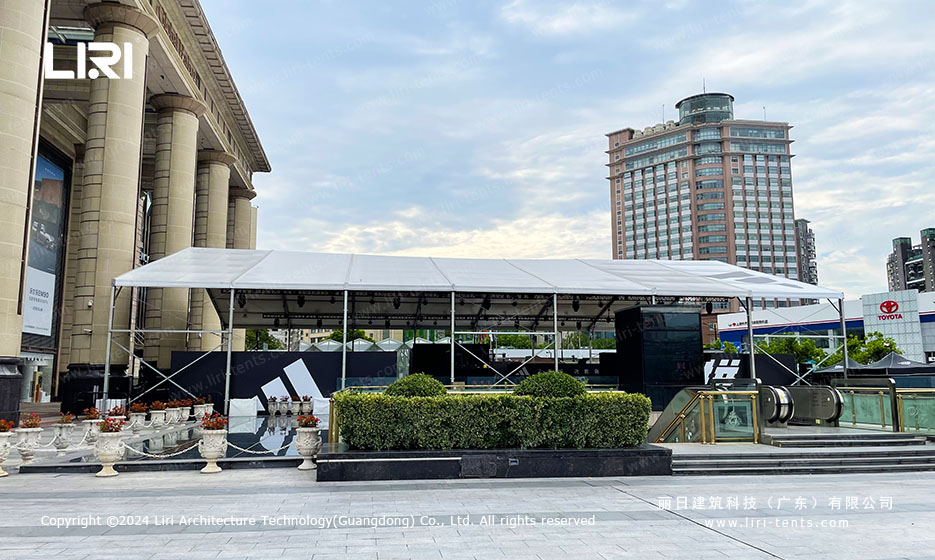
Weather protection proved reliable during the rental period. The double-layer PVC roof carried a waterproof rating of 850 g per square meter, sufficient for heavy rain without sagging or pooling. Gutters along the eaves channeled runoff into discreet downpipes that drained into the plaza’s existing storm system. During a brief afternoon thunderstorm, interior acoustics remained comfortable thanks to the fabric’s sound-dampening properties. For couples considering an outdoor ceremony, this level of weather security removes the stress of last-minute relocation plans.
Accessibility and flow also shaped the design. Two main entrances flanked the stage area, with additional service doors on the rear wall for catering and equipment. The open interior allowed guests to move between seating, dining, and activity zones without bottlenecks. The same logic applies to wedding receptions where guests need clear paths between the ceremony arch, dining tables, and dance floor. Reading through the ultimate wedding tent guide reveals how layout planning directly impacts guest experience, regardless of tent size.
From a procurement standpoint, the project demonstrated the value of choosing modular wedding tents for luxury venues over fixed structures. The rental cost for the entire installation, including flooring, lighting, and climate control, ran below the price of renovating a permanent ballroom of comparable capacity. For hotel operators and event companies, this math makes temporary structures an attractive revenue tool during peak wedding seasons.
The installation remained in place for two weeks, hosting daily activities without structural adjustment. Daily inspections checked tension on the roof cables and anchor points, but no major maintenance was required. This durability points to why heavy duty wedding tents for sale are increasingly popular for multi-day festivals and extended wedding weekends. A single structure that holds up for days without visible wear gives venue managers confidence in their investment.
FAQ
Can a clear-span tent really replace a traditional wedding venue?
Yes. A properly installed clear-span tent provides the same weather protection, interior climate control, and aesthetic finish as a permanent ballroom, with the added benefit of location flexibility. Many venues now use them as seasonal overflow or primary reception spaces.
How quickly can a large tent be installed in an urban location?
A 25-meter clear-span tent typically requires two to three days for full installation, including flooring and utilities. Removal takes one to two days. This schedule assumes a level surface and proper access for delivery vehicles.
What flooring options work well for wedding tents?
Wooden platform flooring remains the most popular choice for wedding receptions because it supports heels, allows for leveling on uneven ground, and provides a clean visual base. For sports or exhibitions, modular synthetic panels offer additional durability.
Do aluminum frame tents hold up in heavy wind and rain?
Aluminum clear-span frames are engineered to meet local wind-load codes, typically rated at 0.3 to 0.5 kN per square meter. The PVC roof fabric is waterproof and UV-resistant, with a service life of 15 to 20 years under normal use.
Whether you are planning a city-center wedding or a rural estate celebration, the right tent structure defines the entire experience. This Shanghai installation proves that commercial wedding tents wholesale can deliver both the scale and the polish that modern couples expect. For venues and rental companies looking to expand their offerings, investing in a modular aluminum system opens doors to year-round bookings without the overhead of permanent construction.
For a project-specific brief, use the Wedding Tent Planning guide to map capacity and layout, then compare wedding tent price factors before requesting a quotation.