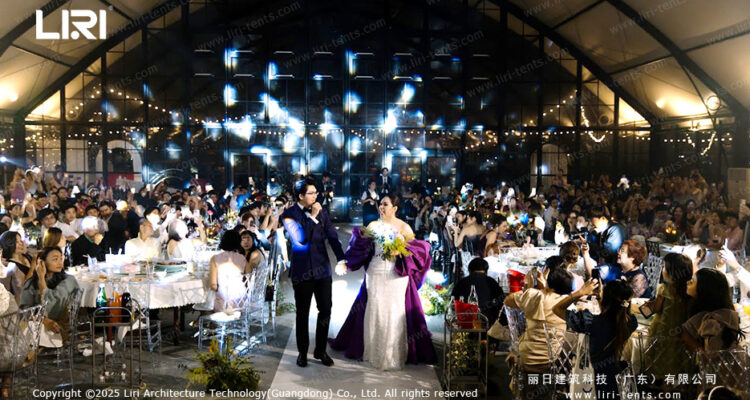
Search for an outdoor wedding venue and you will meet a pile of names: wedding tent, wedding marquee, clear roof tent, transparent tent, orangery marquee, pagoda, high peak, clear span. They sound like eight different products. Most are not. Some point to the same structure, while others describe a real difference in the roof or the walls.
This guide sorts them out, then shows what a name never tells you. Read it before you compare quotes, so you know what to ask for and what to check in a supplier’s photos.
Tent and marquee usually mean the same thing
In British English, a large temporary building for a party or reception is usually called a marquee. American suppliers more often say tent. Both words describe the same basic thing: a metal frame that holds up a fabric or panel cover, put up for one event and taken down again.
It is not the small camping tent you pack in a bag. A frame is simply the skeleton of poles and beams that carries the roof. Suppliers sell to different countries, so one white structure may be a “wedding marquee” on one page and a “wedding tent” on another.
The same supplier may even use both words in one catalogue, because customers search for both. Nothing about the frame, the cover or the price changes when the word changes. So do not spend time deciding which of the two you need.
The words that come after them change what your guests actually see and feel. Those words describe the roof, the walls or the shape of the frame.
Names that describe the roof
Most wedding marquees have a solid white roof. It is a coated fabric stretched over the frame. White fabric cuts the direct sun, so the light inside stays soft and even through a long afternoon. It also gives you a plain, bright ceiling if you plan to hang lights or fabric above the tables.
A clear roof, clear top or transparent roof is made from see-through panels instead of white fabric. Daylight comes straight in, and after dark your guests can look up and see the sky. “Clear” here means you can see through it, not that the material is clean. The two roof types suit different parts of the day.
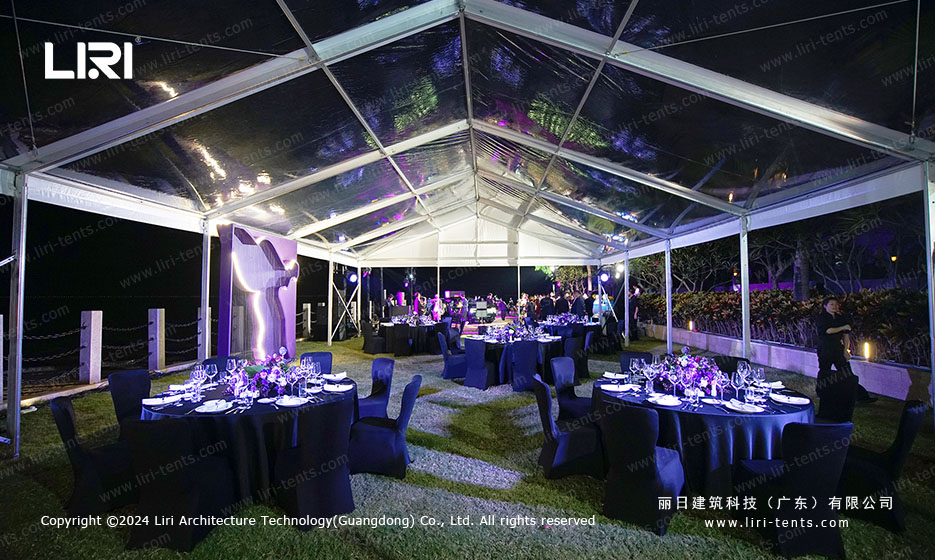
Picture a garden ceremony at three in the afternoon in midsummer. Under a clear roof the light is beautiful, but the space can feel warmer and brighter than you expect. Under a white roof the same ceremony is softer and cooler.
Now picture dinner at eight in the evening. The clear roof gives you dusk and stars above the tables, while the white roof gives you a surface to light with your own lamps. Neither is better; they simply suit different hours.
Ask which roof the quote covers, and ask for a real photograph taken at the time of day you plan to use it. Night photos and noon photos are hard to compare. If you like the open-sky look, compare a clear top wedding tent with a white-roof version before you decide. Some structures keep a white roof and put clear panels in the walls instead.
Names that describe the walls and the shape
Clear span describes the frame, not the cover. It means there are no support poles inside the space, because the beams carry the roof from the edges. In plain terms, nothing stands in the middle of the room. Tables, a dance floor and an aisle can go wherever you want them.
It is the usual choice for a main reception. The word tells you nothing about whether the roof or walls are transparent.
An orangery marquee has large glass or clear wall panels set into a visible frame, often with a glass roof too. It looks more like a permanent garden room than a tent. The name describes the architectural look, so an orangery can also be clear span.
If you want guests to see the garden while they sit down to dinner, this is the word you will meet most often. Our orangery tent review goes through the practical side of that choice.

Pagoda and high peak describe a pointed roof. These are usually small, single-room structures with one tall centre and a distinctive silhouette. Couples use them for a ceremony spot, a welcome area or a bar beside the main tent, rather than for seating two hundred guests.
Pick the shape for the job first, then choose the roof and walls for the light and shelter you want. Walls are a separate choice again.
A marquee can arrive with open sides, solid fabric panels, windowed panels or full glass. Whenever a name sounds precise, ask what is fitted on each of the four sides.
What a name never tells you
This is the part first-time buyers most often miss. A name does not include a size, a floor, doors, sidewalls, lighting, delivery or the people who put the frame up. “20m clear span wedding marquee” describes a width and a frame style. It does not tell you whether there is anything under your feet or anything keeping the wind out.
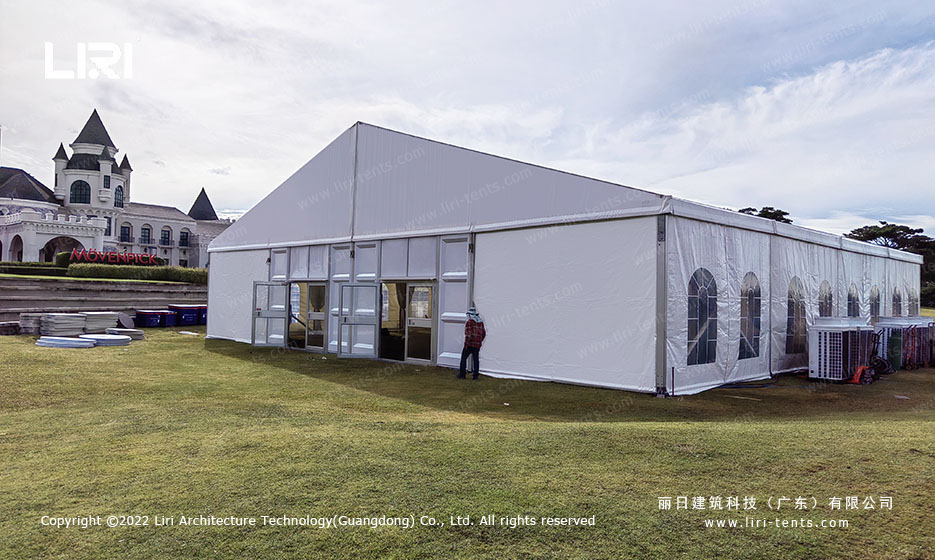
Two suppliers can both advertise a “transparent wedding tent” and send very different quotes. One may mean a clear roof with four open sides and grass below. Another may mean glass walls, a fitted floor and doors.
Ask for a short list of what is included, and compare lists rather than labels. Our wedding tent product range groups structures by shape, which makes that comparison easier.
One quiet note on safety, whatever the structure is called. A marquee needs to be fixed down properly for the ground and the weather on the day, and someone experienced should check it before guests arrive. That is a normal part of any hire or purchase, not a complicated approval process. Ask who does it, then move on to the details you actually care about.
What to ask before you order
You do not need to learn the trade vocabulary. Six plain questions will get you a useful answer.
When is the wedding, and is the ground grass, paving or a slope? Roughly how many guests will sit down, and will there be a dance floor? Is the main event in daylight or after dark?
Do you need closed walls for wind and rain? Do you want a floor, and what is under it now? Finally, which of these items are in the price you have been given?
Send your answers with a wide photograph of the site if you have one. A supplier can then suggest a roof and wall combination for your day, and you can read the quote knowing which parts are real. The labels are only a starting point; the photographs and the item list are what you will live with.
If you are at that stage now, send us your date, guest count and a photo of the space. We will explain the roof and wall options in plain terms and list what each quote includes.