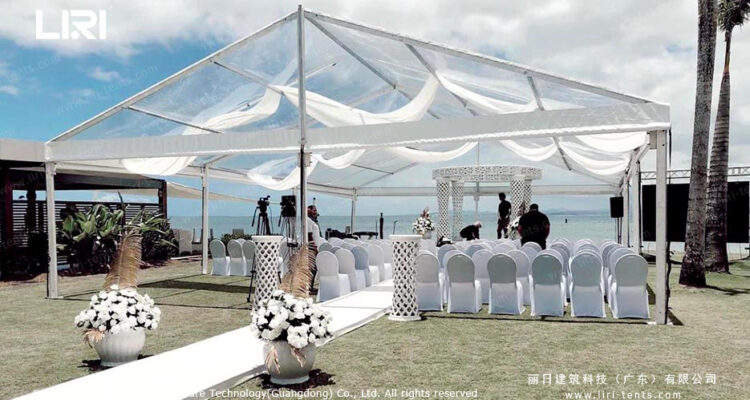
A clear top wedding tent has a transparent PVC roof instead of the usual white fabric. Sunlight comes straight through during the day. At night, you see the stars. The frame is aluminum — lighter than steel, no rust, and it goes up faster than you’d think.
These tents work in almost any outdoor spot because the see-through roof makes small spaces feel open. Guests don’t feel trapped under canvas. They can watch the sky change color, spot birds overhead, and still stay dry if it rains. You get the outdoors without the weather gamble.
Where Clear Top Tents Shine
Garden weddings. If your venue has old trees, flower beds, or a view worth keeping, a clear top tent keeps all of it visible. Natural light fills the space during the ceremony — no harsh shadows, no dark corners. After sunset, string lights hung from the frame reflect off the clear ceiling and feel like floating candles. We’ve seen this setup work especially well at English estate venues and California vineyard properties. If you like the glasshouse look but want more flexibility, our orangery tent guide covers that option too.
Beach weddings. Sand and salt eat through regular steel frames in a season or two. Aluminum doesn’t rust, which is why you see it on coastal venues. Set up a clear top tent near the water and your guests get an uninterrupted ocean view with protection from wind and blowing sand. One couple we worked with in Thailand put a 10m x 20m tent right on the sand and timed the ceremony for golden hour — every photo shows pink and orange sky filling the entire ceiling.
Rooftop and city weddings. A bare rooftop turns into an elegant venue with a clear top tent. City lights at night become your backdrop. Walls block the wind and street noise. The transparent roof keeps the open-air feeling that made you pick the rooftop in the first place.
Vineyard and farm weddings. Rustic venues pair well with modern clear top tents. Guests eat dinner while looking at vineyard rows or rolling fields. The contrast between the sleek aluminum frame and the casual countryside setting creates a look you can’t get with a barn or hotel ballroom.
What Drives the Cost
A few things set the final price:
- Size. Most wedding setups range from 6m x 12m (seats about 80) to 15m x 30m (250+). Bigger tents cost more overall, but the per-square-meter price drops as you scale.
- PVC grade. Thicker, better-grade PVC stays clear longer. If you plan to use the tent across multiple seasons, go with the higher-grade material.
- Add-ons. Windowed sidewalls, flooring, AC units, and lighting all add up. A basic tent package is straightforward — extras shift the budget.
- Installation. If your site is on a slope, has soft ground, or needs a crane for access, setup costs go up.
Aluminum frames cost more upfront than galvanized steel, but you save over time. No rust, no repainting, lighter to transport, and faster to install. For venues that host multiple events per year, the math works out.
If you want a completely different look — something round and dramatic — geodesic domes are another option worth exploring. For layout tips on how to arrange seating and dance floors inside your tent, check our frame marquee layout guide.
Orangery vs Clear Top Wedding Tent
A clear top wedding tent is usually the more flexible choice for temporary events and rental inventory, while an orangery tent is designed to create a stronger architectural venue appearance. Both can provide transparent views, but they differ in finish level, wall systems, operating model, and the amount of interior integration required.
| Planning factor | Clear top wedding tent | Orangery tent |
|---|---|---|
| Best fit | Outdoor receptions, temporary venues, and flexible rental use | Estate venues, resorts, hotels, and longer-term hospitality projects |
| Visual character | Open-sky effect with a transparent roof | More architectural appearance with defined frames and glass-style wall options |
| Wall options | Open sides, clear PVC panels, or solid weather panels | Transparent panels, hard walls, glass-style doors, and more permanent-looking entrances |
| Interior planning | Lighting, draping, flooring, and climate control can be added by event | Often planned as an integrated venue with flooring, doors, lining, lighting, and HVAC routes |
| Buying priority | Transport, repeated setup, modular expansion, and inventory flexibility | Venue appearance, long-term operation, guest comfort, and finish consistency |
Choose by operating requirements rather than appearance alone. Confirm the venue surface, expected guest count, event schedule, local weather exposure, wall configuration, flooring, and climate-control needs before requesting a quote.
Use the wedding tent planning guide to define the layout, then compare wedding tent price factors before contacting the factory.
FAQ
Is a clear top tent too hot in summer?
Not if you plan for it. The transparent roof does let sunlight through, so add side vents, portable AC, or a shade liner for midday events. Evening weddings rarely need extra cooling.
Does the clear roof stay clean in rain?
Yes. The PVC surface is smooth and waterproof — rain sheets right off. You might see water spots if it dries in full sun, but a quick rinse restores the clarity.
Can I hang lights or flowers from the roof?
You hang from the aluminum frame, not the PVC itself. String lights, floral garlands, and lightweight draping all work fine. Most couples coordinate with their tent supplier to map out the rigging plan before installation day.
How long does setup take?
A 10m x 20m clear top tent takes a pro crew about 4—6 hours. Larger setups or tough terrain add time. Always schedule installation at least one full day before the event.
What’s the difference between a clear top tent and an orangery tent?
Both have transparent elements. Orangery tents usually have clear walls plus the roof and a more architectural look with defined gable ends. Clear top tents are simpler — transparent roof with optional window panels. Need the see-through walls? A transparent wedding tent might be what you’re picturing. Each style fits different venues, so it’s worth comparing before you decide.