
Two distributors in the same market can receive wedding tent quotations that differ by a third for structures that look identical in a brochure. The difference is rarely a discount worth chasing. It is usually a difference in scope: one supplier has written down what the price includes, and the other has left the expensive parts out of the document entirely.
Reading a quotation is therefore a technical task, not an arithmetic one. The number at the bottom only means something when every line above it is visible and specific. This article sets out what a complete wedding tent quotation should itemise, which costs are routinely excluded, and how to put two offers side by side without comparing a tent to an empty frame.
Why two quotations rarely describe the same tent
A wedding tent is a system, not a single product. The frame alloy and section profile, the PVC weight class, the wall configuration, the door type, the guttering, the anchoring method and the flooring all change the material content of the same nominal size. A 20 by 50 metre structure quoted with 850 g/sqm roof membrane, glass walls and a cassette floor is not the same purchase as one quoted with a lighter roof, no walls and direct-lay flooring.
Suppliers also quote from different assumptions about the project. One assumes installation on site is included; another prices the goods ex-works and expects your crew to build. Neither assumption is wrong, but mixing them into one comparison produces a number that has no meaning.
The starting point is to treat the headline figure as a summary of scope, not as the price of a tent. Before comparing any two offers, both documents need to be broken into lines. The reference point for headline budgeting is the wedding tent price page, which explains how size, materials and configuration move the total; this article goes one level deeper into the lines behind that total.
The lines a complete quotation must itemise
A quotable offer names every major component group separately. At minimum you should see the following lines, each with its own specification and quantity.
- Main structure: clear span size, eave height, apex height, frame alloy grade and main profile section, bay spacing and total number of bays.
- Roof and wall membrane: PVC type and weight class for roof and gables, translucency, colour, and whether the fabric is certified to EN 13782 as a temporary structure.
- Wall configuration: solid PVC walls, glass walls, ABS hard walls or a mix, with quantities per bay.
- Doors and access: number and position of glass doors, zip doors or roll-up doors.
- Anchoring: method per surface type (expansion bolts, stakes, ballast) and who supplies the ballast.
- Accessories: gutters and drainage, roof covers, lining and curtain systems, flooring system and type, electrical fit-out if offered.
- Freight: packing method, container or truck loading plan, and the delivery term (ex-works, CIF to a named port, or DAP to site).
- Installation: whether a supervised crew, a turnkey build or drawings-only support is included, and how many build days are assumed.
- Documentation: engineering drawings, wind load calculation references, warranty scope and the spare parts list.
If a quotation lists one total against “aluminium wedding tent, 20 x 50 m” with no further detail, that is not a quotation. It is an invitation to a later conversation about extras, and that conversation always happens after the contract is signed.
The frame line deserves particular attention because it is the hardest to change after delivery. The main profile section and connection hardware determine what the structure can carry in walls, ceilings and equipment later. A lighter frame saves money on paper and closes doors on upgrades.

The exclusions that change the total more than the rate per square metre
Across the four gap areas buyers most often discover late, the pattern repeats: the excluded item is heavy, labour-intensive or jurisdiction-dependent.
Ballast and anchoring hardware are the classic example. Anchoring depends on the ground at the venue, so many suppliers quote the structure alone and leave ballast blocks, staking or concrete work to the buyer. The anchoring and wind rating requirements should be confirmed in writing before you sign, because the hold-down plan is often the single largest hidden line.
Flooring is the second. Subfloor systems, cassette floors and dance floors are priced per square metre and can rival the cost of the structure itself on uneven sites. A quote without a flooring line assumes you will solve the ground yourself.
Freight and customs form the third. An ex-works price looks dramatically lower than a DAP price for the same tent until you price ocean freight, port handling and import duties for your market. Always normalise both offers to the same delivery term before comparing anything else.
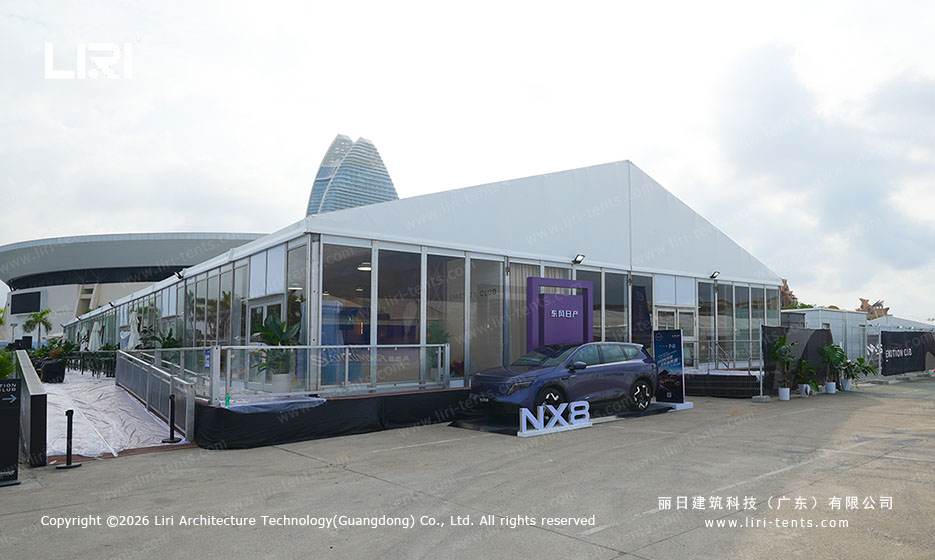
Installation labour is the fourth. For a rental fleet that builds ten times a season, crew time is a recurring cost, and a quotation that includes supervised installation is buying a different thing than one that ships drawings. Wall configuration feeds directly into this line: a project such as the ABS wall and glass marquee complex built for a Formula E hospitality site shows how hard-wall and glazed packages change both material cost and build sequence compared with open structures.
How to put two supplier offers side by side
Start by forcing both quotes onto the same skeleton. Build a simple table with the component groups above as rows, then fill one column per supplier. Where a supplier leaves a row blank, do not score it as zero; mark it “not quoted” and request the missing line. The comparison is honest only when both columns are complete.
Normalise the specifications before comparing numbers. Confirm both frames use comparable profile sections, both membranes sit in the same PVC weight class, and both wall packages describe the same mix of solid, glazed and hard walls. A cheaper offer is often simply a lighter specification in disguise.
Size assumptions deserve the same treatment. Guest count drives span and bay count, and the 40×80 wedding marquee planning guide shows how layout, staging and catering zones change the required footprint at scale. Two quotes for the “same” 300-guest wedding can legitimately be for different spans, which makes any direct price comparison misleading.
Finally, compare the terms, not only the goods. Delivery term, payment schedule, warranty scope, spare parts included and lead time are all commercial lines. A supplier who is precise about these is usually precise about engineering as well.
Questions that expose a thin quotation
Three questions, asked in writing, will usually reveal whether a supplier quotation is complete or assembled to win the first conversation.
First: “Which items are explicitly excluded from this price?” A confident supplier answers with a list. Evasion here predicts change orders later.
Second: “What delivery term does this price assume, and what is the price under DAP to our site?” The gap between the two answers is your real logistics and duty exposure.
Third: “Which installation option is included, and what site preparation does your crew expect to find on arrival?” Access, ground condition and cranage assumptions belong in the document, not in a phone call.
Frequently asked questions
What is the most commonly missing line in a first quotation?
Anchoring and ballast. It depends on site ground conditions, so suppliers often defer it. Ask for the assumption in writing, then price the alternative for your actual venue surfaces.
Should I compare prices per square metre?
Only after the specifications match. Rate per square metre is meaningful between two identically specified structures; between different specifications it measures nothing.
How detailed should the freight line be?
Detailed enough to name the delivery term, packing method and who handles customs clearance. Vague freight lines are where importers lose the margin they thought they had negotiated.
When you are ready to test a supplier against this checklist, send us your venue type, guest count and project location and request an itemised wedding tent quotation from our team.