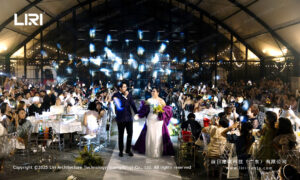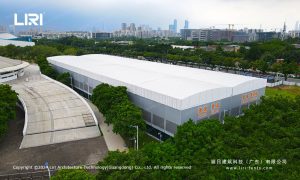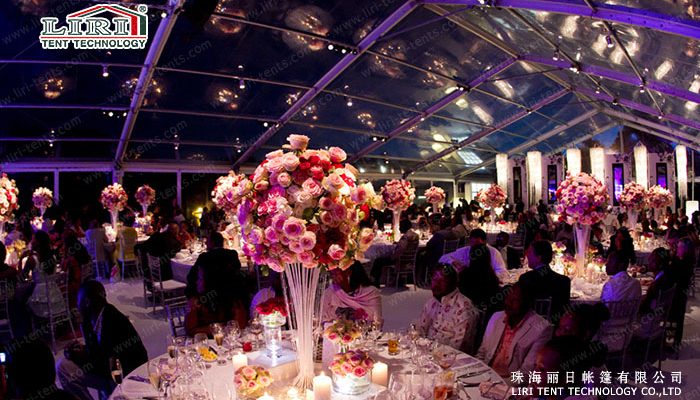
Why a Transparent Wedding Tent Changes Everything
Couples planning an outdoor wedding quickly face one question: how do you combine the beauty of nature with the comfort of an enclosed space? A transparent tent answers that better than any other structure.
Unlike traditional white canopies that seal guests off from the surroundings, a clear-top wedding marquee keeps the sky, trees, and sunset as part of the decor. The PVC membrane overhead lets in daylight during the ceremony and reveals the stars once evening sets in.
The practical side matters as much: extruded aluminum frames with hot-dip galvanized steel connectors handle gusty winds and downpours. The PVC fabric is fire-retardant certified and UV-stabilized, staying clear across multiple seasons of use.
How to Plan the Layout for a Clear-Top Wedding Venue
Nailing the floor plan inside a clear tent comes down to three zones: ceremony, dining, and social. Start by placing the ceremony area directly under the most unobstructed section of the transparent roof—guests will be looking up during vows whether you plan for it or not, so give them something worth seeing.
For the dining setup, position round tables of eight around the perimeter while keeping the center aisle open. This avoids the cramped, tunnel-like feel that happens when tables run wall-to-wall. A stage at the far end with a backdrop of sheer fabric catches natural light beautifully and does not compete with the outdoor view.
One detail venue operators often overlook: the wedding marquee sidewalls. Leaving the long sides fully open during the afternoon creates a breezy indoor-outdoor transition. Rolling down the clear PVC panels after sunset traps warmth while preserving the see-through effect. Planning the wall sequence by time of day avoids last-minute scrambling.
Nighttime Atmosphere: Lighting a Transparent Structure
A transparent tent at night becomes a lantern. Uplighting the aluminum frame from the base washes the structure in soft color. Warm white LED spots aimed at the center poles reflect gently off the clear ceiling and create a candlelit ambience that feels intimate even in a tent built for large guest counts.
Outside the tent, string lights draped along the entry path and uplights on surrounding trees extend the venue boundary outward. A well-decorated marquee should feel like it belongs to the landscape, not like it was dropped onto it. The transparency of the structure already does half the work—the lighting just needs to support what is already there.
Electrical runs should be planned before flooring goes down. Cable channels under the subfloor keep walkways clear and meet safety requirements that formal venues must satisfy.
What Makes a Commercial-Grade Transparent Tent Worth the Investment
Rental operators and venue owners evaluating a transparent wedding tent for purchase should look beyond the sticker price. A commercial aluminum frame rated for permanent or semi-permanent installation saves money across multiple seasons compared to renting equivalent structures event by event. The fire-retardant PVC roof membrane carries certifications that venues in regulated markets must present during permit applications.
Maintenance is low: the frame needs an annual bolt torque check and the PVC panels clean with mild soap and water. When stored correctly between seasons, a quality clear-top marquee delivers a consistent return over a decade of use.
Frequently Asked Questions
How many guests can a transparent wedding tent hold?
A standard 10m × 20m clear-top marquee seats roughly 120 guests for a plated dinner with a dance floor, or up to 180 for a standing cocktail reception. Modular designs allow widths up to 30m and unlimited length extensions by adding intermediate bays. For a ceremony-only setup without tables, you can double those numbers since seating density requirements drop significantly.
Does a clear roof make the tent uncomfortably hot during daytime?
The PVC membrane used in commercial-grade transparent tents is UV-treated to reflect a significant portion of infrared heat while transmitting visible light. In practice, a clear roof tent runs roughly 3–5°C warmer than an opaque white roof under direct midday sun—a difference easily managed with portable air conditioning units or by rolling up the sidewalls for cross-ventilation. For summer weddings, scheduling the ceremony in the late afternoon sidesteps the peak heat window entirely.
Can a transparent tent stay up year-round?
Aluminum frame tents with hot-dip galvanized steel connectors are engineered for permanent or semi-permanent installation. The limiting factor is usually the local wind-load code, not the structure itself. With proper anchoring—concrete ballast blocks or ground stakes depending on the surface—a commercial clear-span marquee handles snow loads and sustained winds. Many resort venues in coastal and alpine regions keep identical structures up through all four seasons without issue.
What maintenance does a clear PVC roof require?
Quarterly cleaning with a mild detergent solution and a soft-bristle brush keeps the membrane transparent. Avoid pressure washers, which can force water past the welded seams. Annually inspect the tensioning straps and roof fastening points for any loosening caused by thermal expansion cycles. The frame benefits from an annual bolt torque check and a rinse to remove salt spray if installed near the ocean. A clear-top marquee tent with proper care outlasts cheaper alternatives that need panel replacement after a few seasons.