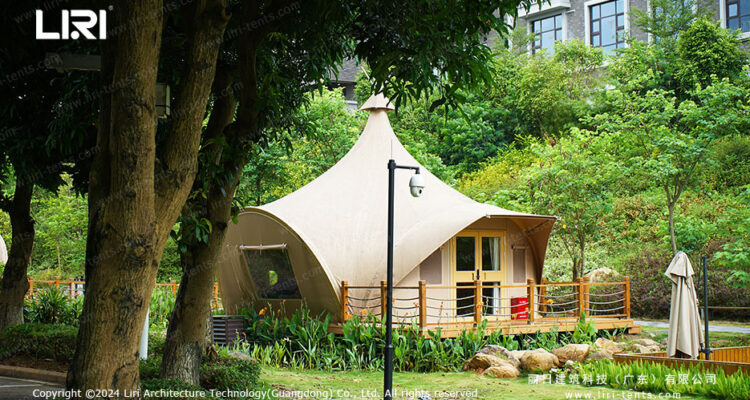
Title Tag: Luxury Hotel Tents for Weddings — Turn Any Spot Into a Venue | WeddingTentsForSale
A couple we worked with last summer wanted their wedding on a cliffside in southern Portugal. No buildings for miles. No power. No running water. They pulled it off with a luxury hotel tent — and their guests still talk about it.
These aren’t camping tents. Think hotel suite meets outdoor pavilion: solid aluminum frames, fabric walls that handle serious weather, and ceilings high enough for chandeliers. You get the comfort of a ballroom in places no ballroom could ever be built.
What These Tents Are Made Of
The frame is 6061-T6 aluminum alloy. Same grade used in aircraft. Light enough to transport to remote sites, strong enough to stand through coastal storms. We’ve had tents stay upright in 60mph wind on beachfront properties in the Philippines.
The canopy is 700D PVC-coated tarpaulin — fire-resistant, waterproof, and coated with a self-cleaning top layer. Rain beads off. Dirt rinses away with the next shower. For resort operators who can’t afford daily maintenance crews, this coating saves real money.
Inside, ceiling height hits 4-5 meters. No center poles. No beams blocking sightlines. Add hardwood flooring and drapery, and guests won’t guess they’re inside a temporary structure.
Sizes: From Honeymoon Suite to Grand Reception
Tents range from 50 to 500 square meters. A 50sqm tent makes a stunning honeymoon suite with king bed, seating area, and ensuite. A 200sqm setup seats 100 guests for dinner. At 500sqm, you’re hosting 300+ with room for a dance floor, bar, and lounge.
Resort operators sometimes connect multiple tents like a village. One becomes the ceremony space. Another the dining hall. A third the after-party lounge. Covered walkways link everything together.
If you’re familiar with planning a tipi tent wedding, the layout logic is similar — multiple zones, one connected venue. Hotel tents lean classic-elegant; tipis go boho-rustic. Both let you build your venue piece by piece.
Setup: No Foundation Required
Regular venues need flat ground, concrete pads, utility hookups. Hotel tents need level-ish ground and a crew.
Beach sand? Ground stakes. Rocky terrain? Weighted base plates. Rooftop? Ballast blocks. We’ve installed these on Greek island cliffs, in Costa Rican rainforests, and on the 30th-floor terrace of a Dubai hotel.
Setup takes 1-3 days depending on size. Takedown is faster. Seasonal resorts that operate 4-6 months a year can pack everything up during the off-season — no empty building to maintain through monsoon or snow.
For hotel operators, a 200sqm frame tent gives you venue flexibility. A luxury hotel tent adds overnight accommodation capability. Same aluminum frame technology, broader use case.
Real Performance Under Pressure
A resort client in Thailand runs 12 hotel tents along a beach. During the 2024 monsoon, winds hit 50 knots. Zero structural damage. Zero water ingress. The self-cleaning coating meant tents looked fresh within 48 hours after the storm passed.
The double-layered PVC fabric combined with properly tensioned frames is the key. When wind hits, the structure flexes instead of fighting it. Rigid buildings crack. These tents breathe.
For cold climates, add insulated liner walls and portable HVAC. For hot climates, the high ceiling naturally vents heat — open the peak vents and you get passive cooling. This works especially well with clear top wedding tents, where ventilation keeps the transparent roof from turning into a greenhouse.
What Wedding Planners Say
Emma Torres, a destination wedding planner in Bali, switched half her clients to tent weddings after 2023. “Venues here book out 18 months ahead. With a tent, I can create a venue on a rice terrace, a private garden, a secret beach. Couples get exclusivity no hotel ballroom offers.”
The math works too. A 200sqm luxury hotel tent with full interior fit-out costs 60-70% less than building a permanent event pavilion. And you can relocate it if the business changes direction. For more on the financial side, see our business case for luxury wedding tents.
Frequently Asked Questions
How long does a luxury hotel tent last?
With basic maintenance, 8-12 years. The aluminum frame essentially lasts forever. The PVC canopy needs replacement after years of UV exposure — most operators budget a canopy refresh around year 7-8.
Can these handle snow?
Yes, with the right setup. Standard frames handle moderate snow loads. For heavy snow regions, we recommend a reinforced roof pitch and heated interior to prevent accumulation.
What’s the price range?
A 50sqm model with basic interior starts around $8,000-12,000. A fully outfitted 200sqm tent with flooring, lighting, HVAC, and bathroom pod runs $40,000-60,000 — roughly one-third the cost of a permanent structure of equivalent quality.
Do I need a permit?
Most jurisdictions allow temporary structures under certain size thresholds without building permits. This varies by country. Our team provides structural documentation for permit applications when required.
Can guests actually sleep in these?
Yes. With insulated walls, proper flooring, climate control, and bathroom facilities, a luxury hotel tent feels like a high-end hotel room — except for the waking-up-in-nature part. Several five-star resorts now list tent suites at the same rate as their premium rooms, as documented in hospitality industry reports (Boutique Hotel News, 2024 Glamping Market Review).