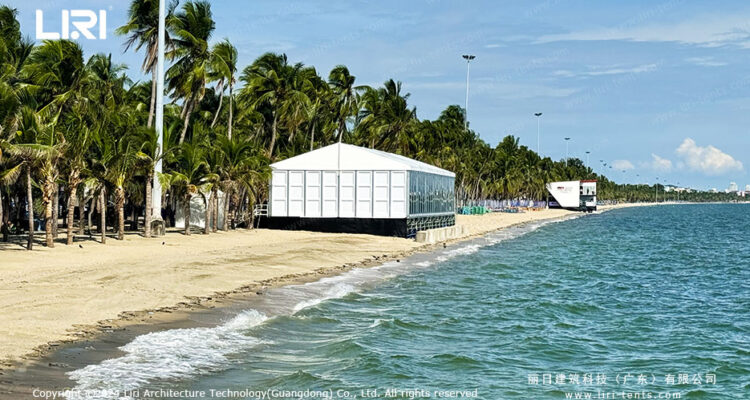
If you’re planning a beach wedding, the tent frame matters more than you’d think. Salt air destroys regular steel in a season or two. Aluminum doesn’t rust. That’s the short reason why beach venues and coastal resorts almost always pick aluminum frame tents over anything else.
But rust resistance isn’t the only reason. Aluminum frames are lighter than steel, so the crew can carry sections across sand without heavy equipment. They handle wind better because the frame flexes instead of snapping. And the open interior — no center poles — gives you a clear view of the ocean from every seat.
Why Aluminum Beats Steel at the Beach
Steel tent frames need rust-proof coating and regular maintenance near salt water. Miss one spot and rust spreads fast. Aluminum doesn’t have this problem. The frame comes out of the box ready for coastal conditions and stays that way year after year.
Wind is the other big factor. Beach weddings often catch gusts that inland venues never feel. Aluminum frames have some give — they absorb wind pressure and bounce back. Steel is rigid. In strong gusts, rigid frames put stress on joints and connectors. Over years of beach use, that stress adds up. Aluminum spreads the load and lasts longer.
Weight matters when you’re setting up on sand. A 20m aluminum frame tent can go up with a 4-person crew and no crane. The same size in steel often needs a crane or extra hands, which blows up the installation budget.
What to Look for When Choosing a Beach Tent
Frame material. If the venue is within 500 meters of salt water, aluminum is the only frame worth buying. Galvanized steel looks cheaper on the quote, but replacement costs catch up within 3-5 years.
Roof type. Clear PVC roofs work great at the beach — they let in sunset views while blocking wind and sand. If you want something that matches a clear top tent, ask about transparent roof panels. For daytime events with direct sun, consider an opaque white roof instead to keep the interior cooler.
Sidewalls. At the beach, you’ll want at least partial sidewalls to block wind. Many couples go with window sidewalls — clear panels that stop the breeze without blocking the view. You can roll them up if the weather turns calm.
Flooring. Sand is uneven. You need a proper subfloor — interlocking panels or a raised deck system — not just fabric on the ground. Guests in heels, elderly relatives, and the dance floor all need level footing. Budget for flooring early; it’s not an add-on you want to discover you need at the last minute.
For ideas on how to decorate the inside once the tent is up, our frame tent decoration guide has practical tips for lighting, draping, and table layouts. If you’re comparing frame tents against other options, a geodesic dome is a completely different shape that works surprisingly well on the beach — worth a look if you want a 360-degree view.
FAQ
How much wind can an aluminum frame beach tent handle?
A properly anchored aluminum frame tent handles sustained winds of 60-80 km/h. The key is anchoring — on sand, you need deep stakes or concrete ballast blocks, not standard ground pegs. Your tent supplier should run wind-load calculations for the specific beach location.
Does salt air damage the PVC roof or sidewalls?
Not in any meaningful way. PVC is inherently salt-resistant. The zippers and seams — which are heat-sealed and treated with extra vinyl coating — hold up well. Rinse the fabric with fresh water after the event if you’re storing the tent long-term.
Can I set up an aluminum frame tent directly on the sand?
Yes, but you need proper anchoring and a level subfloor. Sand shifts, so the crew will compact and level the area first. For tents over 10m wide, many resorts build a temporary wood deck inside the tent footprint — it’s safer and more comfortable for guests.
How long does a beach tent installation take?
A 10m x 20m aluminum frame tent on sand takes about 6-8 hours with a 4-person crew — longer than on grass because of the extra anchoring and floor work. Always schedule setup at least one full day ahead. Factor in tide times if the site is close to the water.
What size tent do I need for a beach wedding?
A 10m x 15m tent seats about 100 guests at round tables with a dance floor. For 150 guests, go up to 10m x 25m. Beach venues often have narrow access, so measure the entry path before you commit to a tent size. A modular aluminum frame tent can be assembled in sections if the access route is tight.