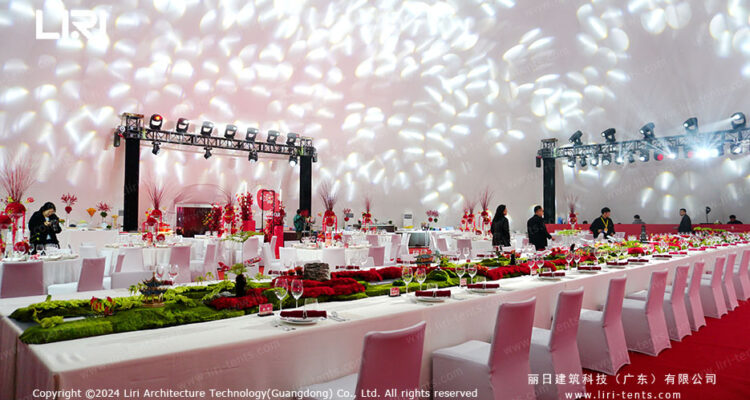
Wedding tent accessories determine how a basic structure performs as a complete event venue. For rental companies, hotels, resorts, wedding venues, and project buyers, the right accessory package should be planned around the site, guest layout, weather exposure, installation frequency, transport, and storage—not selected as decoration at the end of the project.
Wedding Tent Accessories at a Glance
| Accessory group | Main purpose | Planning questions |
|---|---|---|
| Walling and doors | Weather protection, access, visibility, and venue finish | Open or enclosed event, guest flow, emergency exits, and loading access |
| Flooring | Level walking surface, interior finish, and equipment support | Ground condition, drainage, load points, stage, dance floor, and catering routes |
| Lining and interior finish | Visual treatment, acoustic control, and service concealment | Theme, lighting, rigging, cleaning, storage, and repeated use |
| Lighting and rigging support | General lighting, feature lighting, signs, flowers, and production equipment | Approved load points, cable routes, power supply, and installer responsibility |
| Climate-control integration | Cooling, heating, ventilation, and guest comfort | Tent volume, enclosure, guest density, weather, duct routes, and equipment position |
| Anchoring and ballast | Structural stability for the site and selected wall configuration | Ground penetration rules, surface type, wind exposure, and local engineering requirements |
Walling and Entrance Options
Wall choices influence weather performance, daylight, guest circulation, transport weight, and the overall venue appearance. Common options include clear PVC window panels, solid fabric walls, transparent panels, ABS hard walls, glass-style wall systems, and framed door units. Select the system together with the entrance plan, emergency exits, catering access, and prevailing weather direction.
Wedding Tent Flooring
Flooring can create a level, clean surface over grass or other temporary sites while supporting dining, dancing, staging, and service movement. The correct system depends on the ground, drainage, expected loads, installation duration, and finish requirement. A floor should be coordinated with entrances, ramps, wall panels, cable routes, and climate-control equipment.
Lining, Lighting, and Interior Finish
Roof lining, wall draping, lighting, chandeliers, decorative frames, and partition systems can transform the interior, but each item affects installation time, rigging, cleaning, packing, and storage. Rental operators should favour repeatable accessory packages that can be configured for different guest counts and venue styles.
Climate Control and Service Integration
Heating, air conditioning, ventilation, power, and catering services should be included in the layout before installation. Confirm equipment locations, safe clearances, duct or cable routes, noise control, and access for maintenance. Transparent roofs and enclosed wall systems may require a different comfort strategy from open-sided structures.
Accessories for Rental Companies and Venues
A practical commercial inventory usually combines versatile core components with a smaller number of premium options. Standardise compatible wall bays, doors, flooring modules, lining sections, and transport packaging where possible. Track inspection, cleaning, repairs, missing hardware, and storage conditions after every installation.
What to Include in an Accessory Quote Request
- Tent model, span, length, eave height, and bay configuration
- Venue country, surface, access conditions, and expected weather
- Guest count and layout for ceremony, dining, stage, dance floor, bar, and catering
- Required wall, door, flooring, lining, lighting, and climate-control options
- Whether the project is a one-time installation, venue asset, or rental inventory
- Delivery timing, transport method, installation responsibility, and local compliance needs
Review the wedding tent planning guide and price factors, then request an accessory and layout quote.
Planning note: Accessory compatibility, structural loads, anchoring, exits, fire requirements, electrical work, and climate-control equipment must be confirmed for the selected tent model and local regulations.
Match the accessory package to the ceremony and reception plan
The same structure can support very different wedding experiences. Instead of ordering an isolated list of parts, build the accessory brief around the guest journey, operating conditions, and structure interfaces. Every option below uses accessory groups already listed on this page; final compatibility and approved loads must be confirmed for the selected tent model.
Ceremony configuration
Prioritise the entrance, processional route, aisle width, weather-facing wall sections, a stable walking surface, and lighting for the ceremony focal point. Keep exits and post-ceremony guest flow clear.
Banquet reception
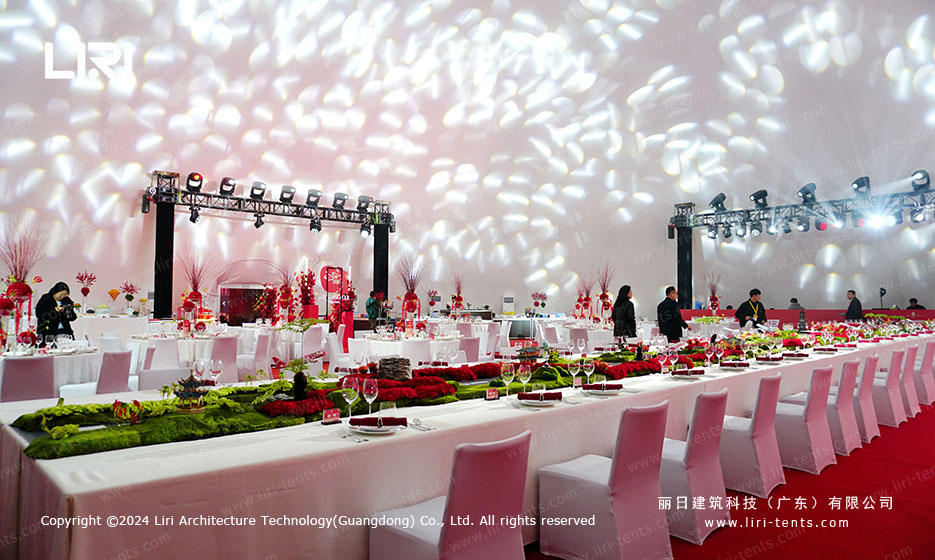
Coordinate flooring, walling, doors, lining, lighting support, climate-control integration, and catering access around the table plan, dance floor, stage, bar, and service aisles.
Luxury reception
Use a consistent finish language across framed doors, wall systems, flooring, lining, chandeliers or feature lighting, and screened service areas. Confirm transport, cleaning, packing, and storage implications for premium components.
Clear-roof setup
Plan transparent and solid wall sections, ventilation or cooling questions, daytime shade, evening reflections, cable routes, and cleaning access together with the clear-roof owner.
Orangery setup
Coordinate framed doors, glass-style or hard-wall systems, finished floor level, facade lighting, interior zoning, and climate equipment with the orangery owner.
Accessory package comparison checklist
| Check | Why it matters |
|---|---|
| System compatibility | Wall bays, doors, flooring edges, lining sections, hardware, and support points must match the specific structure. |
| Site interface | Surface, drainage, anchoring method, floor level, ramps, entrances, and service routes affect the package. |
| Operating responsibility | Clarify who supplies, installs, tests, cleans, repairs, packs, stores, and documents each component. |
| Transport and inventory | Label parts, separate fragile and fabric items, record quantities, and define protective packing for repeat use. |
| Local review | Exits, electrical work, fire requirements, climate equipment, rigging, and structural interfaces require project-specific approval. |