Outdoor ceremonies look effortless in the photos, but anyone who has planned one knows the real variable is the weather. Forecasts change, evening dew arrives on schedule, and a beach or garden venue gives you no walls when the wind picks up. A marquee does not fight the weather; it removes the gamble entirely, which is why couples who book one tend to sleep better in the weeks before the day.
Why Weather Proofing Decides the Day
Rain is the obvious risk, but it is not the only one. Strong wind turns decorations into projectiles, harsh sunlight makes guests squint through the ceremony, and cold evenings cut a reception short no matter how good the band is. A marquee handles all four at once: the roof sheds rain, the frame carries wind loads, the walls block glare, and the enclosed space holds warmth after dark.
Evening dew is the quiet killer of outdoor events. Chairs, linens and table settings left exposed overnight end up damp by morning, and a reception stretched into the late hours under an open sky collects moisture on everything. Under a marquee, the dinner service, the dance floor and the late-night bar all stay dry, which lets the party run on its own clock instead of the weather’s.
Couples often book outdoor venues months ahead, when a reliable forecast is impossible. That early booking is exactly why a backup plan matters: with a garden marquee on the booking, the venue decision stops being a weather bet and becomes a schedule decision.
Choosing the Right Marquee Size and Layout
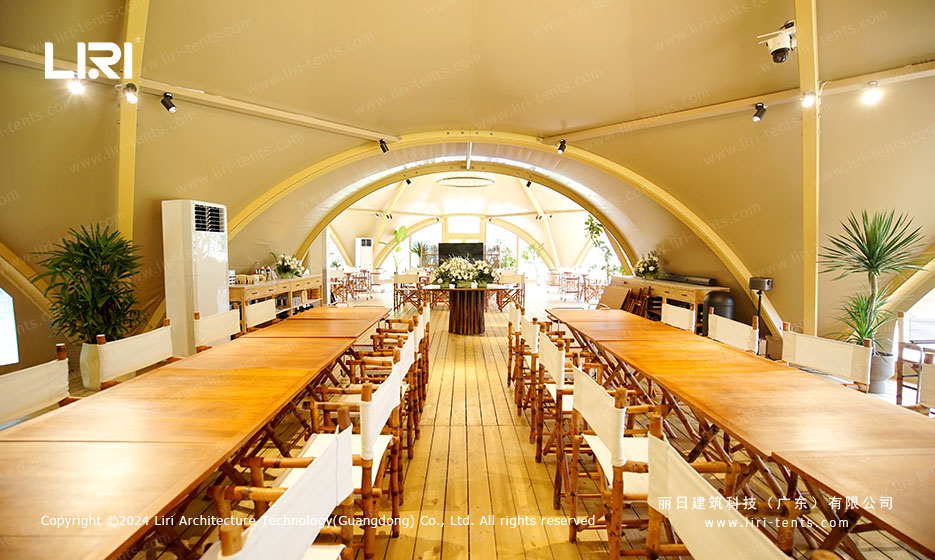
Size starts with the guest list and the table plan, not the other way around. A seated dinner needs roughly one square metre per guest, while a cocktail reception fits more people because the space is standing. For a 100-guest dinner, a 10m by 15m marquee works comfortably; a 200-guest banquet with a stage and dance floor typically steps up to a 15m by 20m footprint.
The frame type matters as much as the dimensions. A aluminum frame wedding tent has no centre poles, so the dance floor and head table sit wherever you want them and guests get clear sightlines from every seat. If the celebration leans casual, a large tipi tent gives a very different silhouette with the same weather protection.
Layout planning usually follows a simple sequence: ceremony at one end, dinner tables across the middle, bar and dance floor at the far end. That keeps the flow moving one direction and avoids guests crossing the dance floor with plates. A frame wedding tent with side entrances helps catering teams move between kitchen and tables without walking through the ceremony area.
Making the Tent Feel Like a Venue, Not a Shelter
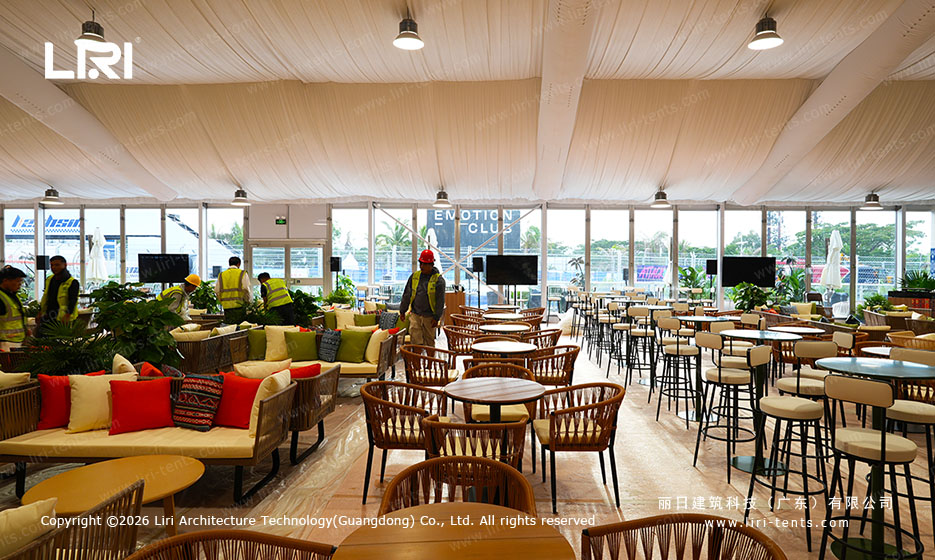
The tent is the blank canvas; the styling is what makes guests forget they are under fabric. Lining the roof hides the trusses and gives the space a ballroom feel, while chandeliers or string lighting define the height and mood. Transparent roof panels or clear side walls let a garden or beach view carry into the reception, which is the whole point of choosing an outdoor setting in the first place.
Flooring is worth budgeting for. A raised wooden floor keeps heels out of the grass, levels the tables and makes the space feel permanent, while a dance floor insert protects the fabric from heavy foot traffic. For couples who want daylight over the ceremony and a warm glow after dark, a clear top marquee tent delivers both in one structure.
FAQ
How far ahead should we book a wedding marquee?
Book as soon as the venue and date are locked in, ideally three to six months out. Peak wedding season fills the most popular sizes first, and an early booking also locks in the tent before the forecast becomes a factor.
Can a marquee handle a beach wedding?
Yes, with the right anchoring. Sand anchors or ballasted base plates replace standard ground pegs, and the frame is engineered for coastal wind loads. Salt air is a consideration too, so the supplier should confirm the frame finish is marine-grade before you commit. Tell the supplier the exact site so the anchoring is specified for the conditions.
What happens to the buffet and open ceremony areas in wind?
Side walls close down to protect the buffet line, and the ceremony area shifts under the same roof without losing the outdoor feel. That is the practical advantage of a marquee: the plan changes, the day does not.
How do marquees compare with hiring a permanent venue?
For a garden, beach or family property, a marquee costs a fraction of a hired ballroom and gives full control over the layout, catering and styling. The trade-off is the planning: power supply, flooring and heating need to be arranged, which the marquee supplier can manage as part of the package.