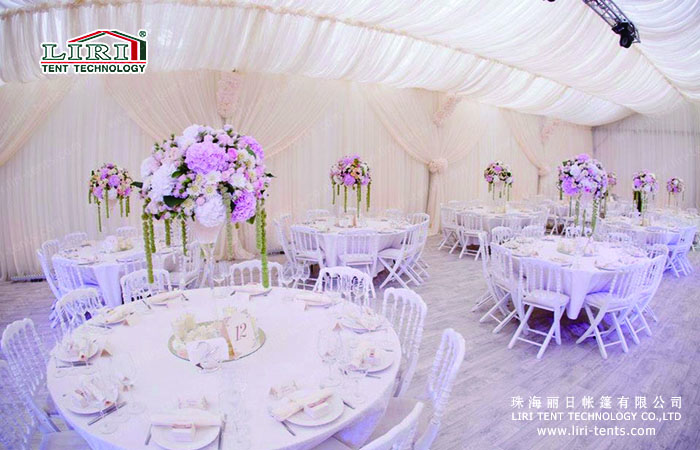
Popular Wedding Tents: Sizes, Frames, and Design Options
Wedding tents have come a long way from basic canopy shelters. Today’s popular wedding tents combine structural engineering with design flexibility, making them a preferred choice for outdoor celebrations across every budget level. Whether you’re planning a backyard ceremony or a large-scale reception, understanding the core options helps you make the right call. A wedding tent for sale typically includes the frame, fabric cover, and basic accessories, with custom add-ons available from most suppliers.
Standard Dimensions and Frame Types
Most popular wedding tents for sale use clear-span widths between 3m and 12m, with eave heights around 2.6m. The frame is typically extruded aluminum alloy (6061-T6 grade) or hot-dip galvanized steel tubing. Aluminum offers lighter weight and corrosion resistance, while galvanized steel provides higher load capacity for larger spans. Both options support modular bay extensions, so length can be tailored to the required guest count without custom engineering.
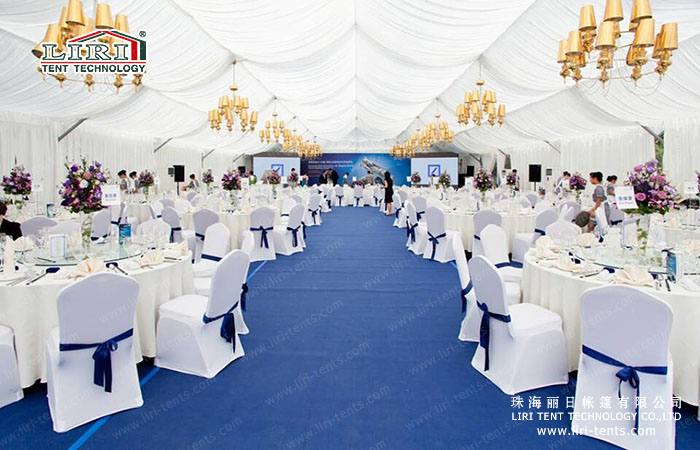
Roof profiles come in three main shapes: high peak (classic A-frame), dome (curved top), and multi-pitch. High-peak roofs deliver dramatic ceiling height in the center ideal for chandeliers and floral installations. Dome roofs offer a modern silhouette and better rain runoff. Multi-pitch designs provide increased interior volume for larger gatherings.
Wall Options: From PVC to Glass Panels
Unlike the solid walls of a traditional building, wedding tents offer interchangeable sidewall systems. Standard options include:
- PVC fabric walls — Opaque white or cream, wind-resistant, cost-effective
- Clear PVC walls — Transparent panels that let in natural light while protecting from wind
- Reinforced glass walls — Permanent-venue look with full visibility, higher upfront cost
- Mesh walls — Airflow-friendly option for warm-weather events
For couples looking to balance aesthetics and budget, a outdoor wedding tent sizing guide helps match wall type to seasonal conditions and guest expectations.
Interior Decor and Theme Flexibility
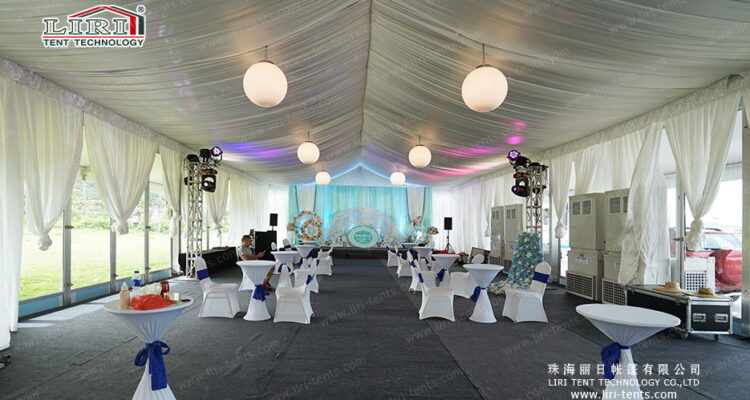
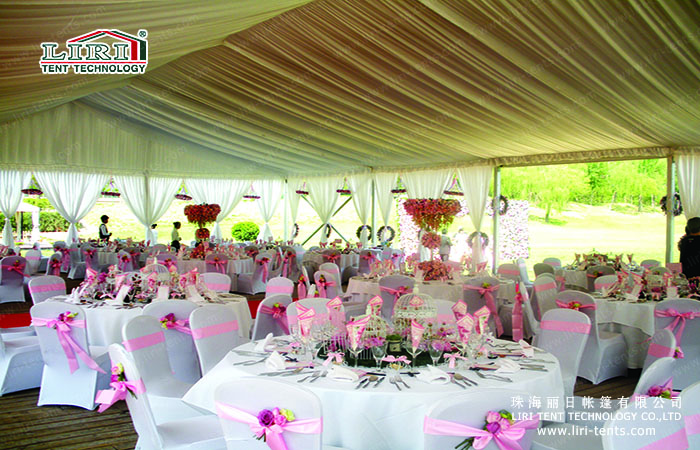
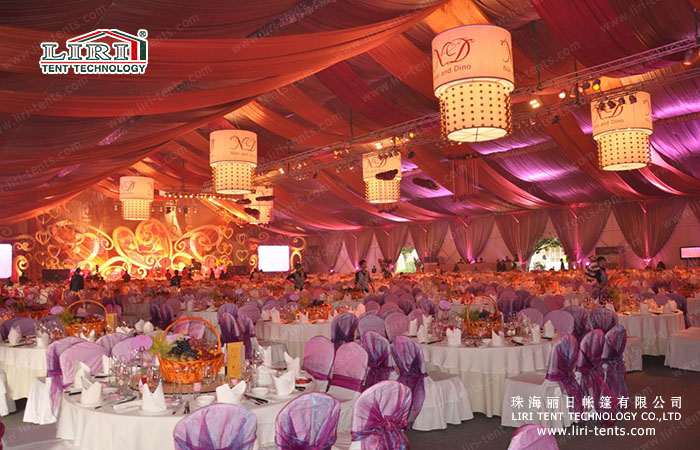
A popular wedding tent is essentially a blank canvas. The interior can be adapted to any theme through roof liners, sidewall draping, lighting, and furniture. Color choices set the mood: purple for elegance, pink for romance, white for prestige, and red for festivity. A pleated roof liner transforms the ceiling from bare fabric into a refined interior surface, while side curtains soften the edges and hide the frame.
Lighting is where the biggest visual impact happens. By placing colored spotlights or LED uplights around the perimeter, the whole space shifts from a functional shelter to an atmospheric venue. For evening receptions, warm white or amber lighting creates a castle-like glow that photographs beautifully.
Entrance decor deserves special attention—it’s the first thing guests see. A well-dressed entrance with flower arches, a welcome table, and a photo wall sets expectations before guests even step inside. Investing in entrance design pays off in first impressions and photo opportunities.
Budget Management for 200-Plus Guest Weddings
Guest counts above 200 strain most venue budgets. A popular wedding tent solution offers a clear financial advantage: instead of paying per-head venue fees, you rent one structure and control everything else separately. A large event tent suitable for 250 guests typically costs between USD 3,500 and USD 7,500 to rent, inclusive of setup, basic flooring, and lighting. The same-sized event in a hotel ballroom in a comparable market would cost twice that or more for the space alone.
Additional savings come from the ability to bring in outside caterers, decorators, and entertainment—many traditional venues require in-house vendors at premium rates. A wedding tent lets you negotiate each service independently, which typically reduces overall expenditure by 20% to 35% compared to all-inclusive venue packages.
DIY-Friendly Assembly for Private Events
Many smaller wedding tents (up to 6m span) are designed for DIY assembly with three to four people and basic tools. Frame sections connect via bolted brackets, and the fabric roof is tensioned with ratchet straps. For private landowners and small-scale event organizers, this means no installation crew required. Assembly time for a 6m × 9m tent runs about four to six hours for a first-time builder.
For larger structures (10m to 12m span), professional installation is recommended. Most rental companies include setup and teardown in their pricing, with timelines of two to three days depending on site conditions. As highlighted in how to rent a cheaper wedding tent, off-peak season bookings (late fall through early spring in most regions) can bring additional discounts of 15% to 25% off regular rates.
Frequently Asked Questions
What is the most commonly rented size for a wedding tent?
The most popular wedding tent size is 10m × 20m, which accommodates 150 to 200 guests seated at round tables with a dance floor. For smaller events, 6m × 9m tents are widely used for backyard weddings.
Are wedding tents suitable for windy locations?
Modern aluminum-frame wedding tents are engineered for wind loads of 80 to 100 km/h when properly anchored with ground stakes or ballast weights. Site assessment by the rental company determines the required anchoring method.
Can I install a wedding tent myself?
Smaller tents up to 6m span are designed for DIY assembly with three to four people. Larger tents require professional installation due to frame weight, fabric tensioning, and safety requirements.
What is the recommended flooring for a wedding tent?
For uneven ground, plywood or composite subflooring creates a level surface. For flat lawns, vinyl dance floors over temporary mats work well. Solid wood composite flooring provides the most premium feel.
How do I decorate a wedding tent on a tight budget?
Focus on three high-impact areas: ceiling pleated liners (largest visual surface), perimeter uplighting (transforms ambiance instantly), and entrance decor (first impression). These three elements deliver roughly 80% of the visual result for about 40% of a full decor budget.
Do I need a permit to set up a wedding tent?
Permit requirements vary by municipality. Most areas require a permit for tents larger than 10m span or those with more than 100 occupants. Your tent rental company typically handles the permit application as part of their service.
Get a Quote for Popular Wedding Tents
Tell us your guest count, event date, and preferred location. We’ll recommend the right tent size, frame type, and decor package within 24 hours.