Why More Couples Choose Outdoor Wedding Venues
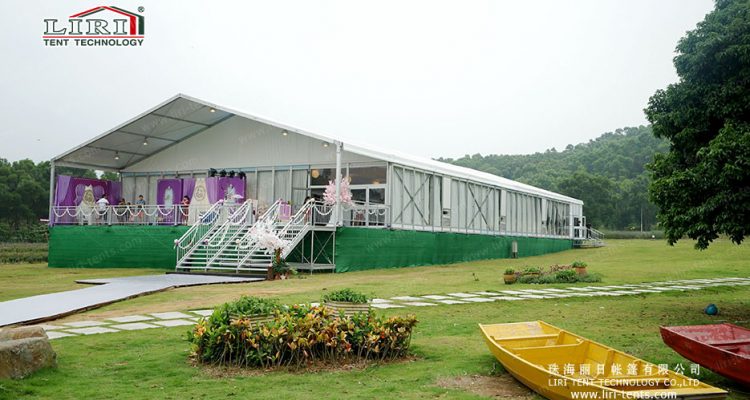
The traditional hotel ballroom is no longer the default choice for weddings. More couples are looking for venues that offer flexibility, character, and a connection to the outdoors. An outdoor wedding venue—especially one centered around a tent or marquee—delivers all three at a cost that often beats indoor alternatives.
Outdoor venues let you design the entire look and feel of your wedding. You choose the layout, the lighting, the flooring, and the backdrop. No two outdoor weddings need to look the same. And because the venue is temporary, you are not limited by the fixed decor of a banquet hall or hotel ballroom.
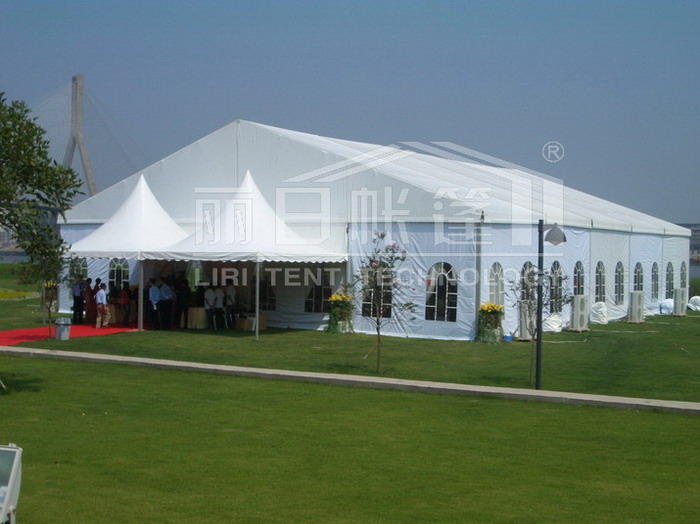
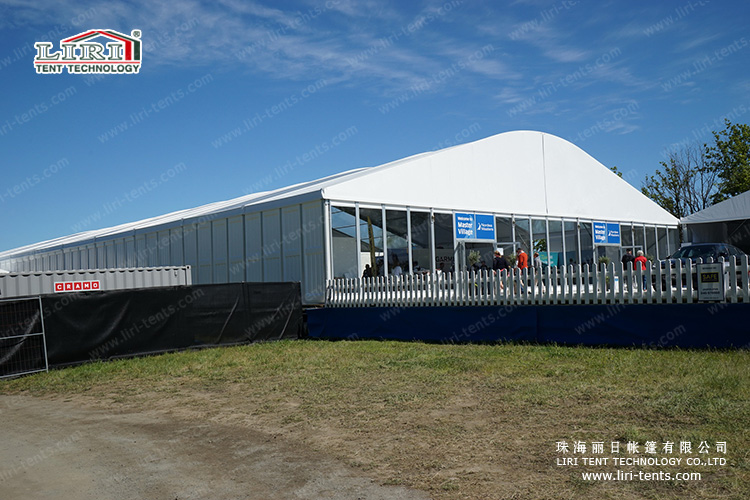
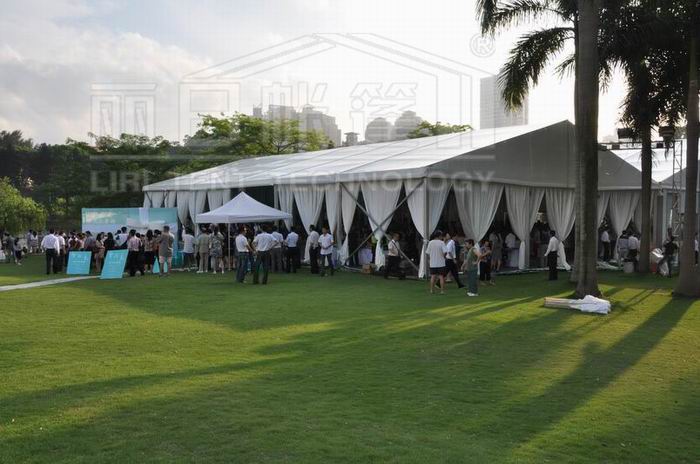
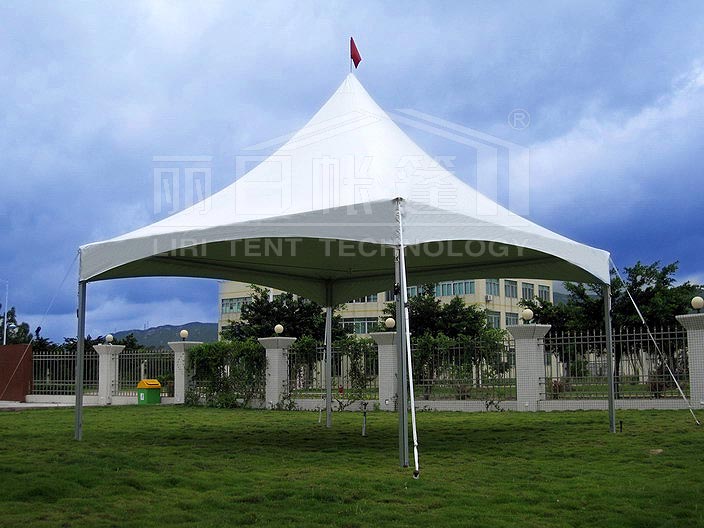
When comparing options, look into a wedding tent venue as a practical alternative that combines outdoor charm with weather protection.
Comparing Venue Costs: Outdoor vs. Indoor
Cost is one of the main reasons couples shift toward outdoor wedding venues. A hotel ballroom often charges a venue fee that covers nothing beyond the empty space. Catering minimums, decor restrictions, and corkage fees add up quickly. An outdoor tent venue typically includes the structure, flooring, and basic climate control in a single package.
Here is a rough comparison for a 200-guest wedding:
Indoor banquet hall costs include a venue rental fee of $2,000–$5,000 plus food minimums starting at $80–$150 per person—often exceeding $20,000 total. An outdoor wedding tent setup costs $3,000–$8,000 for the structure, flooring, and lighting combined. The tent IS the venue, so there is no separate venue rental fee.
For a budget-friendly approach, browse outdoor wedding venue ideas that work with different tent sizes and locations.
Choosing the Right Location
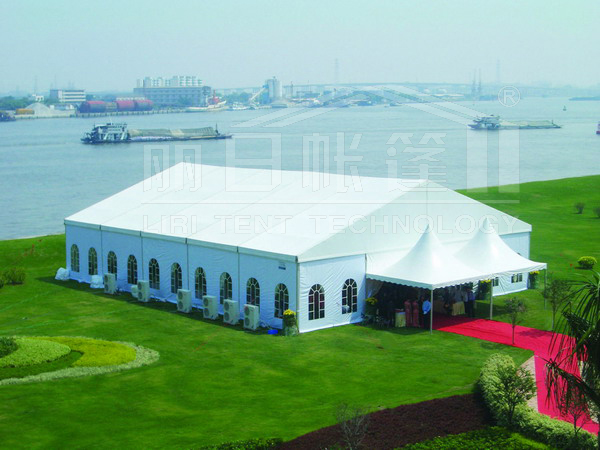
The location of your outdoor wedding matters as much as the tent itself. Parks near the city are the most convenient option. They offer easy access for guests, parking, and basic amenities like restrooms. Lakeside venues provide a natural scenic backdrop. Countryside or farm settings offer open space and privacy.
When evaluating a location, check for level ground. Uneven terrain requires platform flooring. Access for delivery trucks matters—tent frames need to reach the setup area. Some parks require permits for temporary structures, so check local regulations early. For coastal or open field locations, wind exposure is a factor. Frame tents anchor well in moderate wind, but exposed hilltops may need extra ballast.
Essential Decorations for Your Wedding Tent
Once the location and tent are sorted, the decoration choices bring the venue to life. Roof linings create a finished ceiling that hides the frame structure. Creased fabric linings in white or champagne are the most popular option for formal weddings.
Flooring choices affect both the look and comfort. Wooden floors give an upscale feel. Carpet is more affordable and comes in many colors. Artificial grass works well for rustic or garden themes. A raised floor also keeps guests above wet ground if the weather turns.
Lighting is the element with the highest visual impact per dollar spent. String lights across the ceiling create warmth. Uplights along the walls let you change the tent color to match your theme. Chandeliers work well over the head table or dance floor for a formal touch.
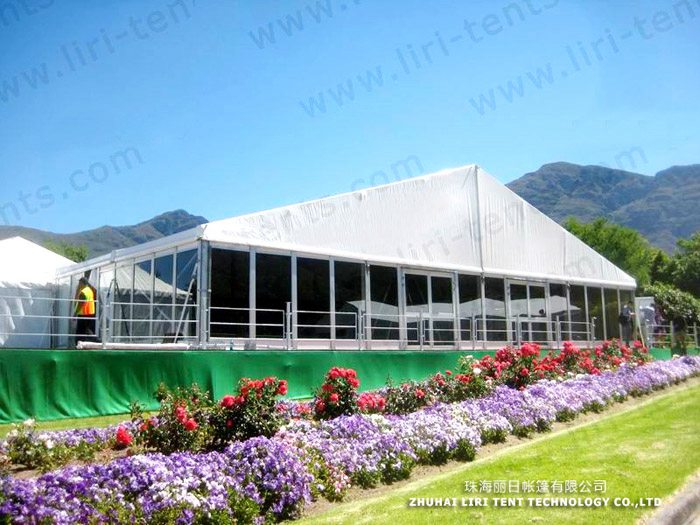
Glass walls or clear PVC panels connect the interior with the outdoors. They let natural light in during the day and turn the tent into a glowing space at night. ABS wall panels provide full weather protection when needed.
Get more ideas from our wedding tent decoration guide for practical, budget-friendly suggestions.
Guest Capacity and Tent Sizing
For a seated dinner with round tables, allow about 1.5 square meters per person. For cocktail-style receptions, allow 1 square meter. A 10m x 20m tent seats about 130 guests for dinner or 200 for a cocktail reception. A 15m x 30m tent seats about 300 for dinner. These numbers assume space for a dance floor, head table, and buffet area.
Clear-span tents offer the most efficient use of floor space because there are no interior poles. Frame tents also offer column-free interiors. Peak tents and pole tents may have center supports that reduce usable floor space.
For large celebrations, consider a large wedding tent that can accommodate 500+ guests with room for a stage, dance floor, and catering stations.
When to Start Planning
Start looking at venues 8–12 months before your wedding date. Tent rental companies need at least 4–6 weeks for custom orders. Site visits should happen at the same time of day as your planned ceremony—visit at least twice to check sun position and wind patterns.
If you are working with a wedding planner, involve them early in the venue selection process.
Frequently Asked Questions
Is an outdoor wedding tent cheaper than a hotel ballroom?
Usually yes. A complete tent package for 200 guests often costs $3,000–$8,000. Hotel venue fees alone can be $2,000–$5,000 without any decor included.
What if it rains on my outdoor wedding day?
A wedding tent with full side walls and a waterproof PVC roof keeps guests dry. Most tent suppliers offer side walls as a standard option.
How far in advance should I book a wedding tent?
Book 4–6 months ahead for standard sizes. Custom sizes need 8–12 weeks. Peak wedding season requires earlier reservations.
Can I have an outdoor wedding in winter?
Yes, with the right tent and heating. Frame tents with insulated side panels and portable heaters create a comfortable environment even in cold weather.
Contact Us
Fill in the form below to discuss your outdoor wedding venue plans. Check our outdoor wedding tent ideas for inspiration.
Compare venue options with our wedding venue guide for pricing and layout tips.
Not sure which tent fits your wedding size? Check our wedding tent sizing guide for recommendations based on guest count.