Why a Tented Wedding Works
A tented wedding gives you control that a fixed venue simply cannot match. You pick the setting — a family estate, a beachfront, a quiet garden — and the tent shapes itself around your vision, not the other way around. This flexibility is why outdoor tented celebrations have become the go-to for couples who want something personal rather than a carbon-copy ballroom event.
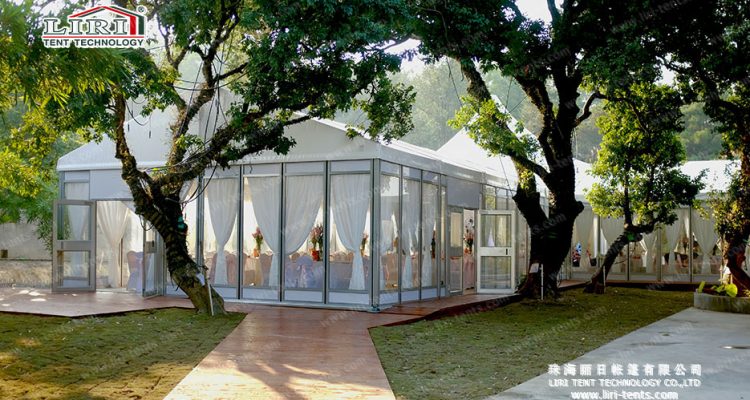
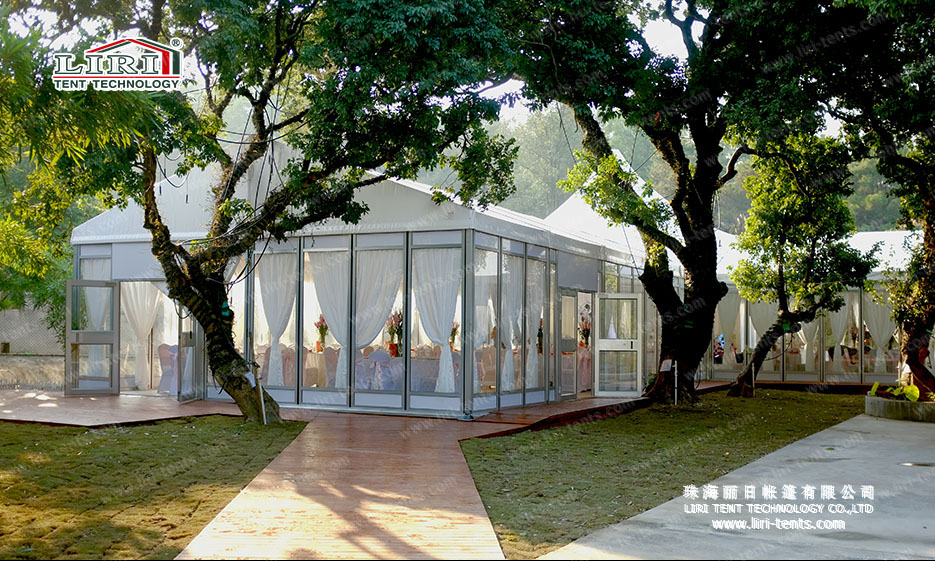
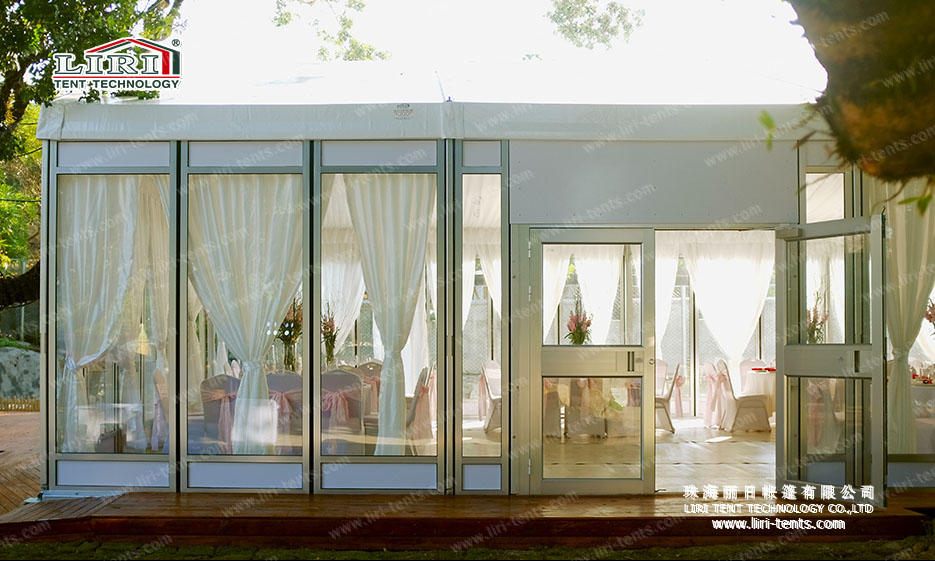
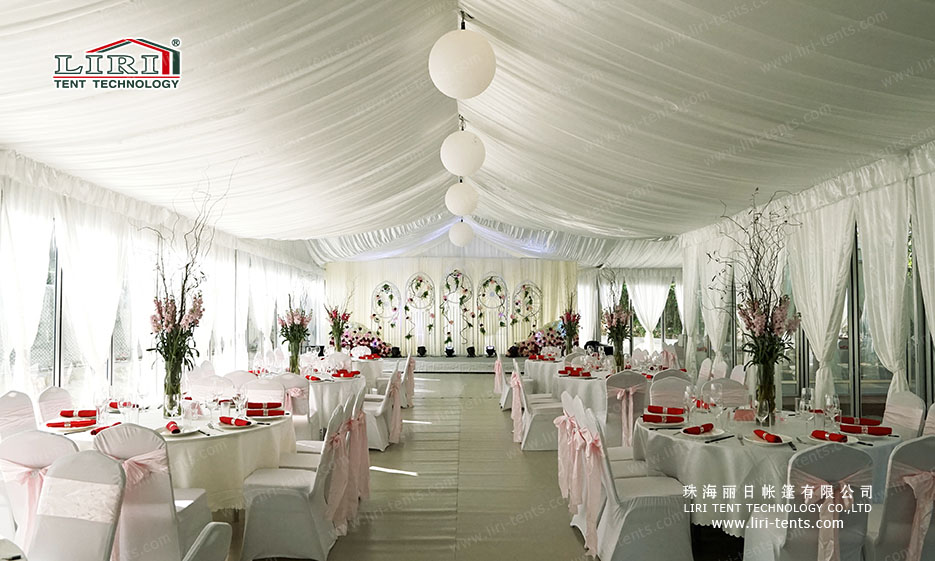
The tent in the photo shows what a fully kitted-out setup looks like: a custom structure combining high-peak and A-frame profiles, dressed with roof lining, glass walls, glass doors, layered lighting, and finished flooring — the kind of setting that signals a custom-built venue rather than a temporary shelter. That is the whole point of a well-specified wedding tent — it disappears into the experience while doing the heavy lifting behind the scenes.
Choosing Tent Style, Size, and Setup
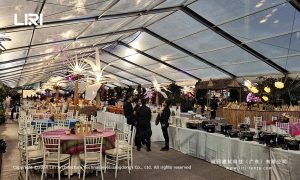
A tented wedding works for any scale. An intimate group of 40 can feel cozy under a single pagoda-style structure, while 400 guests spread across a clear-span frame tent still feel connected to the open sky. The trick is matching the tent profile to both the guest count and the site. A outdoor wedding tent with transparent roof panels lets you steal the sunset; a solid white roof gives you total climate control regardless of what the weather does.
Style options run deeper than most people realize. Beyond the classic A-frame and high-peak profiles, there are dome tents that create a cathedral-like interior, arcum tents with their distinctive curved silhouette, polygon structures for geometric drama, and geodesic domes that turn a reception into a conversation piece. Fabric colors range from crisp white and soft ivory to bolder choices that suit themed weddings — deep navy for evening glamour, sage green for garden affairs. The accessories layer completes the picture: glass walls blur the boundary between indoors and outdoors, roof linings in cream or champagne warm up the ceiling plane, and modular flooring systems make uneven ground a non-issue.
On the rental-versus-purchase question, the math depends on your model. If you are a venue operator or event planner running multiple weddings per season, owning a tent for hire inventory pays for itself within a couple of seasons. For a one-off celebration, rental is the obvious route — you get a fully installed, professionally dressed structure for a fraction of the capital cost. Either way, working with a supplier who handles everything from engineering drawings to onsite installation means you focus on the celebration, not the logistics.
The structural side matters too. Aluminum frame tents with 6061-T6 alloy profiles handle wind loads that would worry a pole tent. Clear-span designs eliminate interior columns so your floor plan flows without obstruction. Modular bay systems let you scale from a compact ceremony tent to a full reception-and-dining complex simply by adding bays. For venues in coastal or high-wind areas, these engineering details are not nice-to-haves — they are what keeps the party going when conditions turn.
A tented wedding, done right, does not feel like a compromise. It feels like the venue was custom-built for that specific celebration — because, in a real sense, it was. Luxury wedding tents for sale and rental programs both serve the same goal: a wedding space that belongs entirely to the couple and their guests, with no shared lobby, no competing events down the hall, and no clock watching from the venue manager.
Frequently Asked Questions
How long does it take to set up a wedding tent?
A standard frame tent for 100-200 guests typically takes a crew of three to four people one full day. Larger custom structures with glass walls, flooring, and extensive lighting may need two to three days. The supplier should handle site survey, engineering approval (if required by local code), and complete installation and dismantling.
What happens if it rains during a tented wedding?
A properly engineered aluminum frame tent with sealed roof panels and sidewalls handles rain without issue. The key is solid sidewall attachment — clip-on PVC walls create a watertight envelope, and gutter systems at the eaves channel water away from entrances. Adding flooring that sits a few centimeters above ground level prevents any water ingress.
Can I have a tented wedding in winter?
Absolutely. Winter tented weddings use double-layer roofs for insulation, hard sidewalls (glass or solid PVC) instead of mesh, and forced-air heating units placed discreetly around the perimeter. Many suppliers offer transparent wall panels so you keep the winter landscape visible while maintaining indoor comfort. The tent effectively becomes a temporary heated venue.
Do I need a permit for a wedding tent?
Requirements vary by location. Most municipalities treat temporary structures under 400 square meters as exempt, but larger tents often need a structural permit and possibly a fire safety inspection. A reliable tent rental provider handles permits as part of their service — confirm this during your initial consultation.