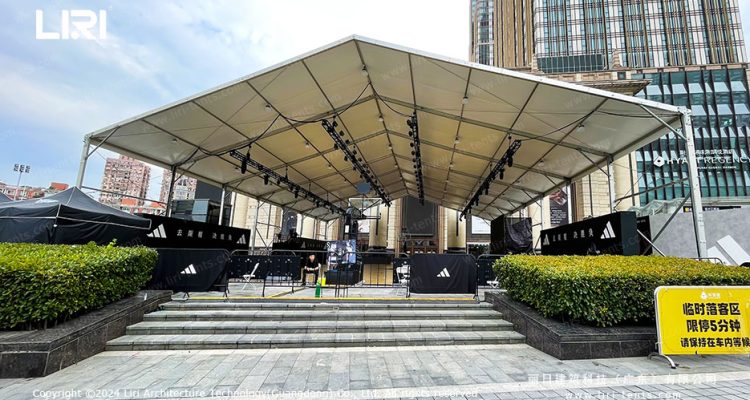
Most wedding tent damage is not caused by the wedding. It is caused by the way the structure was packed on the Monday after, and by the fact that nobody wrote down what state it was in when it went into the rack. That is the part of fleet ownership that never appears in a brochure, and it is the part that decides whether a marquee is still earning in year six or quietly costing money every time it is booked.
What actually fails first in a wedding tent fleet
Rental operators tend to expect the roof to go first. In practice the roof is usually the last thing to fail, because it is the most visible and the most carefully handled. The quiet failures sit underneath it.
Keder that has been pulled through a track at the wrong angle wears at the same few centimetres until the bead will not stay seated. Truss pins go missing one build at a time and are replaced with whatever fits. Base plates bend on asphalt and are straightened with a hammer. Ratchet straps lose their stitching before they lose their tension. None of these stops a build. All of them shorten the life of the parts around them.
The result is a structure that still looks acceptable and is no longer worth what the balance sheet says. Fleet managers who track this early treat it as an operating problem, not a maintenance problem.
A three-tier inspection cycle that fits a rental calendar
A single annual service is the wrong shape for a rental fleet, because most failures are introduced between events rather than during the season. Three tiers work better, and each one takes a different amount of time.
Tier 1, pre-season. Every unit is built once, fully, before the first booking. This is the only time in the year when it is economic to find a problem, because the crew is not under event pressure. Check the roof under tension, walk the bays, inspect every leg, and note anything that needs a part.
Tier 2, between events. A short check at pack-down, done by the crew that just dismantled the structure. Ten minutes per unit, recorded, covering keder seating, missing pins, bent plates and damaged wall fixings. This is where most repair work should be identified.
Tier 3, post-season. Full clean, full dry, hardware count, and a written condition note per unit before storage. Anything that failed during the season is repaired now rather than in the week before the next one.
The cadence above is a workable operating default rather than a manufacturer instruction. Where a structure is used by the public, the reference standard in Europe, EN 13782, expects inspection and documentation as part of operating a temporary structure, and local requirements can go further. The point is not the exact interval. The point is that the check has an owner and a record.
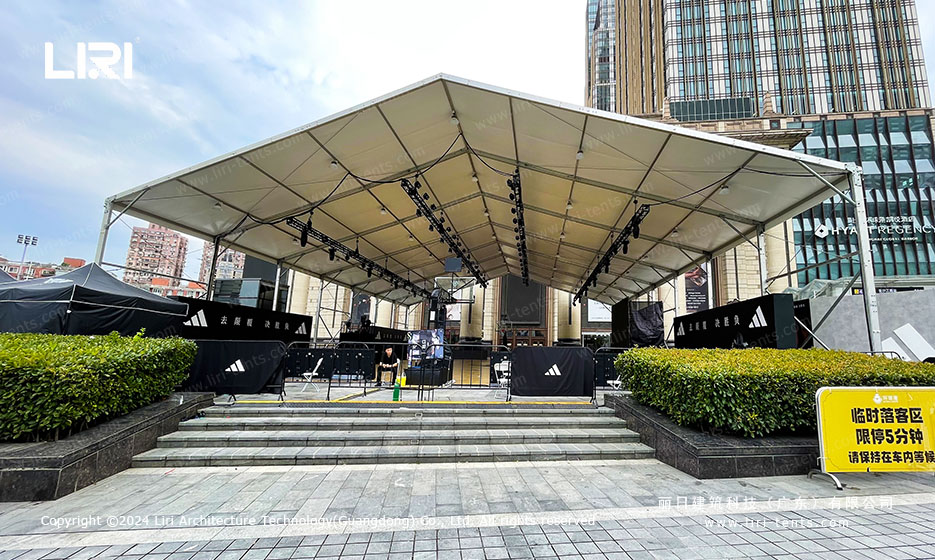
Fleets that buy across several structure types should apply the same three tiers to each family in the commercial wedding tent range, because the failure points differ by roof shape and wall system.
Cleaning PVC without shortening its life
Cleaning is where well-intentioned crews do the most damage. The membrane is a coated fabric, and the coating keeps it waterproof. Abrasion and solvents attack the coating, not the dirt.
Fresh water and a pH-neutral detergent remove almost everything a wedding leaves behind, including food, drink and candle residue. A soft brush on a pole is enough. Solvent-based cleaners, aggressive degreasers and high-pressure jets directed at seams all remove coating along with the stain, and the damage only becomes visible a season later when the surface starts to chalk.
Two habits matter more than any product choice. First, never fold or roll a membrane that is damp. Water trapped in a fold is how mould starts, and mould stains are permanent in a coated fabric. Second, dry the roof fully before storage, even if it means leaving it on the frame under tension for a day after the event.
Frame, joints and hardware: the quiet failures
Aluminium does not rust, which is why frame maintenance gets skipped. It does corrode in coastal air, and the fittings around it wear regardless. Run these checks at Tier 2 and Tier 3:
- truss pins and clips: present, straight, and the correct part
- keder track ends: no burrs, no lifting, bead seats fully along the length
- base plates: flat, holes not elongated, no field straightening marks
- ratchets and straps: stitching intact, no UV cracking on the webbing
- wall fixings and bungee points: still attached, not stretched or missing
- legs and joints: no elongation at the bolt holes, which is the first sign of repeated overload
Consumables are the cheapest insurance in the fleet. A box of correct pins costs less than an hour of a crew’s time, and far less than a build that stops because a rafter will not lock. The aluminium frame construction guide explains how the joints are meant to seat, which is what the crew is checking against.
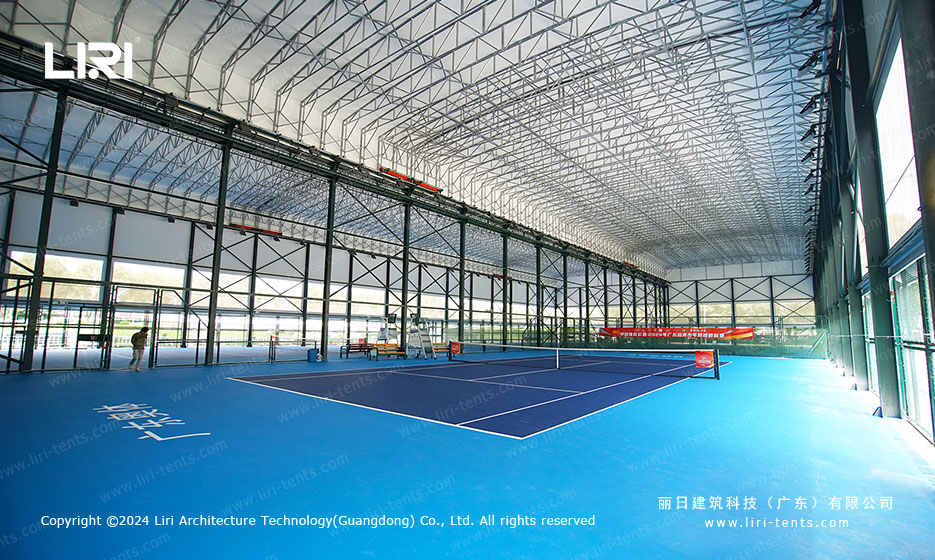
Storing structures between seasons
Storage decides how much of the maintenance work survives the winter. Four rules cover most of it.
Store dry, and store off the floor. A membrane or a wall panel sitting directly on concrete pulls moisture. Store out of direct sun, because UV exposure continues in storage and is the main driver of membrane ageing. Store with tension released, so the roof is not held stretched for months at a time.
For venues and hotels that keep a structure up for a long season rather than packing it away, the routine changes: the checks become monthly rather than per event, and drainage around the legs matters more than storage discipline. Operators running hotel and resort wedding installations usually need both patterns at once, with some units stored and some standing.
Records that protect resale and insurance value
A rental fleet without records is valued on appearance. A fleet with records is valued on history, and the difference shows up at resale, at insurance renewal and after any incident.
One page per unit is enough. Record the unit number, the structure type and the purchase date, then log every repair, every replaced part and every condition note from the three tiers above. Add photographs at pre-season and post-season. Keep the file with the structure documentation and the anchoring plan, not in a crew WhatsApp group.
That record converts a maintenance habit into an asset record, and gives an insurer or licensing authority something to read that is not a verbal assurance.
When a unit should be retired instead of repaired
Fleets keep structures too long for the same reason people keep cars too long: repair is cheaper than replacement, until it is not. Three signals justify retirement.
The first is repeat failure in the same place, which usually means the part is no longer holding its shape. The second is a membrane that no longer cleans up, because staining that will not lift is a coating problem, not a dirt problem. The third is a unit that is consistently booked for the smallest events because clients no longer trust it for the good ones.
At that point the decision is commercial, not technical, and it needs replacement cost in front of you. The wedding tent cost breakdown is the right place to start that comparison, with freight and installation included rather than structure only.
Frequently asked questions
How often should a rental wedding tent be cleaned?
After every event where the roof met food, drink or candle smoke, and fully at season close. Frequency matters less than drying properly, which protects the coating and prevents mould.
Can a pressure washer be used on the roof?
Not at close range and not on seams. High pressure lifts coating and forces water into stitched areas. Low pressure with a fan nozzle and a pH-neutral detergent is the safer method.
How long does a wedding tent membrane last?
It depends on UV exposure, how the roof is stored and how it is cleaned, so no honest figure can be given without the specific membrane documentation. Ask the supplier what the membrane is rated for and keep that document with the unit record.
If you run a fleet and want to set a service interval that matches your booking pattern, tell us how many structures you hold, which types, and how often they are rebuilt. Send your fleet details to our team and we will come back with the spares list and inspection points worth adding to your own schedule.