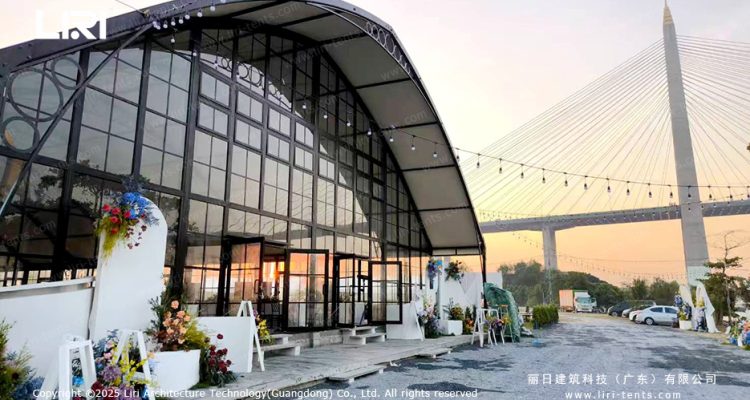
Luxury wedding venues face a consistent challenge: how do you offer something more flexible than a fixed ballroom and more dependable than a temporary event canopy? Couples today want an outdoor atmosphere without giving up comfort, polished aesthetics, or reliable weather protection. At the same time, venue operators need spaces that scale across different guest counts, strengthen their event packaging, and turn underused lawns, courtyards, and waterfront plots into revenue-generating assets.
This is where modular wedding tents come into their own. A genuine modular structure is not a camping tent and not a low-grade party shelter. It is a scalable venue system engineered for premium hospitality use — built around aluminum framing, optional glass wall systems, integrated flooring, lighting compatibility, and the ability to transform almost any outdoor site into a refined wedding environment.
What Makes Modular Wedding Tents Different From Standard Event Tents?
The word “modular” carries real engineering meaning here. It describes a structure built as a repeatable system of bays, frames, panels, and accessories that can be expanded, reconfigured, upgraded, and redeployed for different venue requirements. Instead of committing to a permanent event hall, a venue gains a luxury wedding space with faster deployment and significantly greater layout flexibility.
Key characteristics that separate modular systems from basic party tents:
- Expandable footprint: Venues can increase or decrease the structure length depending on event size, seasonal demand, or booking configuration. A 20-meter bay can become 30 meters next season without starting from scratch.
- Clear span interiors: The absence of obstructive internal poles creates a clean, uninterrupted room layout — essential for long-table receptions, dance floors, and sightline-sensitive ceremony staging.
- Venue-grade finishing options: Glass walls, hard wall panels, raised flooring systems, ceiling draping, climate control integration, and decorative lighting tracks can all be incorporated.
- Multi-use operational flexibility: The same site can host formal seated banquets one weekend, cocktail receptions the next, and private corporate events between wedding seasons.
For hotels, destination resorts, wedding estates, and professional event operators, this flexibility often matters as much as the structure itself. The strongest modular systems are planned like real venue products — not treated as one-off tent rentals.
Why Luxury Venues Are Investing in Modular Wedding Tents
Modular wedding tents help venues solve two problems simultaneously: limited indoor capacity and unreliable outdoor weather. Rather than turning away larger bookings or accepting a weak backup plan, operators can offer couples a dedicated outdoor venue product with genuine commercial substance behind it.
Commercial benefits driving adoption across the hospitality sector:
- More bookable inventory: A lawn, garden, or courtyard transforms into a premium event space with defined pricing and package value.
- Higher per-event revenue: Venues can upsell a signature tented wedding experience — complete with climate control, lighting design, and panoramic views — at a premium over a standard function room.
- Reduced weather-related cancellations: Rain, excessive sun, wind gusts, and temperature swings become manageable rather than revenue-destroying.
- Brand differentiation: A glass-walled modular marquee set against a coastal or estate backdrop creates photography that distinguishes a venue from competitors still relying on indoor halls.
- Seasonal adaptability: Structures can serve peak wedding months and then pivot to summer gala dinners, holiday corporate events, or multi-use hospitality programming.
Data from the global wedding industry supports this shift. According to The Knot’s 2025 Real Weddings Study, outdoor and tented weddings now account for over 35% of luxury wedding bookings in North America, with couples willing to spend 20-30% more on venues offering distinctive outdoor spaces with full weather protection. For operators, this represents a clear revenue signal.
Design Features That Shape Guest Experience
A modular wedding tent performs best when it is conceived as a complete venue environment rather than merely a covered area. Couples remember light quality, spatial flow, comfort levels, sightlines, ceiling height, and the overall feeling the room creates once guests arrive. The best modular structures support every one of those experiential details.
Open Banquet Layouts Without Compromise
Clear span engineering — where the roof load is carried by perimeter framing rather than interior columns — makes it straightforward to design long-table feasts, round-table banquets, dedicated dance floors, bar installations, floral arches, and stage areas without awkward obstructions. Wedding planners who value symmetry and uninterrupted photography sightlines consistently prefer this configuration.
Glass Walls and Architectural Facades
Many of the strongest modular wedding tent designs incorporate glass-rich side elevations, hard wall systems, or transparent PVC panels with UV treatment. These create a cleaner, more architectural presence than basic white event tents and help the structure read as a true venue rather than a temporary shelter. Options range from clear tempered glass panels to framed window walls that can open partially for natural ventilation.
Flooring, Lighting, and Finish Integration
Luxury weddings demand more than a roof overhead. Engineered flooring systems — from polished hardwood-look planks to neutral-toned composite decking — define the room. Ceremony platforms, decorative backdrops, entry sequencing through framed doorways, and integrated lighting tracks all contribute to the final atmosphere. A modular system delivers best results when these finish layers are planned together from the start rather than added as afterthoughts.
Climate Control and Acoustic Management
For venues operating in regions with temperature extremes, modular tents can accommodate HVAC integration, insulated wall panels, and acoustic ceiling treatments that absorb sound and reduce echo. These features narrow the gap between a temporary structure and a permanent built venue — often at a fraction of the construction timeline and capital cost.
Operational Advantages for Hotels, Resorts, and Venue Operators
From an operator’s perspective, the value of modular wedding tents extends well beyond aesthetics. These structures can remove the commercial constraints of fixed-space hospitality properties and create a more scalable outdoor events program.
- Faster deployment than permanent construction: A modular venue can be installed in weeks rather than the months or years required for a traditional extension project. This means new revenue starts flowing significantly sooner.
- Minimal property disruption: Outdoor wedding capacity can be added without heavily altering existing buildings, landscaping, or guest areas. This is particularly valuable for historically protected estates and operating resorts that cannot afford construction downtime.
- Adaptable site utilization: Grass lawns, gravel courtyards, waterfront edges, and scenic open areas become usable event inventory rather than wasted square footage.
- Broader event format support: The same modular structure can accommodate wedding ceremonies, receptions, welcome dinners, gala events, corporate brand activations, and private milestone celebrations.
This versatility explains why modular wedding tents are gaining traction among destination wedding properties and luxury outdoor venues across Europe, the Middle East, Southeast Asia, and North America. They support a better business model — not just a prettier event backdrop.
Can Modular Wedding Tents Work on Difficult Sites?
Yes — provided the site assessment and engineering are handled correctly. One of the biggest advantages of a modular structure is its adaptability to installation conditions that would complicate or preclude traditional built halls. With the appropriate flooring system, base anchoring solution, and engineering design, operators can work with lawns, estate grounds, waterfront locations, hillside terraces, and other premium outdoor settings.
That said, practical site evaluation remains essential before committing to installation. Critical factors include:
- Access width and delivery route for structural components
- Ground stability, drainage patterns, and level changes
- Wind exposure classification for the specific geographic location
- Local building regulations, permit requirements, and fire safety codes
- Service logistics: power supply, water access, waste management
Reputable modular tent suppliers do not simply sell a tent footprint. They assess whether a given site can genuinely operate as a high-end wedding venue and recommend the right foundation, anchoring, and accessory configuration to match those conditions.
What to Ask Before Choosing a Modular Wedding Tent Supplier
If you are purchasing for a hotel, resort, rental business, or event venue, the supplier’s capability matters as much as the structure itself. Before moving forward, ask questions that affect real-world operation:
- What span widths and length configurations are available, and how do they scale for different guest counts?
- What wall systems, glazing options, and entry solutions can be fully integrated without retrofit work?
- Can the structure support raised flooring, professional lighting rigs, climate control units, and decorative interior upgrades?
- What wind load ratings and weather specifications are certified for your target operating region?
- How is the structure packed, shipped, installed, and maintained over multiple seasons of use?
- Can the system be extended later if the venue expands its event program or seasonal demand grows?
- What warranty coverage, spare parts availability, and after-sales engineering support are included?
These questions help separate true modular wedding tent systems from low-grade event tents that may photograph acceptably but perform poorly under sustained luxury venue use.
Best Use Cases for Modular Wedding Tents
- Luxury resorts seeking to sell outdoor wedding packages with dependable weather backup and premium presentation.
- Private wedding estates and manor houses that need elegant temporary structures without permanent construction or heritage restrictions.
- Waterfront venues where panoramic views are central to the experience and a glass-forward marquee enhances rather than obstructs the setting.
- Rental companies serving high-end banquet clients, hotel partnerships, and destination wedding planners.
- Hospitality groups that want a reusable modular venue asset deployable across seasonal programming and multiple property locations.
Frequently Asked Questions
How long does it take to install a modular wedding tent?
A standard modular wedding tent for 150-300 guests can typically be installed within 1-2 weeks, depending on site preparation, access conditions, and the complexity of integrated systems like flooring, glass walls, and climate control. This is dramatically faster than permanent construction, which often requires 6-18 months.
What is the typical lifespan of a modular wedding tent structure?
High-quality modular tent structures built with 6061-T6 aluminum alloy frames and double-coated PVC fabric can serve for 15-20 years with proper maintenance. The aluminum framework itself can last indefinitely when regularly inspected and cleaned. Fabric panels may need replacement every 8-12 years depending on UV exposure and usage intensity.
Can modular wedding tents withstand strong winds and heavy rain?
Yes. Professional modular wedding tents are engineered to meet specific wind load ratings — typically 80-100 km/h (50-62 mph) for standard configurations, with reinforced options available for higher wind zones. Proper anchoring, tensioning, and drainage design are essential. Always verify the supplier’s engineering certification for your specific geographic conditions.
What size modular tent do I need for a wedding?
As a general guideline: a 10m x 20m (200 sqm) structure comfortably hosts 120-150 seated guests with space for a dance floor. A 15m x 30m (450 sqm) configuration accommodates 250-300 guests. Add approximately 30% more floor area if you plan to include a stage, buffet stations, and a bar area. Always work with your tent supplier to model the exact layout based on your guest count and event format.
Are modular wedding tents suitable for winter weddings?
Absolutely — when properly equipped. Winter-ready configurations include double-layer insulated roof and wall panels, integrated heating systems (forced air or radiant), sealed flooring with insulation, and vestibule entries that prevent heat loss when guests arrive. Some suppliers offer snow-load-rated roof designs for regions with heavy winter precipitation.
Venue operator decision support
Define the operating model before selecting a modular venue
Recurring wedding programme
List the layouts the venue will repeat, the zones that may expand or separate, seasonal enclosure, reset time, service access, and the storage plan. Modular value depends on a usable operating pattern, not expansion capability alone.
Asset responsibility
Assign ownership of component records, inspection, cleaning, repairs, packing, storage, transport, crew training, installation supervision, accessory compatibility, and replacement-part ordering throughout the asset life.