You’ve booked the band, picked the menu, and sent out invites. Now you need a venue that can actually fit everyone comfortably — without blowing the budget on some overpriced hotel ballroom.
A large frame tent gives you that. No interior poles getting in the way, no low ceilings killing the vibe. Just open space you can arrange however you want.
Frame tents have become the go-to choice for banquet-style weddings for one simple reason: they work. The aluminum frame wedding tents we’re talking about here are modular — you can size them up or down depending on your guest count, the venue shape, and how much dancing room you need.
Why Frame Tents Beat Traditional Venues
Hotel ballrooms come with rules. You can’t move the chandelier. The carpet is beige. The ceiling height is what it is.
With a frame tent, you decide everything. Want floor-to-ceiling windows on three sides? Done. Prefer French doors that open onto a stone terrace? No problem.
Frame tents give you a blank canvas. The aluminum frame creates a clear span wedding marquee — meaning zero interior columns blocking sight lines. Every guest gets a clear view of the head table and the dance floor.
Flooring That Makes the Difference
Flooring is one of those things nobody thinks about until they’re standing on wet grass in heels. Don’t let that happen.
Carpet Flooring
Carpet is the budget-friendly pick. It goes down fast, costs less, and honestly looks fine once the tables and chairs are in place. For a daytime reception or a more casual banquet, it gets the job done.
Wooden Flooring
If you want the space to feel like a proper ballroom, go with wood. It adds warmth, it’s easier to walk on in formal shoes, and it elevates the whole look. Yes, it costs more — but when guests step onto a real wood floor instead of grass, they notice.
Both options work with a modular wedding tent structure — the flooring panels click into place just like the frame sections do. No custom carpentry required.
Adding Character with Entrance Structures
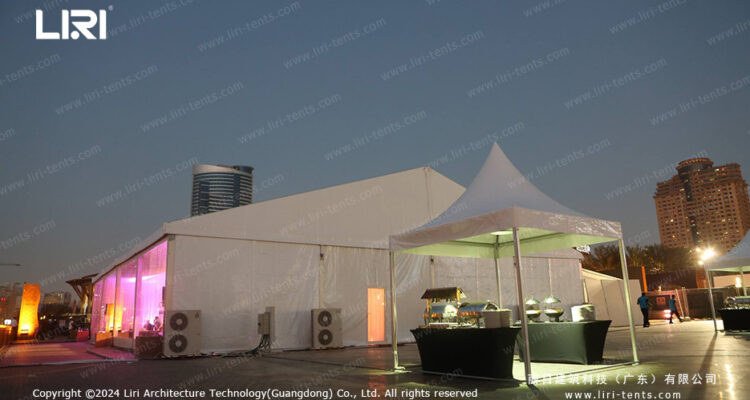
Small touches make big impressions. One thing we’ve seen work beautifully is placing smaller pagoda tents at the entrance to the main frame tent. It creates a natural flow: guests arrive, pass through a cozy welcome lounge, then step into the main banquet space.
These entrance structures also give you a place for the welcome drinks, the guest book, or a photo backdrop — without cluttering the dining area.
A Real Setup Example
Picture this: A 15m x 25m frame tent on a country estate. Wood flooring throughout. Clear sidewalls on two sides so guests can see the gardens. A small pagoda tent at the entrance for cocktails. Inside, eight round tables seating 10 each, a long head table, a dance floor, and still room for a DJ setup.
French doors open onto a stone terrace where the couple shares their first dance under string lights. That’s not a hotel ballroom — that’s a frame tent wedding.
What Size Frame Tent Do You Need?
Here’s a quick reference:
| Guest Count | Suggested Frame Tent Size | Seating Style |
|---|---|---|
| 80-100 | 10m x 20m | Round tables + dance floor |
| 120-150 | 12m x 25m | Round tables + lounge area |
| 200-250 | 15m x 30m | Round tables + stage + dance floor |
These are estimates. If you’re adding a buffet station, a bar, or a live band, you’ll want to bump up a size. Check out our frame tent layout guide for more detailed spacing recommendations.
FAQ
How long does it take to set up a large frame tent for a wedding?
For a standard 10m x 20m frame tent, a crew of 3-4 can set it up in about 4-6 hours. Larger structures (15m x 30m or bigger) typically take a full day. That includes the frame, the canopy, sidewalls, and basic flooring. We always recommend having the tent fully installed at least 24 hours before the event so the decorating team has plenty of time.
Can a frame tent handle wind and rain?
Yes — that’s actually one of the main reasons to pick a frame tent over a pole tent. The aluminum frame distributes wind load evenly, and when properly anchored, these tents can handle winds up to 80-100 km/h depending on the model. The PVC fabric roof is fully waterproof. For more details on wind resistance, see our article on aluminum frame tent durability.
What’s the difference between a frame tent and a marquee?
Frame tents and marquees are the same category of product — “marquee” is the British term, “frame tent” is more common in North America. Both refer to aluminum-framed, clear-span structures with PVC or fabric covers. The key distinction is usually in the roof style: some marquees have peaked or pagoda-style roofs, while frame tents typically have a simpler gable or flat profile. Browse our marquee tent collection to see both styles side by side.
Do I need a permit for a large frame tent at my wedding venue?
It depends on your location and the tent size. Most municipalities require a permit for temporary structures over a certain square footage — often 400-600 square feet. The tent supplier or your wedding planner should know the local rules. Frame tents are usually classified as temporary structures, which have simpler permit requirements than permanent buildings.