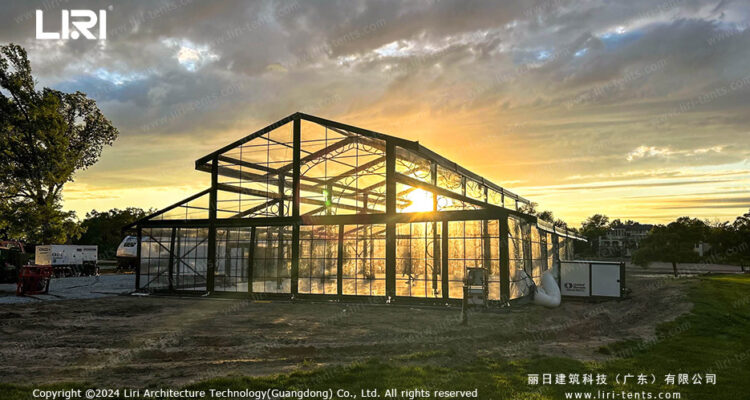
You’ve seen the photos. Rows of long tables under a glass-like roof, chandeliers hanging from dark aluminum beams, and guests comfortable no matter what the sky decides to do. That’s what a well-chosen orangery tent delivers. And if you are planning a wedding or running a venue business, the aluminum orangery tent deserves a hard look before you commit to anything else.
A friend of mine runs a small estate venue in the Cotswolds. Two years ago she bought a 12m × 20m orangery tent from Liri. Last season she booked 14 weddings in it. Her only regret was not buying a bigger one. The math is simple: couples want that outdoor feeling without the outdoor stress.
Why the Orangery Design Actually Works
The orangery style isn’t just about looking pretty — though it does that too. The structure combines a dark aluminum frame with transparent or semi-transparent roof panels. During the day, sunlight pours in and cuts down on lighting costs. At night, the frame becomes a natural rigging point for fairy lights and chandeliers.
One couple we worked with hosted a November wedding in an aluminum frame wedding tent styled like an orangery. Temperature outside: 6°C. Inside: 22°C with two portable heaters. Guests in cocktail dresses stayed comfortable for six hours. That’s the practical side nobody talks about in Pinterest posts.
What Makes the Orangery Different from a Standard Marquee
A regular marquee tent does the job. But the orangery brings three things most marquees don’t:
- Vertical glass or PVC side panels that let guests see the gardens or countryside around them — not just white fabric walls
- A peaked transparent roof that creates height. Even a 10m-wide orangery feels spacious because your eye travels upward
- Dark frame profiles that look intentional and architectural, not like a temporary shelter
The frame itself is aluminum alloy — light enough for a crew of four to assemble in a day, but rated to handle wind loads that would shred a pole tent. That matters when your wedding site is on an exposed hill or a coastal property.
Real Numbers for Real Planning
If you are budgeting, here is a rough guide based on what venue operators report:
| Guest Count | Recommended Orangery Size | Seated Dinner Setup | Standing Reception |
|---|---|---|---|
| 60-80 | 8m × 12m | Fits with dance floor | 100+ |
| 100-120 | 10m × 15m | Comfortable fit | 150+ |
| 150-200 | 12m × 20m | Spacious layout | 250+ |
These numbers assume round tables of 8-10 guests plus a buffet area and a small dance floor. Add a bar and DJ booth, and you want the next size up.
Long-Term Value for Venue Owners
If you run a wedding venue or rental business, the orangery tent pays for itself faster than you might think. The aluminum frame lasts 15-20 years with almost zero maintenance — no rust, no rot, no repainting. PVC roof panels need a pressure wash once a year. That’s it.
Compared to a permanent building, you skip planning permission in most regions and you can move the tent between seasons. One rental operator we know rotates three orangery tents between a vineyard in summer, a manor house in autumn, and a barn site in winter. Each move takes two days and costs under £500 in labor.
Setting It Up Right
A few things couples and planners often overlook:
- Flooring: You need proper cassette flooring. Grass underneath gets damp, and heels sink. Budget £8-15 per square meter for a decent system.
- Heating and cooling: An orangery holds heat well during the day but loses it fast after sunset. Plan for portable heaters in cool months. In hot weather, roll-up side panels provide cross-ventilation.
- Lighting at night: The dark frame makes uplighting easy. Run LED strips along the beams and point spots upward. The transparent roof reflects ambient light beautifully — it looks like a lantern from outside.
Frequently Asked Questions
How much does an aluminum orangery tent cost to buy?
Prices depend on size and specifications. A 10m × 15m orangery tent with transparent PVC roof and glass side panels typically ranges from $12,000 to $25,000 direct from the manufacturer. Custom sizes and premium materials like tempered glass walls push that higher. For an accurate quote, you need to specify dimensions, wall type, and any add-ons like flooring or HVAC integration.
Can an orangery tent handle rain and wind?
Yes. The aluminum frame is engineered to handle wind speeds of 80-100 km/h when properly anchored. The roof panels are tensioned PVC with welded seams — they do not leak. Side walls can be solid glass panels or roll-up PVC sheets with clear windows. Ground anchoring depends on your surface: stakes for grass, weight plates for hard surfaces like concrete or asphalt.
How long does it take to set up an orangery tent?
A professional crew of 4-6 people can assemble a 10m × 15m orangery in one day. Larger structures (15m × 25m or bigger) take two days. The frame goes up first, then roof panels, then side walls and doors. Site preparation — leveling the ground and laying flooring — adds another half-day to a full day depending on conditions.
Is an orangery tent better than a clear span marquee?
They serve different needs. An orangery has a peaked roof and vertical walls — it looks like a permanent glass building. A clear span marquee has a curved or A-frame roof profile with no internal poles. The orangery wins on aesthetics and natural light. The clear span wins on sheer internal space and easier expansion. For weddings, most couples prefer the orangery look. For trade shows or large banquets, clear span is more practical.
Do I need planning permission for an orangery tent?
Temporary structures generally do not need planning permission in most countries, including the UK and US, as long as they are not in place for more than 28 days. However, if you plan to keep the tent up seasonally or permanently, check local regulations. Some conservation areas and listed properties have stricter rules. Always confirm with your local council before booking.
Can I use an orangery tent year-round?
Yes, with the right setup. In summer, the transparent roof can make the interior warm — add ventilation panels or portable AC units. In winter, the aluminum frame accepts insulation lining and heater ducting. The PVC roof holds up fine in snow, though you should brush off heavy accumulation. Many venues in northern Europe run orangery tents from April through December with no issues.