Have an Awesome Wedding inside an Outdoor Wedding Tent
A wedding ceremony ranks among the most meaningful moments in a couple’s life. Every detail — the venue, the layout, the lighting — shapes how guests remember the day. More couples are stepping away from fixed ballrooms and choosing outdoor wedding tent setups that give them complete freedom over the space.
Location Freedom with a Tent Venue
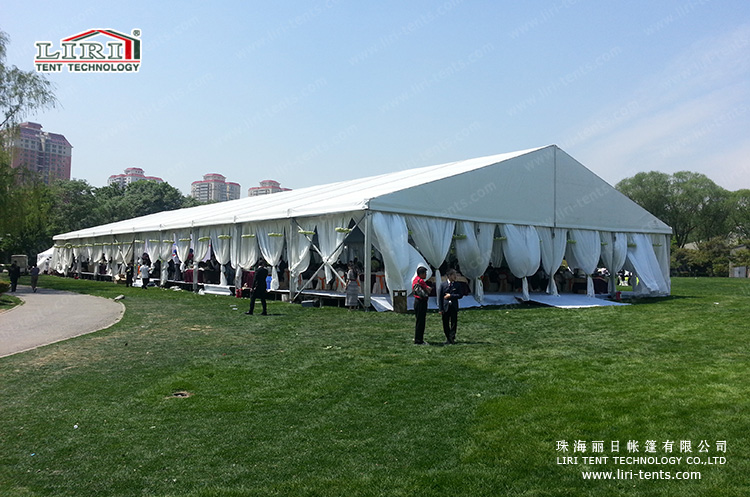
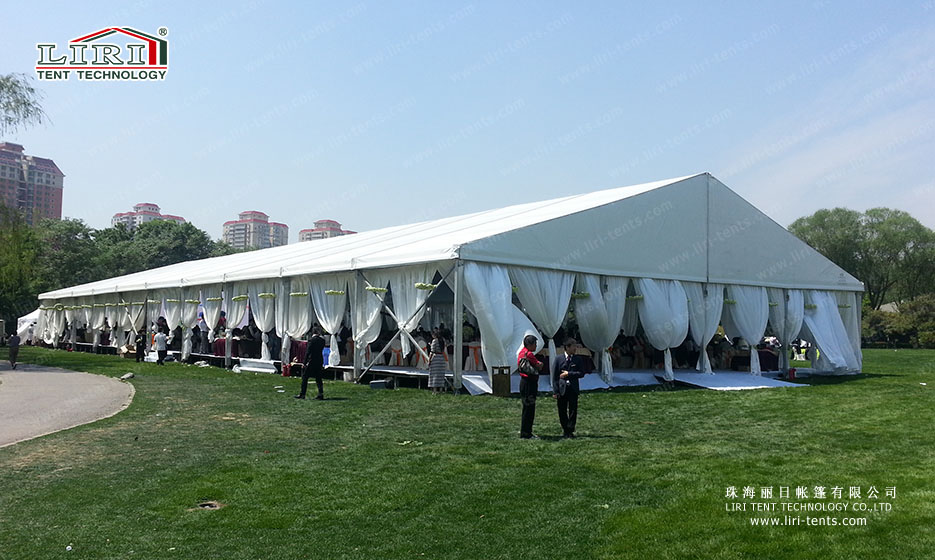
What makes an outdoor tent wedding stand out is how it opens up location choices. A grassy field, a private garden, a beachfront, a vineyard — any of these can become your venue with the right structure. The picture below shows a 20m wide by 50m long wedding marquee that seats around 1,000 guests with room for a stage, dance floor, and dining area. No ballroom gives you that kind of spatial flexibility.
Interior Design and Accessories
A tent gives you a blank canvas — no permanent walls, no fixed chandeliers. You decide where the aisle runs and how tables are arranged. We supply a complete range of accessories: pleated roof linings that hide the frame for a soft ceiling; sidewall curtains in various fabric weights and colors; chandeliers and pendant lighting; hardwood flooring systems that level any terrain; and furniture packages including banquet tables, chiavari chairs, and lounge seating.
Weather Protection and Structural Engineering
A well-engineered wedding party tent uses aluminum frames rated for wind loads up to 80 to 100 km/h and PVC covers that are waterproof and flame retardant. Sidewalls roll down in minutes if weather shifts, and transparent PVC windows let light in with panels closed. Flooring systems include adjustable legs that level slopes without permanent ground changes — useful at historic estates or protected landscapes.
Budget-wise, an outdoor tent wedding often costs less than a comparable indoor venue. You pay for the structure and setup rather than a premium location fee, and avoid per-head catering minimums that ballrooms enforce. Couples wanting a luxury wedding tent with crystal chandeliers can allocate budget where it matters most.
Here are the practical questions first-time tent wedding planners often ask:
How long does tent setup take for a wedding?
A standard 20m by 50m frame tent takes a crew of four to six people roughly one to two days to erect, including flooring and basic lighting. Larger setups with linked structures, glass walls, or extensive drapery may need three to four days. Book the venue at least one day before for setup and one day after for teardown.
Can an outdoor wedding tent handle bad weather?
Modern aluminum frame tents are engineered for wind, rain, and even light snow loads. The frame is anchored with stakes or concrete blocks depending on ground surface. Sidewalls with transparent windows keep guests dry while maintaining natural light. For temperature extremes, portable AC or heating units connect through dedicated wall ports.
What accessories should I budget for beyond the tent itself?
Plan for flooring (essential on grass or sand), lighting (chandeliers, uplighting, or string lights), climate control if the season demands it, and restroom trailers if the site lacks facilities. Lining and draping create a room-like feel that guests rarely associate with a tent. Tables, chairs, and a generator round out the typical accessory list.
Does a tent wedding feel as elegant as an indoor venue?
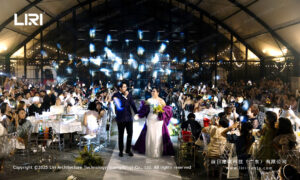
With the right design choices it can feel more elegant. A clear-span structure with a lined ceiling, crystal chandeliers, and draped walls looks indistinguishable from a high-end ballroom — with natural surroundings visible through optional clear panels or open gable ends. Wedding planners often prefer tents for the creative control they offer.
Every wedding deserves a venue that reflects the couple’s taste. Whether you picture a minimalist clear-top structure under the stars or a fully draped marquee with chandeliers, a tent for wedding celebration gives you the space and freedom to build exactly what you want. If you have a date and location in mind, reach out for a tailored proposal.