Planning the Layout of Your Wedding Marquee
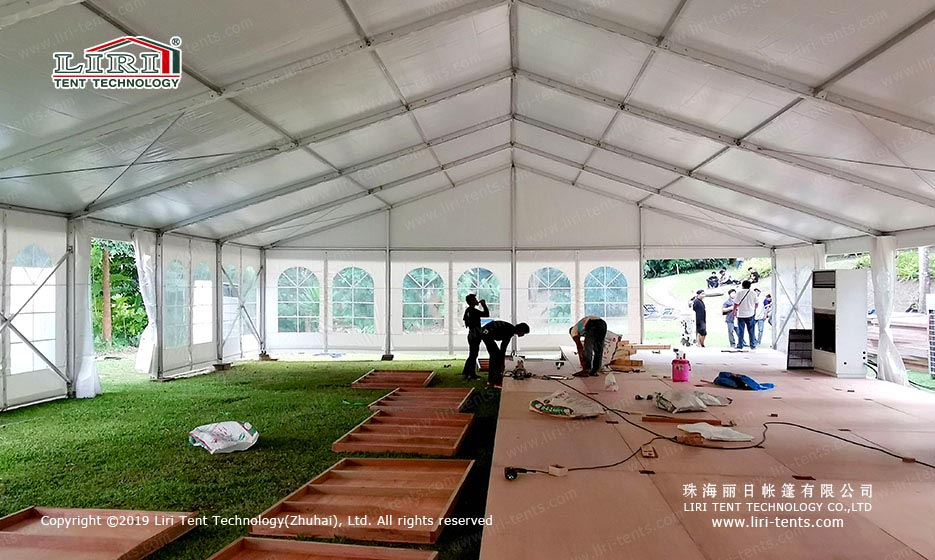
Getting the layout right is the foundation of any well-decorated wedding tent. Start by mapping out the guest flow: where people walk in, where they sit, and where the ceremony takes place. Clear span tents offer a column-free interior, meaning you have full freedom to arrange the space without structural obstacles getting in the way.
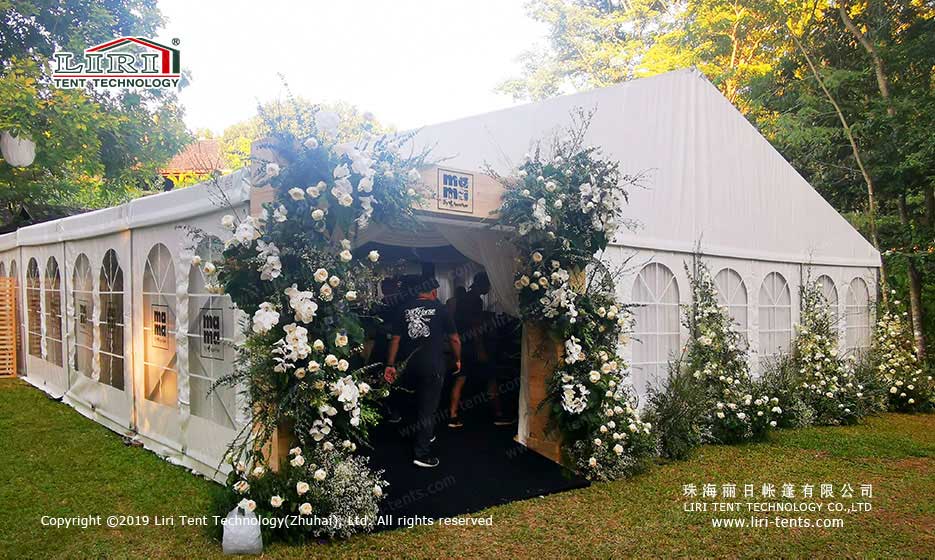
Position the welcome area at the entrance with flowers or greenery on both sides. This sets the tone from the first step. Dining tables should sit toward the center or slightly to one side, leaving the far end open for the ceremony stage or dance floor. Aisles need enough width for two people to walk side by side—at least 1.5 meters. Place the head table at the far end so it naturally becomes the visual anchor of the room.
When choosing between different tent styles, keep in mind that a clear span tent gives you the most flexible floor plan. No center poles means you can place tables of any size anywhere you want.
Lighting Creates the Mood
Nothing transforms a white tent interior faster than the right lighting setup. String lights draped across the ceiling add warmth at a low cost. Chandeliers—crystal or modern geometric—work well over head tables or central dance areas. Uplights placed along the walls can wash the fabric in soft colors that match your wedding palette.
For evening receptions, dimmable LED fixtures let you shift from bright dinner lighting to a more intimate glow for dancing. Spotlights on the cake table or centerpieces draw attention to key details. Many couples combine warm white lights with a single accent color—rose gold or deep blue—to tie the whole look together without overwhelming the space.
A well-lit wedding marquee feels bigger and more inviting. Dark corners make any venue feel cramped, so light every section evenly.
Flooring, Walls, and Roof Choices
The three surfaces that define your tent interior are the floor, the walls, and the ceiling. Each one contributes differently to the overall look.
For flooring, wooden panels give a warm, upscale feel and work well for formal receptions. Carpet is quieter underfoot and comes in dozens of colors to match the theme. Artificial turf suits rustic or garden-style weddings. A raised floor also keeps guests above damp ground if the weather turns wet.
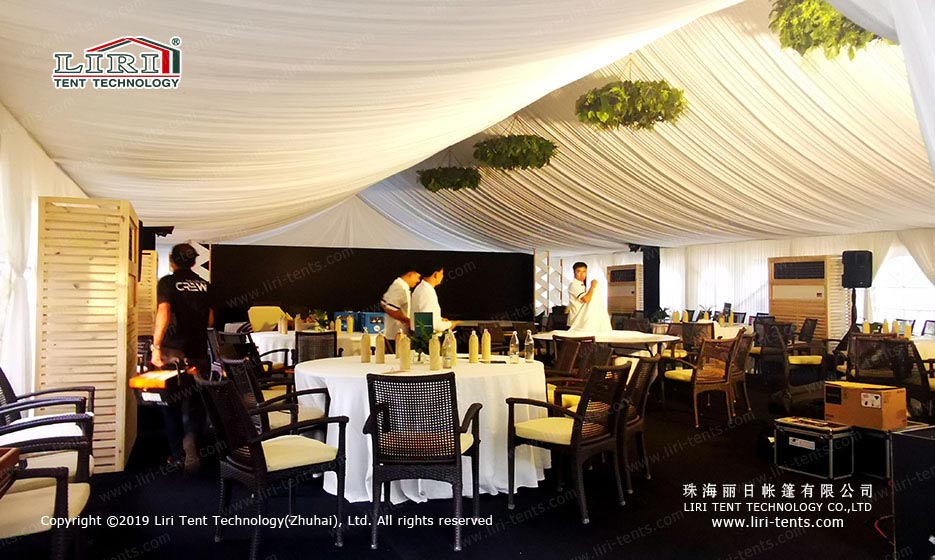
Glass walls or clear PVC panels let natural light pour in during the daytime and turn the tent into a glowing lantern at night. If privacy or wind protection matters more, solid ABS wall panels are a practical option. On the ceiling, fabric linings hide the frame structure and add a finished, polished look. Patterned linings or draped cloth can be secured with hook-and-loop strips along the frame rails.
For an elegant setup, a luxury wedding tent often uses layered linings with contrasting colors—white on top with a softer pastel along the edges.
Furniture and Accessories That Make a Difference
Round tables encourage conversation and maximize seating per square foot. Rectangular tables work better for buffet lines or long banquet-style rows. Chair covers, sashes, and seat cushions add comfort and color without a big investment.
Centerpieces should be tall enough to create visual interest but low enough that guests can see across the table. Mixed-height arrangements—some tall, some short—add depth. Greenery garlands along table edges or across the head table front are a simple way to bring the outdoors in.
Separate the ceremony area from the dining space using a decorative partition, curtain, or a row of potted plants. This creates a natural flow and gives each section its own identity. A small stage with a simple backdrop frames the couple during the ceremony and serves as a focal point for photos afterward.
Before you decide on accessories, look at how to decorate a tent or a wedding with items you may already have—fabric drapes, candles, and potted plants go a long way.
Theme and Color Direction
Every wedding marquee benefits from a clear theme. Western white weddings rely on clean linens, white flowers, and soft lighting for an airy feel. Chinese red weddings bring in bold tablecloths, lanterns, and gold accents for a celebratory look. Silver and crystal details suit vintage European themes, while woven textures and earth tones work for bohemian setups.
Whatever direction you choose, keep the color palette to three main tones at most. Too many competing colors make the space feel busy. Use the dominant color on large surfaces (floor, linens, walls) and accent colors on smaller items (napkins, flowers, signage).
Practical Tips Before the Big Day
Install air conditioning or heaters a day before the event and test the temperature settings. Tents heat up fast under direct sun and cool down quickly after sunset, so climate control makes a real difference in guest comfort. Run a full sound check after the tables and chairs are in place—empty tents sound different than fully furnished ones.
Walk through the entire space at guest eye level. Look for bare spots, tangled cables, or anything that blocks sight lines. Adjustments made the day before are much easier than changes on the wedding morning. For larger setups, consider a clear span marquee which offers maximum layout flexibility without center poles.
For more ideas on setting up your space, browse our wedding tent decoration tips for practical, budget-friendly suggestions.
Frequently Asked Questions
What is the most affordable way to decorate a wedding tent?
Focus on lighting and fabric draping. String lights and ceiling linings give the biggest visual impact for the lowest cost. Rent centerpieces and chair covers instead of buying them.
Do I need glass walls for a wedding marquee?
Not required, but clear walls make the space feel larger and connect guests to the outdoor scenery. They also let in natural light during daytime ceremonies.
How many tables fit in a 10m × 20m wedding tent?
A tent this size typically holds 12 to 15 round tables (seating 8–10 guests each), plus space for a dance floor and head table. Clear span tents use space more efficiently because there are no poles.
Can I decorate the tent roof myself?
Yes, with hook-and-loop straps or clips designed for frame tents. Fabric linings come in precut panels that attach directly to the frame rails. Always check the weight limit of your tent frame before hanging decorations.
What flooring suits outdoor wedding tents?
Wooden flooring is a popular choice for formal weddings. Carpet is quieter and more affordable. Artificial grass works well for garden or rustic themes. All three can be installed over any flat ground surface.
Contact Us
Fill in the form below and our team will help you plan your wedding tent setup. Browse our wedding marquee options for more inspiration.
JavaScript is required for this content.
Need help measuring your space? Check our outdoor wedding tent sizing tips for dimension options.