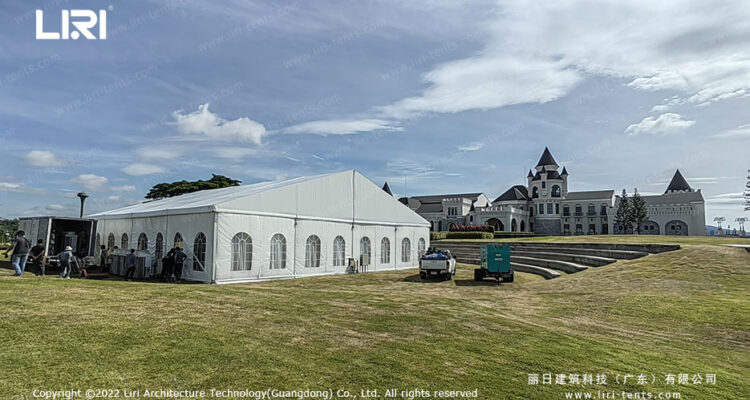
A tent that hosts weddings in April and in January faces two completely different jobs, and the equipment that handles them gets chosen long before a truck arrives. Venue operators who treat heating and cooling as a rental add-on usually discover the gap on the first cold evening, when ducts block sightlines, cables cross a service road, or the power supply cannot carry the load. The fix is a planning sequence, not a bigger unit.
This article walks through that sequence: the season envelope, the wall and lining choices that change the load, the power questions to settle before the build, the layout of units and ducts inside a wedding space, and how to compare supplier proposals on what actually matters.
Start With the Season Envelope, Not the Equipment
Before anyone discusses heaters or air conditioners, write down the date range the tent must serve and the conditions at your site across that range. A marquee running weekend weddings from May to September has a modest climate brief. The same tent hosting December receptions needs a plan for evening temperatures, and for what guests feel in the first twenty minutes before the space warms up.
The envelope does three things. It tells you whether heating is a comfort matter or an operational requirement, whether cooling and shade drive the summer design, and how much of the year the tent runs with closed walls. That last point matters more than any catalogue number, because closed walls change heat, moisture and airflow at the same time. If your venue operates year-round, it is worth reviewing how modular wedding tents for luxury venues are configured for continuous seasonal use before you compare individual units.
One discipline applies to every season: fabrics and linings should meet recognised flame-retardancy standards such as EN 13501-1, DIN 4102 B1 or NFPA 701, and the structure itself should be assessed as a temporary structure under EN 13782. Your local authority may apply additional or different rules, so treat project-location requirements and professional review as the final word.
What Walls and Linings Change Before Any Unit Runs
Wall configuration is the first climate decision, made weeks before an HVAC proposal arrives. Glazed and transparent walls admit light and views, and they lose warmth faster on a cold night. Solid PVC walls with a lining hold a steadier interior feel. Mixed configurations, solid walls on the weather side and glazed walls elsewhere, are common on sites with an exposed edge.
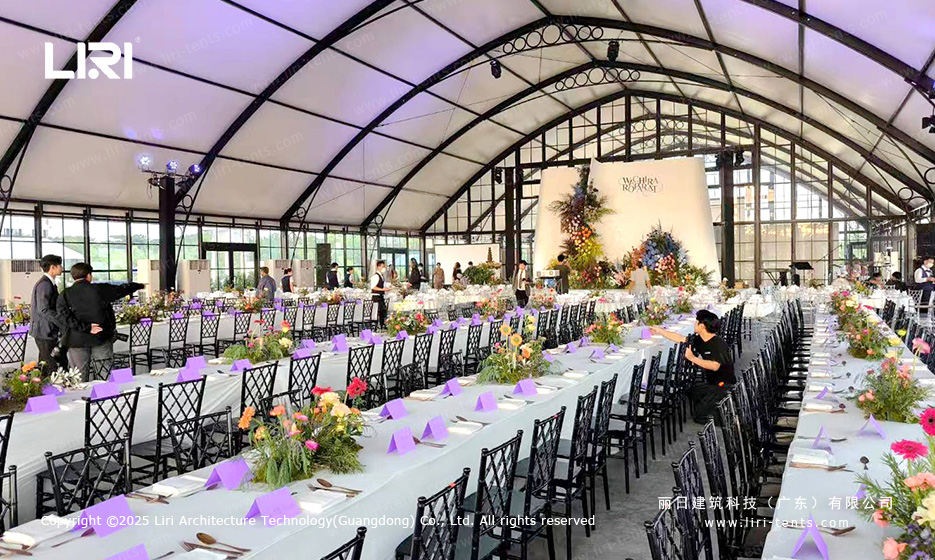
Linings deserve a second look because they do two jobs at once. They soften the interior visually, and they sit between the single-skin PVC roof and the warmed interior space, where condensation would otherwise form and drip. On a tent that runs through cold months, a lining is a moisture-management decision as much as a decorative one. Ask the supplier how the lining interacts with the roof cover, how it is cleaned between events, and whether ventilation paths stay open with the lining installed. For the cooling side of the same question, the older article on choosing an air conditioner for a wedding tent covers unit selection basics and pairs well with this planning view.
None of these choices requires a physics argument to justify. They simply set the starting conditions that any heating or cooling proposal must work against, which is why they come first.
Power Questions to Settle Before the Build
Climate equipment fails on delivery day for boring reasons: the venue supply could not carry the load, the cable route crossed a road, or nobody reserved space for a generator. All of it is preventable with four questions answered in writing before the build.
First, what electrical supply exists at the tent position, and who confirms its capacity for continuous running rather than a quick test? Second, where does distribution sit, and which circuits are reserved for climate equipment versus catering and lighting? Third, what cable routes are acceptable, and what protection do walkway crossings need? Fourth, if a generator backs up the supply, where does it stand, how far from guest areas for noise and exhaust, and what is the fuel access for a full event day?
Assign each question an owner. The venue usually answers the supply question, the tent supplier states what the equipment needs, and the build crew plans routes and placement. On a busy site this coordination is a build task like any other, and the same planning logic used for crews and plant in a wedding marquee build plan applies directly.
Where Units and Ducts Sit in a Wedding Layout
Placement decides whether guests notice the climate system or the wedding. Overhead ducting keeps floors clear but must be dressed so it does not cut across ceremony photos. Perimeter or floor-level supply needs routing that survives banquet service. Both approaches work; both fail when they are improvised on site.
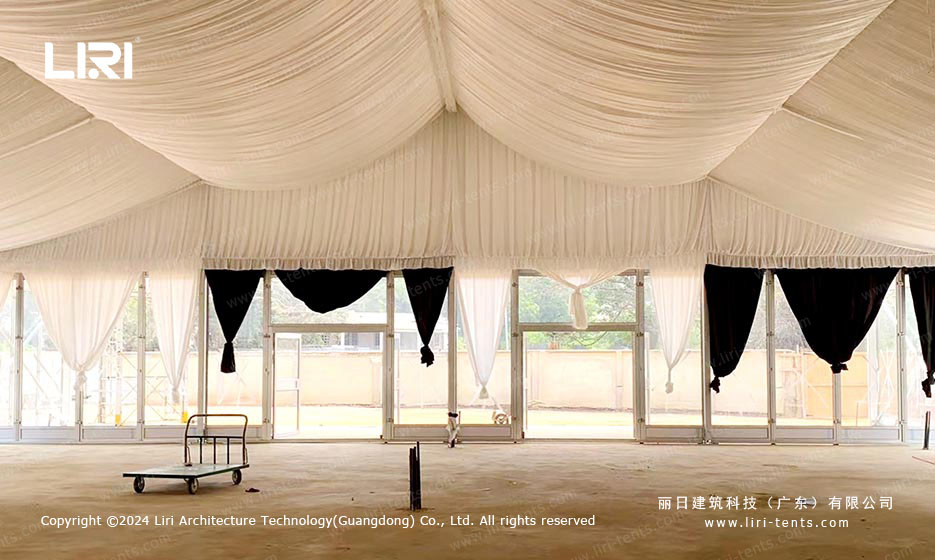
Three placement rules cover most wedding layouts. Keep supply airflow off the head table and the ceremony axis, because a cold or warm draught on the couple is remembered longer than the flowers. Position the loudest equipment, typically external units or generators, away from speeches and the dining floor, and check the noise question during the proposal stage rather than after installation. Finally, route ducts and cables where staff move, not where guests photograph, and protect every crossing.
Comparing Supplier Climate Proposals
Two proposals can look identical at headline level and be built for different jobs. The useful comparison is line by line. Which units are quoted, and are they sized for continuous event running or short tests? What fuel or power source do they assume, and does your site actually have it? Are ducting, thermostats and distribution included, or do they arrive as separate line items later? Does the price cover installation labour, or does your crew do the final connection?
Ask each bidder to state its assumptions in writing: the season envelope, the wall and lining configuration, and the event duration the design supports. A proposal written against the wrong envelope is cheap in the quote and expensive in January. The same scrutiny applies to the tent quotation itself, and our guide to what a wedding tent quotation should itemise uses the same line-item logic.
Keeping Seasonal Equipment Serviceable
Climate gear that sits between seasons collects dust, fuel residue and stale fuel, and it fails at the worst possible moment. Treat it as part of the fleet. Filters, fuel systems, thermostats and duct connections belong on a pre-season check, and any unit that ran a full summer should be inspected before its first winter event.
If you operate a rental fleet, fold climate equipment into the same calendar you already use for PVC, frames and fittings. The seasonal structure in our wedding tent maintenance schedule takes accessory-level equipment without modification.
Climate control rewards venues that plan it early and punishes everyone else on the first cold Saturday. Settle the envelope, the walls, the power and the placement in that order, and the equipment conversation becomes a short, well-informed meeting instead of a rescue. If you are planning a year-round venue, tell us your venue type, event dates and project location, and we will outline the configuration and climate questions to resolve before the build.