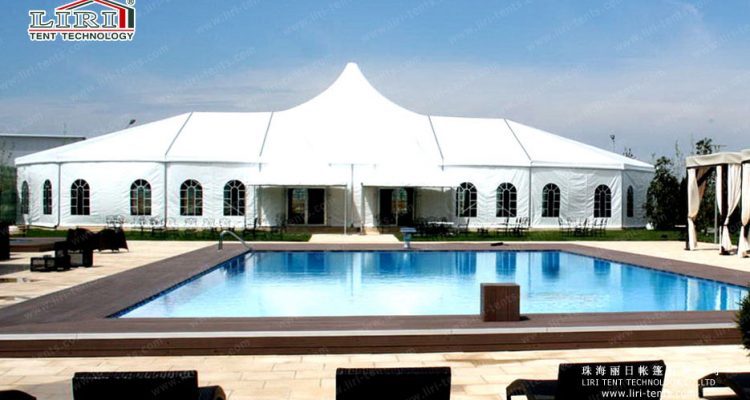
High Peak Tent For Wedding Celebration — Sizes, Accessories & Layout Ideas
A high peak wedding tent stands out the moment you see it. Unlike a standard A-frame marquee, the high peak profile climbs dramatically toward the ridge — creating a grand, almost church-like interior that makes chandeliers and tall floral arrangements look right at home.
We have shipped these tents for weddings from 100-person garden receptions up to 1,500-guest church gatherings. Each one starts with a modular aluminum frame system that can span anywhere from 6 to 40 meters wide, with unlimited length through bay extensions.
Real Sizes, Real Capacities
The modular bay design means you pick the width and keep adding 3-meter or 5-meter sections to hit your target length. Below is what that looks like for common wedding sizes:
| Tent Size | Guests (Round Tables + Dance Floor) | Guests (Theater Seating) |
|---|---|---|
| 15m × 20m | ~250 | ~400 |
| 20m × 40m | ~600 | ~900 |
| 25m × 50m | ~1,000 | ~1,500 |
A 20m × 50m high peak setup handles roughly 800 seated guests for a banquet layout — and you still have room for a stage and buffet stations. If you need help calculating the right dimensions, our team works backward from your guest list and floor plan.
Accessories That Turn a Tent Into a Venue
The structure is just the starting point. These tents accept a full range of rental-grade accessories that transform a bare frame into a finished wedding hall. Think of it like building out a modular wedding tent structure from the shell up:
- Roof and Walls: Choose between clear PVC for sky views or opaque white for a softer glow. Glass wall panels and ABS hard walls give you rigid perimeter options — ideal for winter setups.
- Doors and Entryways: Single-wing and double-wing glass doors create a proper entrance experience. No one walks through a zippered flap at a luxury wedding.
- Climate Control: Air conditioning units mount through designated wall ports. Combined with pleated roof linings, you get both temperature regulation and acoustic dampening.
- Flooring and Decor: VIP cassette flooring systems, banquet carpet, pleated curtains, and integrated ceiling drapes. Everything that makes a ballroom feel like a ballroom — now outdoors.
For a full breakdown of decorating possibilities on a 20-meter frame, see our 20m frame wedding tent decoration guide. The same principles apply to high peak structures — you just get more vertical drama to work with.
Why the High Peak Shape Works
The tall ridge creates a natural visual anchor. Guests walk in and immediately look up. This verticality makes even medium-sized tents feel expansive. It also gives you ceiling height for hanging installations — chandeliers, fabric swags, or suspended floral clouds — that a low-profile large frame tent for receptions cannot comfortably accommodate.
Structurally, the steep roof pitch sheds rain faster and handles snow loads better than shallow A-frames. If you are planning a tent wedding in shoulder-season weather, that is a practical advantage you will appreciate.
FAQ
What is the maximum span of a high peak wedding tent?
Our high peak tents span from 6 meters up to 40 meters. Length is unlimited since each 3m or 5m bay simply bolts onto the previous one. The frame uses 204×120×4mm four-channel aluminum profiles for the main beams.
How many people can sit in a 20m × 40m high peak tent?
Approximately 600 guests with round tables (10 seats each) and a dance floor — or about 900 in theater-style rows. For a 20m × 50m setup with banquet seating, you are looking at roughly 800 seated guests.
Can high peak tents stay up year-round?
Yes. The aluminum frame is corrosion-resistant, and the PVC fabric is UV-stabilized and fire-retardant (compliant with DIN 4102 B1). Many venues use them as semi-permanent structures. You will want to check local building codes for long-term installation permits, and we recommend seasonal fabric inspections.
What accessories are available for climate control?
Air conditioning units, forced-air heaters, pleated roof linings for insulation, and sandwich panels for fully enclosed walls. For fabric-wall configurations, we add ventilation ports near the ridge to manage condensation during cold-weather events.