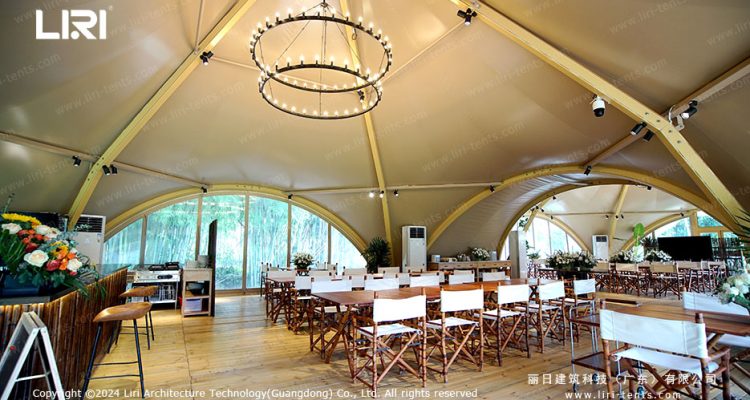
A wedding tent is not a room with four hard walls. Daylight comes through the roof, evening light comes from the lamps you arrange, and sound behaves differently with no solid surfaces to bounce it back. Couples often plan the flowers and the menu, then find that guests at the far tables cannot hear the vows.
This guide explains what light and sound really do inside a marquee. You will learn which roof suits your ceremony time, where evening lights go, how every guest hears clearly, and what to ask before you order.
Why a tent feels different from a ballroom
In a hotel ballroom, the ceiling and walls are solid. Light comes from windows and fitted lamps, and voices reflect off hard surfaces. A wedding marquee works the other way round.
The roof is fabric or see-through panels, and the sides may be fabric, windowed panels or glass. Daylight arrives from above and from every open side at once.
Sound is the part people notice least until the speeches begin. Soft fabric and open sides let sound travel outwards instead of sending it back to the listeners. That is pleasant in some ways, because the space rarely has the echo of an empty hall.
It also means a voice at the front travels further with less help. Guests near the back can miss a reading that the front row heard clearly. That means your choices about light and sound matter more than they would indoors.
Daylight and the roof you choose
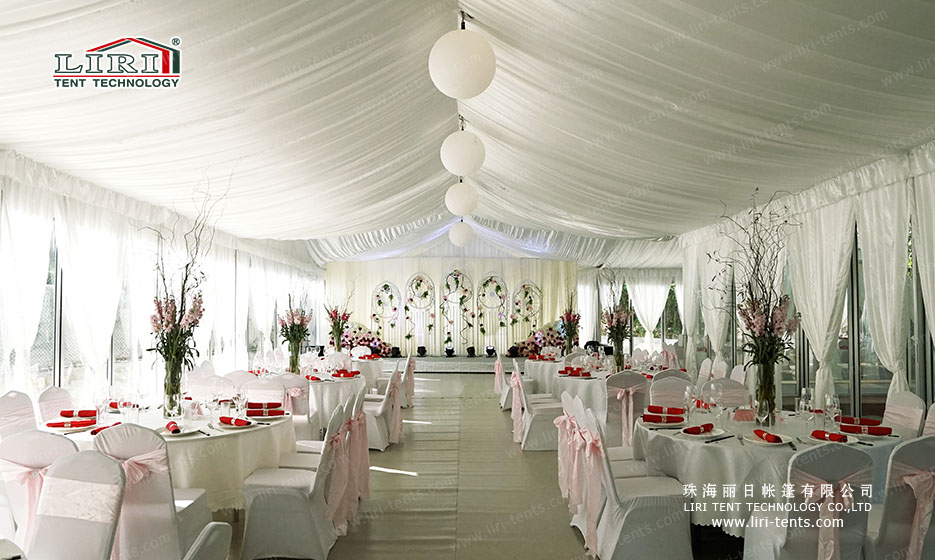
Start with the hour of your ceremony, because the roof decides what the light does. A solid white roof is a coated fabric stretched over the frame. It softens direct sun, so the light stays even through a long afternoon. Faces photograph well, and the pale ceiling gives you a surface to hang lights from later.
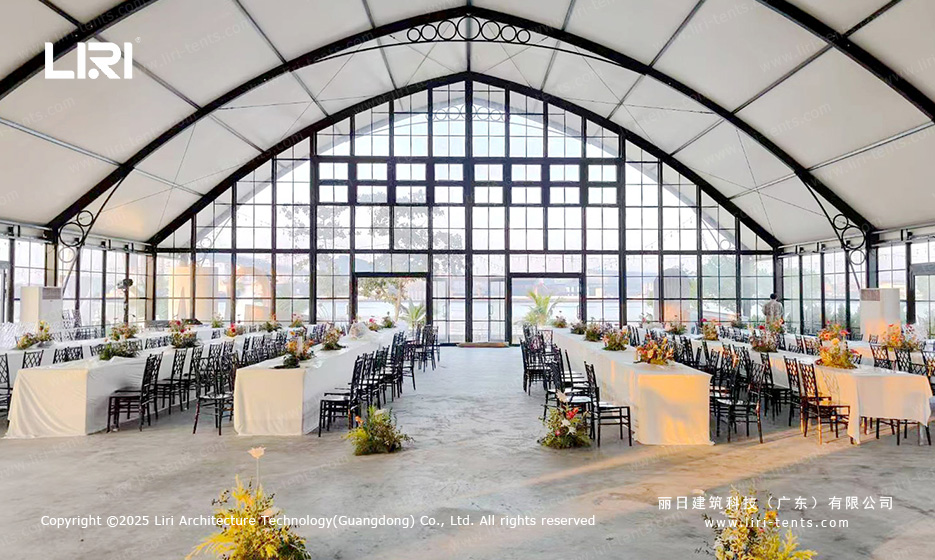
A clear roof, sometimes called a transparent or clear top roof, uses see-through panels instead of white fabric. Daylight comes straight down, guests can see the sky, and after dark the roof becomes a view of the stars.
The trade-off is simple. Midday sun can be bright and warm under clear panels. At night there is no pale ceiling to bounce your lamps off, so you need more light of your own.
An orangery marquee has large glass walls set into a visible frame, closer to a garden room than a tent. Light comes in from the sides as well as above, which suits a daytime ceremony with a view. If you like the open-sky look, compare a clear top wedding tent with a white-roof version before you decide.
Picture a three o’clock ceremony in early summer. Under clear panels the light is beautiful but strong, and you may want shade for the front rows. Under a white roof the same ceremony feels calmer. Ask for a real photograph taken at the hour you plan to use the space.
Where the evening light should go
A marquee does not arrive with lighting fitted. The lamps and cables are separate items. Think about them while you choose the structure, not a week before the wedding.
Most receptions need light in three places. Strings of small bulbs or a few hanging lamps give the whole space a warm base. Small lamps or candles on the tables let guests see each other’s faces during dinner. Lights along the walls, the entrance, the bar and the path outside help people move around safely after dark.
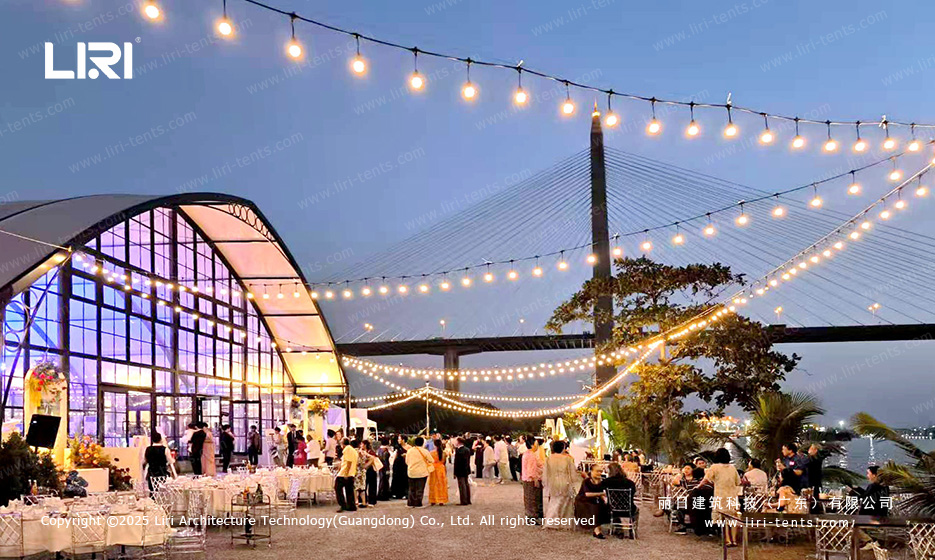
A common mistake is to hang one set of string lights and stop there. The ceiling looks lovely in a photograph, but the far end of a long table stays dim. Adding table lamps, or lights that shine up at a white roof, usually fixes it.
Clear panels cannot reflect light in the same way, so a transparent roof needs a little more direct lighting. Our guide to decorating a wedding marquee has more ideas for the look of the space.
Lights, music and any heating all need power. Ask early whether the site can supply it, and whether dimmers are available so dinner can be bright and dancing can be softer.
Can every guest hear the vows?
This is the question worth asking before you sign anything. In a tent, a voice at the front has no wall behind it to help carry the sound. Guests at the back tables are further away, and any background noise competes with the words that matter most.
A microphone and a pair of speakers placed to face the whole seating area make a bigger difference than a loud system turned up high. Tell the supplier that you plan readings, speeches and music, so the layout accounts for them. If you hire a band or a DJ, ask where they will stand and check that the speakers are not pointing only at the front tables.
Think about the quiet noises too. Rain on a fabric roof, a fan, a generator or a busy bar can all sit under a reading. Some venues also set a time when music must stop, so ask the venue too. Our guide to what guests feel in each season covers the weather side in more detail.
The simplest test is also the cheapest. On the day, stand at the furthest table during the sound check and listen. If you cannot follow a sentence there, move a speaker or raise the microphone level before guests arrive.
A short note on power and safety
Cables should run along the edges and be fixed down so nobody trips in dim light. Hang lamps or fabric only from the frame points your supplier says are suitable, and check who is fitting them. In wet weather, plugs and connections need to be kept dry and covered.
That is a short conversation with the people putting up the tent, not a complicated approval process. It belongs in the same list as the floor and the sidewalls.
What to ask before you order
You do not need technical words to get good answers. Say when the ceremony and the dinner start, and whether most of the celebration happens in daylight or after dark. Say how many guests will sit down and where the furthest table will be.
Then ask which roof the quote covers, whether lighting and speakers are included, who provides the power, and what happens to the sides if it rains. Ask to see a photograph taken at your time of day. Those questions tell you more than any brochure about how the space will look and sound.
Light and sound come from the roof, the lamps, the speakers and the layout working together. Decide them early and the day itself feels calm. If you tell us your date, your guest count and your ceremony time, we can explain which roof and lighting setup fits and list what is in the quote.