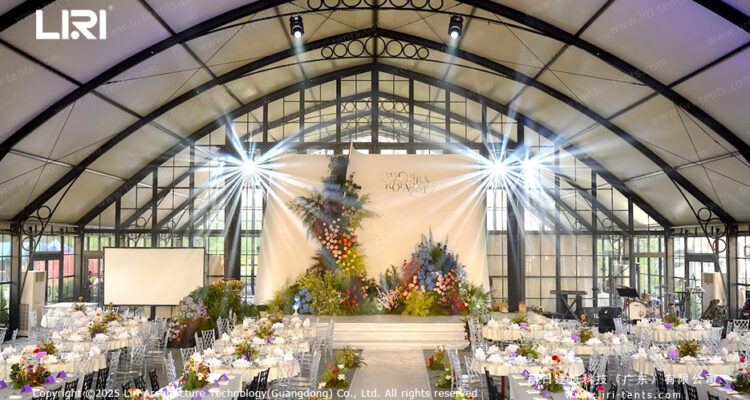
A wedding tent is not a room with a heating dial and four solid walls. It shares its air with the outdoors, so a July afternoon and a November evening feel very different to the people sitting inside. That is worth knowing before you book one, because most comfort problems are easy to avoid. This guide walks through what guests notice in each season, from bright sun on a clear roof to cold feet on damp grass. By the end you will know what to ask, what to tell your guests, and when a tent suits your date.
Why a tent feels different from a building
In a hotel ballroom the walls, the ceiling and the air conditioning do the work. In a marquee, three simple parts do it instead. The roof cover is the fabric or clear sheet stretched over the frame. The sidewalls are the panels that can close the open sides. The floor is a separate layer laid over the ground. None of them is fixed, so the same tent can feel airy in June and snug in October.
That flexibility is the good news and the thing to plan around. Sun passes through a clear roof far more than through white fabric. Warm air rises to the highest point and sits there. A breeze moves straight through open sides, which is lovely at four in the afternoon and less lovely at ten at night. Suppliers have their own words for these choices, but you do not need them. Just picture your guests at the hour they will sit down.
One example helps. Two couples can hire the same tent on the same lawn, one for a June lunch and one for a December dinner. The June couple wants shade and moving air. The December couple wants closed sides, a dry floor and a warm glow. The tent has not changed. The season has.

Spring and summer: light, shade and moving air
Summer weddings get the most attention, and the most common worry is heat. White fabric reflects sunlight, which is why a classic white marquee stays calmer under a midday sun. A clear roof does the opposite. It floods the tables with daylight and looks beautiful in photos, but on a hot still afternoon it can feel like a greenhouse. If you love the open sky, an evening ceremony often suits a clear roof better than a two o’clock one.
Air matters as much as shade. Open sides let a breeze cross the space, and that single thing often does more for comfort than any machine. Solid sidewalls cut the wind on an exposed site, but they also stop the air moving. Many couples keep some sides open for the meal and have panels ready to close if the weather turns.
Spring is gentler but less predictable. A cool morning can turn into a warm afternoon, then a sharp shower. Ask what happens if rain arrives during dinner, and where guests will stand while the sides are closed. Our guide to how solid, glazed and mesh sidewalls behave is worth a look when you compare options.
Autumn and winter: holding on to the warmth
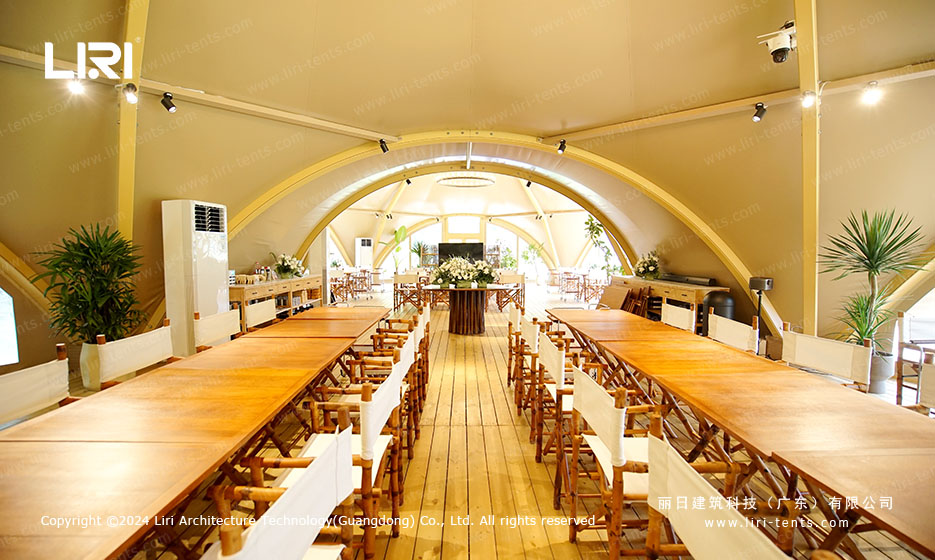
Cold-weather weddings have a different rhythm. Guests arrive in coats, then sit for a long meal as the light fades. Once the sun goes down, the ground gives back the day’s chill. A proper floor keeps feet off wet grass, and closed sidewalls stop the wind finding the gaps. Warm lighting does the rest, because a bright room feels warmer than a dim one.
Clear roofs are often at their best in these months. Low winter sun is soft, and after dark the roof turns into a view of the sky and the string lights above the tables. You get the open feeling without the midday heat. If your date is in late autumn, ask whether the roof is clear or white. That answer changes both the light and the temperature.
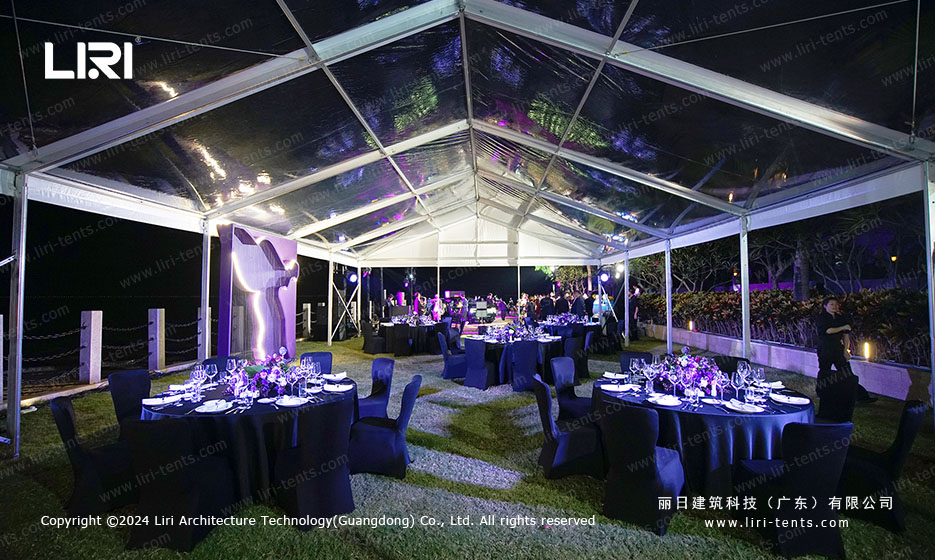
Heaters need power and space, and the crew installing the tent should place them, not guests on the day. Heaters, cables and fabric need a sensible distance between them, and the crew knows where things can safely sit. One short conversation at booking time is enough.
The small things guests remember
Ask anyone about a wedding they enjoyed and they rarely mention the roof first. They remember whether their feet were dry, whether they could hear the speeches, and whether they were too warm during the meal. Shoes are a quiet one. On soft grass, narrow heels sink, and older guests may find an uneven surface tiring. A laid floor solves both. Our guide to what your guests will actually stand on explains the choices.
A cold drink on arrival and a shaded spot for the drinks hour take very little effort. A note on the invitation and a place to leave coats cost nothing either. Telling guests what to expect is free. It also stops the small complaints that have nothing to do with the tent and everything to do with surprise.
What to ask before you choose
You do not need a long list of technical terms. Four plain questions cover most of it. Which roof do you want, white fabric or clear, and why for your month? Can the sides be open for the meal and closed later? What is underfoot, and is a floor included? Where will heating or fans go, and who decides that?
It also helps to be honest about your date and your site. A lawn that bakes in August sun is a different place in October. A garden sheltered by trees may need less from the tent than an open field. If you are still looking at shapes and sizes, start with our wedding marquee range. You can compare a clear top wedding tent with a white roof before you decide.
A note on safety, kept short. Tents must be put up by people who know the structure and secured for the ground and the weather on the day. In strong wind, follow the crew’s advice about closing sides or changing the plan. Nothing else here needs a checklist.
Season is not a reason to avoid a tented wedding. It is simply the first thing to think about, because the same structure gives you a bright, airy afternoon in June and a warm, glowing dinner in November. Decide the roof, the sides and the floor with your date in mind. Tell your guests what to expect. The day will feel like the one you pictured. If you would like to talk through your month, your guest count and your site, we are happy to help you compare the options.