A wedding tent rigging brief gives the structure supplier and event production team the information needed to review proposed lights and suspended decor. A mood board can describe the appearance, but it cannot establish where an item may be attached or what a tent configuration is approved to support.
For a hotel, resort or wedding venue buying a structure, gather that information before treating the overhead design as part of the purchased package. The brief is an input to competent technical review, not permission to attach equipment.
Translate the design image into an equipment record
Ask the lighting designer, florist and production provider to identify every proposed suspended item. Include the equipment or assembly reference, documented weight, intended position and proposed support arrangement. Keep the attachment and suspension equipment in the technical discussion; do not assume that the decorative object is the only relevant part of the proposal.
Request a marked layout or rigging plot that can be compared with the tent arrangement. A general note such as “chandeliers throughout” does not tell the reviewer which locations are proposed. The wedding tent planning guide can establish the room uses and service areas; the production drawing should identify the specific overhead proposal within that layout.
Where a weight, fixing detail or position is unknown, leave it unresolved in the working file and assign someone to obtain it. A photograph of a similar wedding setup does not supply the missing technical information.
Ask who can approve the actual support arrangement
The tent supplier should identify the configuration and documentation against which the proposal will be reviewed. The production provider should identify its design, installation and checking responsibilities. Confirm who coordinates the review and which competent specialists must participate for the actual project.
Encore’s published rigging process, for its own venue services, requires advance technical information and a review of proposed loads. It is a useful example of the information exchange involved. Its venue rules, deadlines and approval do not apply automatically to a separately supplied wedding tent.
Avoid treating a general statement about clear-span construction as a hanging-load allowance. Ask for the written response covering the proposed locations and equipment. If the proposal changes, send the revised information back through that review route. Do not assume that an earlier response covers additional items or moved positions.
Make the quotation boundary visible
The structure, production equipment and installation services may be supplied by different parties. Use the itemised wedding tent quotation guide to distinguish the purchased structure from equipment and services that need separate confirmation.
For the overhead proposal, ask the parties to record who supplies the support system, who supplies the lights or decor, who provides the technical documents, who installs the arrangement and who checks the completed work. Where an item is excluded, name the party that will resolve it rather than leaving “by others” unexplained.
Keep aesthetic choices and technical acceptance connected. If the proposed support arrangement cannot be confirmed, ask the designer for an alternative and have that alternative reviewed. A freestanding arrangement also needs its own suitability and installation checks; it should not be presented as automatically approved.
Use photographs as visual references

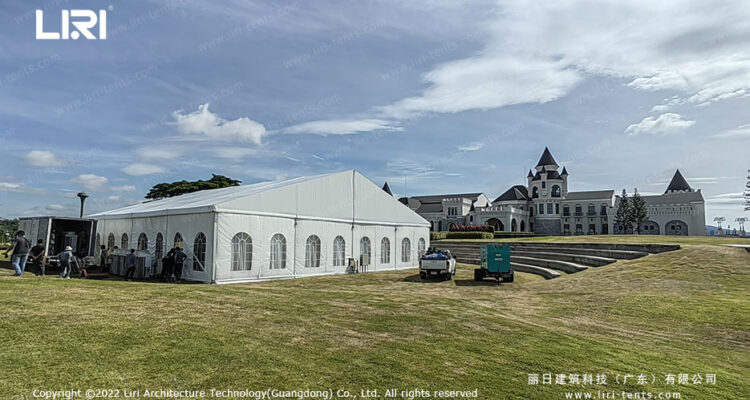
This existing venue image helps communicate the visual relationship between the roof, lighting and dining layout. It does not establish the material specification, fixing method, equipment weight or approved capacity of the pictured structure.
Keep the broader decoration and layout ideas separate from the project-specific rigging decision. Select references for appearance, then document what is actually proposed for the purchased configuration.
Retain the reviewed arrangement for each booking
Before installation, make the current layout, equipment record, written technical response and responsibility contacts available to the relevant teams. Record changes made during coordination and identify outstanding restrictions. After setup, retain the agreed installation and checking records with the venue’s project file.
A later wedding may use a different lighting provider or decorative arrangement. Compare its proposal with the recorded configuration and obtain the required review for changes. A previously photographed event is not a standing approval for every future booking.
Send your venue layout and proposed overhead equipment brief when discussing a commercial wedding tent purchase.