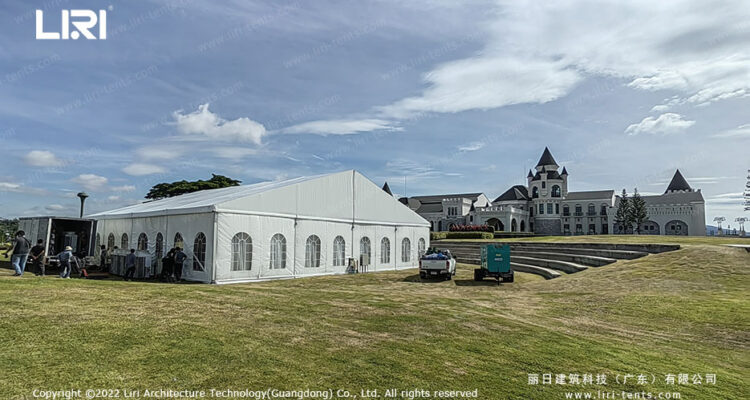
A 10×10 bridal tent covers 100 sq ft, enough for a ceremony of 8 to 12 standing guests or a seated row of 6. Couples choose this footprint when the moment matters more than the headcount, and it sits neatly in a backyard or a garden corner.
The 20×20 white wedding tent shows what a slightly larger version looks like once dressed with drape, and several of those moves scale down neatly to a 10×10 bridal tent.
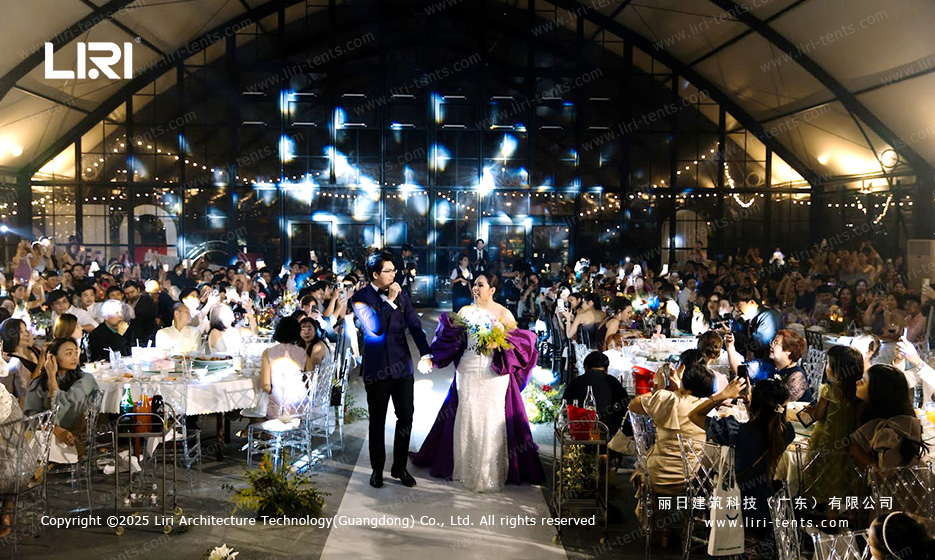
What a 10×10 Bridal Tent Covers
A 10×10 bridal tent is square, so the layout stays simple: an aisle and a small arch at one end, seating or standing room in the middle. With 100 sq ft you can seat about 6 to 8 guests in a tight cluster, or leave the floor open for a standing vow exchange with a few witnesses. This is a ceremony space, not a reception hall, and forcing more in only makes it feel cramped.
The small footprint also keeps the budget and the labor light. A compact structure needs fewer stakes, less fabric, and a shorter install, which is why planners often start from a custom wedding tent size while the guest list is still shifting.
Where This Footprint Works Best
Backyards and garden lawns are the natural homes for a 10×10 bridal tent. The size lets you place it on uneven ground that a wider frame would damage, and it reads as a focal point rather than a cover dropped on the grass.
For venues with fixed architecture, a frame wedding tent keeps its legs at the corners only, so the interior stays clear for the few people who share the moment.
Styling a Small Space Without Crowding
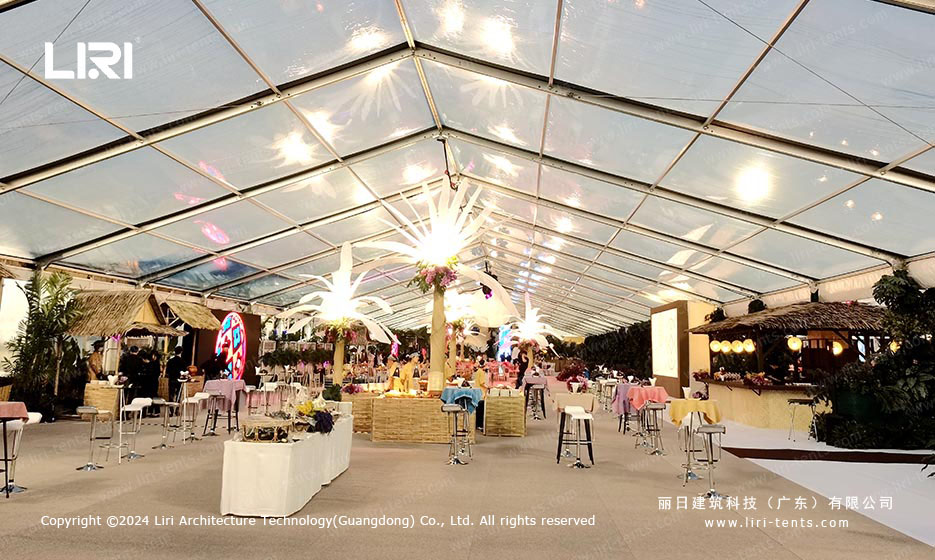
Decoration does the real work in a tight footprint. One length of drape on two poles, warm string lights, and a low floral arch give the eye a finished frame without eating the floor. Keep furniture minimal: a bench or two chairs, a small rug, and the arch are usually enough.
A clear top canopy tent lets daylight act as the decor, which suits a morning ceremony where the open sky is the backdrop.
Setup, Flooring, and Weather
Most kits use a pop-up or a light frame that two people can raise in well under an hour. Grass is the easiest base; on a patio you will need weight plates instead of ground stakes, and a thin mat keeps heels from sinking. Wind is the honest limit, so always check the day’s gusts before you commit to a canopy roof.
The white wedding tent tag groups the small and mid sizes together, which makes comparison quick when you are still deciding.
Frequently Asked Questions
How much does a bridal tent this size cost?
A basic pop-up canopy starts around $100 to $300, while a framed tent with sidewalls runs $400 to $900. Delivery adds more if you book through a rental house instead of buying.
Is a permit required for a bridal tent on private property?
On private residential land a tent this small rarely needs a permit, but homeowner associations and some city rules still apply. For a public park or a managed venue, ask the site manager before you set anything up.
Is it better to rent or buy a bridal tent this small?
If this is a one time event, renting avoids storage and upkeep and usually includes setup help. Buying makes sense when you host often or want a specific color and finish you can reuse, since the per use cost drops quickly after two or three events.