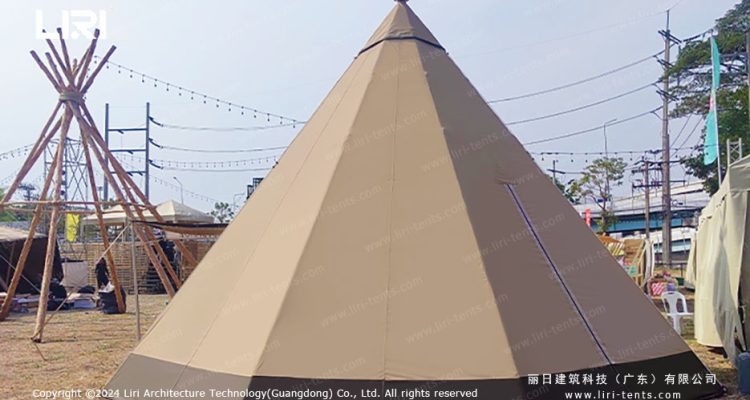
Tipi Wedding Tent — A Striking Choice for Outdoor Celebrations
A few tall conical peaks rise from the grassland. Wooden poles cross at the top, canvas stretches tight down the sides, and the whole structure catches the afternoon light. It is not a festival ground — it is a wedding venue. And it is exactly the kind of scene that makes guests stop, look around, and ask who put this together.
What draws people to a tipi tent, beyond the obvious silhouette, is how it changes the feel of an outdoor space. A flat lawn becomes a destination. An open field turns into a room with a ceiling that soars upward rather than pressing down. For couples who want their wedding to feel immersive rather than formal, the cone-shaped tent delivers from the first glance.
How the Cone-Shaped Frame Puts Wind and Weather in Its Place
The tipi tent owes its shape to a simple structural idea: a tall central pole ringed by side poles that fan outward and upward. Canvas panels wrap from the base to the peak, creating a steep slope. Rain slides off instead of pooling. Wind hits the angled surface and slips past rather than pushing against a flat wall. For planners who run outdoor programs through shoulder seasons, this profile does real work.
Inside, the ceiling height opens the space vertically in a way a traditional frame tent cannot match. Center poles take up a small footprint, leaving wide usable floor area around them. The structure skips interior beams and cross-bracing that would block table arrangements or sightlines during a ceremony. A grand tipi tent wedding setup seats 80 to 120 guests under one cone — comfortably. For larger events, multiple units can link together via tunnel connectors, creating a continuous interior that still reads as one unified venue.
One thing that surprises first-time buyers: the assembly sequence. The canvas goes on after the frame is fully erected, which means the installation crew works at height for part of the process. Watching a tent supplier’s team raise the poles and tension the panels makes the engineering feel approachable. It is hands-on, not mysterious. And that matters when a venue operator needs to train their own staff on setup and teardown.
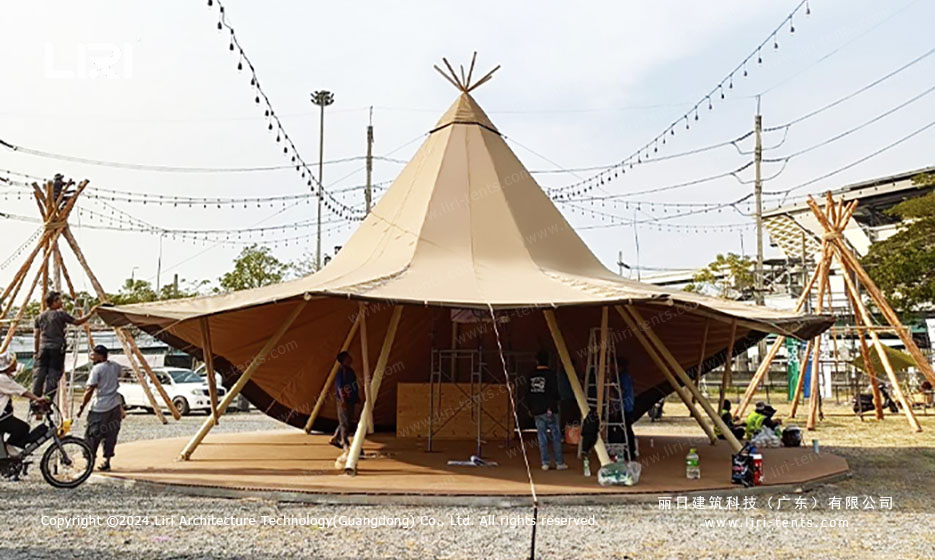
When the Sun Goes Down, the Tent Comes Alive
Daytime tipi tents look clean and structured. Nighttime is where they earn their reputation. String lights wrapped around the central poles and draped down the canvas walls turn the interior into something closer to a lounge than a shelter. The conical ceiling catches reflected light from every angle, so even a modest lighting budget stretches further than expected.
A wedding tent for outdoor use needs to work across a full event timeline. The ceremony happens in the afternoon, but dinner, dancing, and late-night conversations run well past sunset. A tipi tent handles both modes without a visible transition. The canvas naturally dims the interior during the day, and the shape amplifies ambient lighting after dark. No blackout lining needed for evening events. No awkward switch between “daytime venue” and “nighttime party space.” The tent simply shifts with the light.
Guests tend to gravitate toward the center pole area after dark — the lighting draws people inward, which concentrates the energy of the event exactly where the host wants it. For wedding planners who think about crowd flow and event pacing, that natural pull is worth noting.
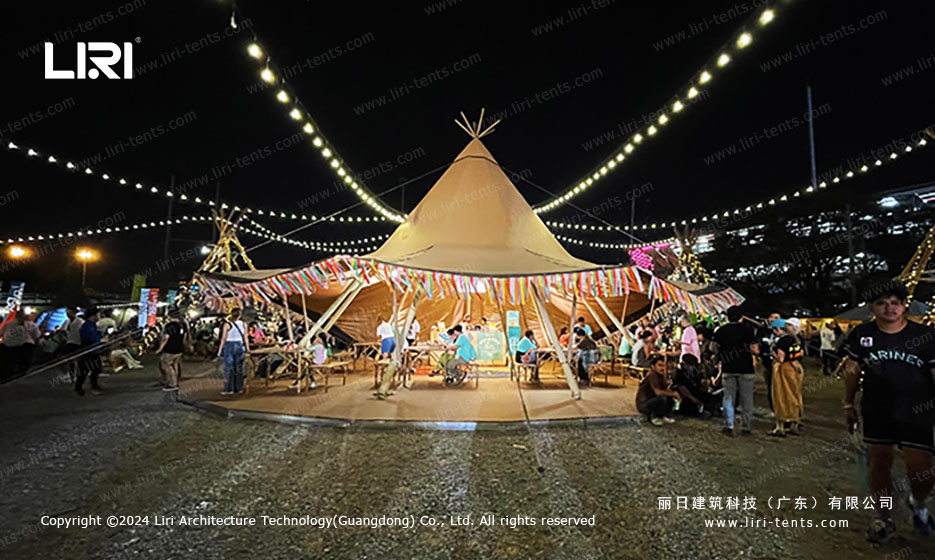
More Than One Use: Receptions, Markets, and Multi-Day Gatherings
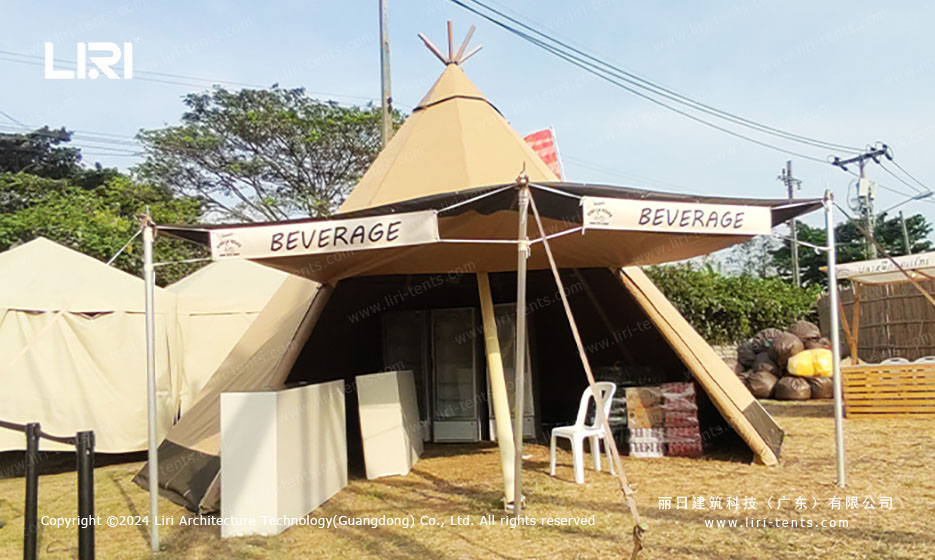
The photos from this project show the same cone-shaped tent in four different situations: setup crew at work, guests mingling at night, the tent standing alone against open sky, and a drink stall tucked under the canvas. That variety is not staged. It reflects what buyers actually do with these tents.
A wedding tent planner typically starts with the ceremony and reception. But a tipi tent is modular enough to serve additional functions — lounge area, bar, catering station, breakout space for separate activities — all using units from the same inventory. For multi-day events or venues that host both weddings and public markets, the same tent stock covers both need sets with only the interior styling changing between bookings.
The drink station shown in one of the images works perfectly for a wedding cocktail hour. But the identical tent configuration could serve as a vendor booth at a weekend farmers market, a craft fair, or a community festival. That crossover is what makes the investment math work. A tent that does one thing well is useful. A tent that does five things well is revenue.
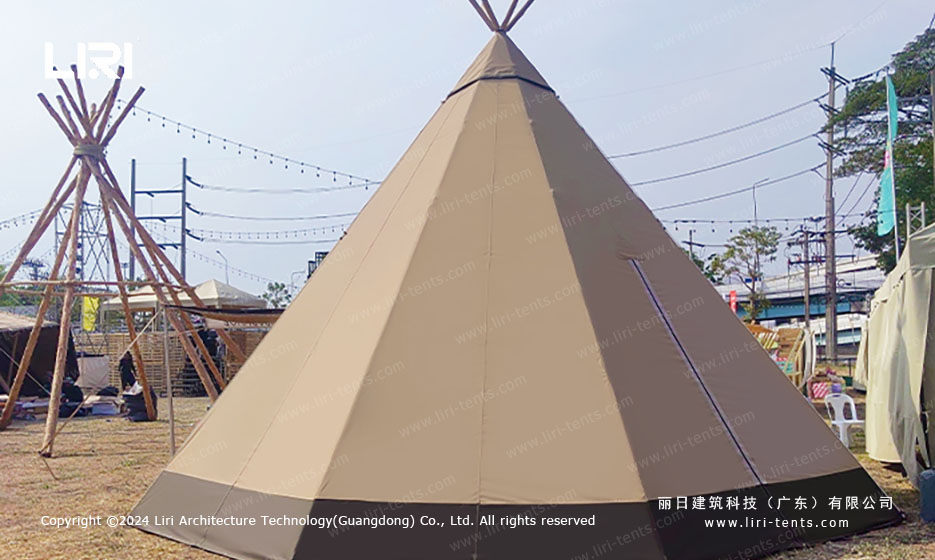
Space and Light: Why the Tall Ceiling Changes Everything
Walk into most event tents and the ceiling sits about three meters overhead — functional but forgettable. Walk into a tipi tent and the eye travels upward for a long moment before coming back down. The central pole rises to six meters or more depending on the model, and the canvas lines draw attention to the peak. Photographers notice this immediately. A modular wedding tent for luxury venues with a tall ceiling gives every shot a sense of scale and drama that a low, flat canopy cannot provide.
The practical side of the tall ceiling matters too. Warm air rises into the peak, away from the guest area, which keeps the seating zone comfortable even on hot days. Ventilation can be added at the top cap, creating a natural chimney effect that pulls cool air in at ground level. For summer weddings in particular, this passive cooling reduces the need for powered climate control and lowers the overall energy cost of running the event.
What Returns Faster: The Tent or the Investment
Event rental operators and venue owners measure purchases differently than one-time buyers. The real question is not the sticker price — it is how many bookings it takes to recover the cost. With a tipi tent, the calculation favors the operator for a few specific reasons.
First, couples choose tipi tents for the visual impact and are willing to pay a premium per event compared to a standard pole tent or frame tent. Second, the same tent unit books across wedding season, corporate retreats, and public festivals, so the calendar fills faster with fewer gaps between events. Third, the structure markets itself. A venue with visible tipi peaks from the road does not need to spend extra on advertising. The tents are the billboard.
A tent supplier that stocks full wedding tent accessories — flooring systems, transparent or solid sidewalls, lighting rigs, and climate control units — can offer the tent as a turnkey rental package, which pushes the per-booking margin higher. When a buyer needs something outside standard dimensions, most manufacturers can accommodate custom tent size and shape adjustments, which opens the door to larger corporate and hospitality contracts.
FAQ
Can a tipi tent handle strong wind and rain during an outdoor event?
The steep conical shape sheds wind efficiently. Canvas panels are tensioned across a triangulated pole frame, which distributes load evenly. With proper ground anchoring — heavy-duty stakes, concrete weights, or a combination of both — these structures stay stable in conditions that would challenge a flat-roof marquee. Sidewalls can be fully enclosed or partially rolled up depending on the weather forecast.
How many guests fit under one tipi tent for a sit-down wedding dinner?
A single large tipi tent accommodates 80 to 120 seated guests for a dinner setup with tables, or 150 to 200 for a standing reception with cocktail tables. For weddings with a larger guest list, multiple tipi units can be connected through tunnel sections, creating a sprawling interior layout that still feels like one cohesive venue rather than separate rooms.
Is a tipi tent suitable for something other than a wedding celebration?
Absolutely. The same structure works for corporate retreats, product launches, food festivals, farmers markets, and community gatherings. One of the photos from this project shows a tipi tent configured as a drink and snack station — a setup that serves a wedding cocktail hour on Saturday and a public market crowd on Sunday. The footprint stays the same. Only the interior styling changes between events.
Planners and venue owners who want to explore how a tipi tent fits their site can reach out directly. A handful of location photos and an estimated guest count are enough to start a conversation about sizing, configuration, and delivery. No long forms, no sales pitch — just practical guidance from someone who has set up these tents in a lot of different places.
Planning a tipi wedding? Compare wedding marquee styles and use our Wedding Tent Planning guide to match the structure to your guest count, site, and layout.