Aluminum Gazebo Tents \u2014 Built for Weddings, Events, and Long-Term Venues
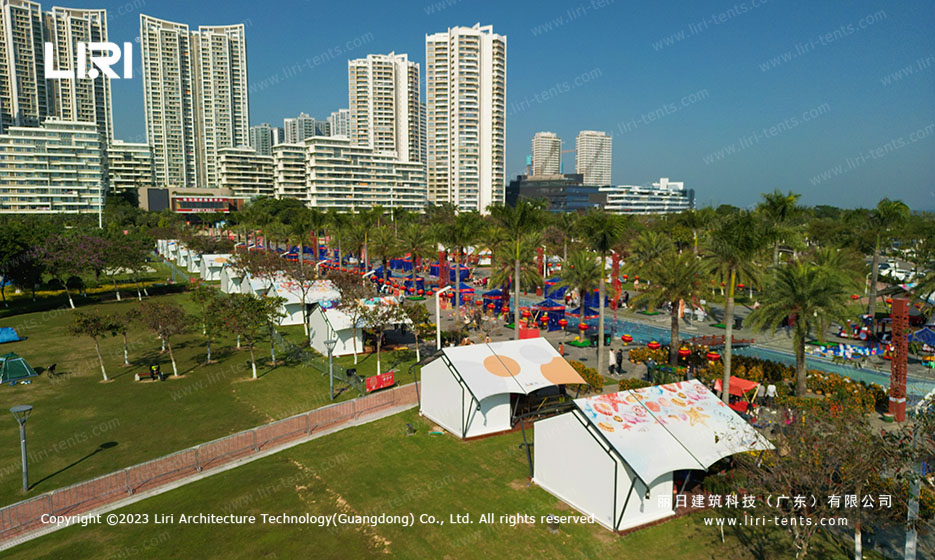
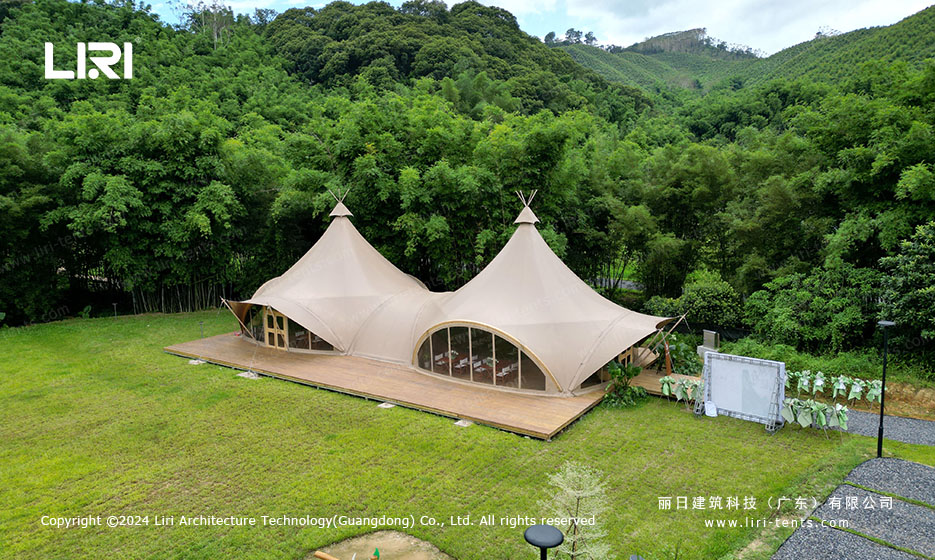
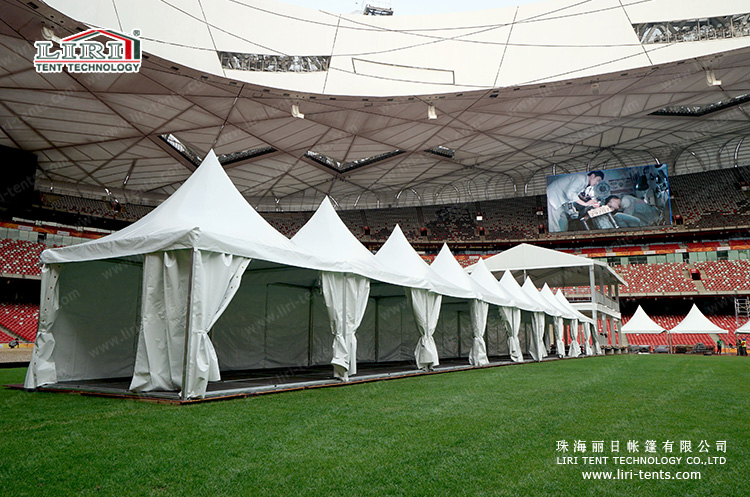
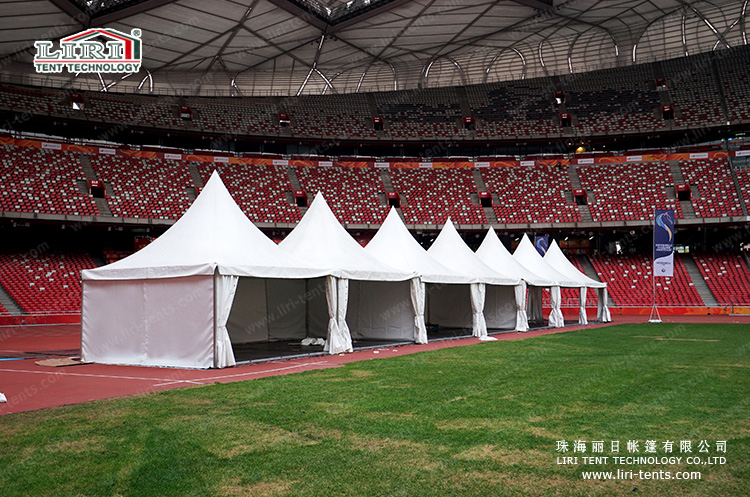
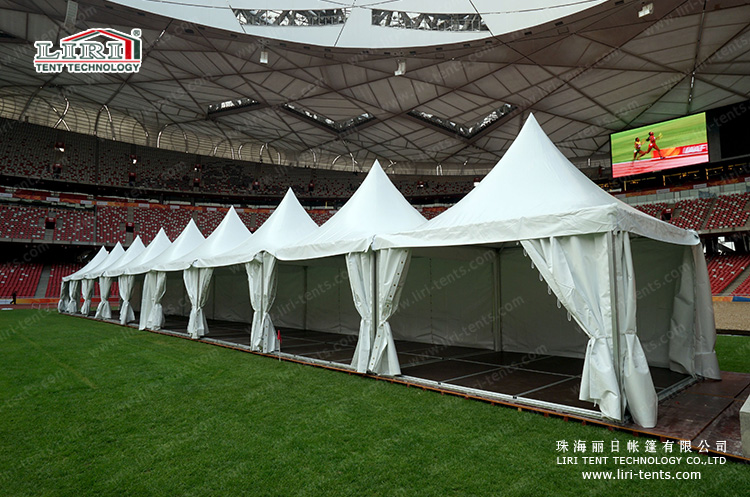
A well-built pagoda gazebo tent turns an open lawn into a usable event space in hours. Whether you need a 10×10 VIP lounge for 20 guests or multiple gazebo tent units linked for 200, the aluminum frame structure gives you repeatable setup without the heavy crew requirements of a full clear-span build. For larger events, pair individual gazebos with a pagoda wedding gazebo tent as the centerpiece.
Cover Options
Roof covers come in three materials depending on your event profile: opaque colorful PVC for themed receptions and brand activations, transparent PVC for evening dinners where sky views matter, and inflatable roof covers for quick-deploy shade at daytime festivals. All covers are UV-stabilized and fire-retardant certified to meet commercial venue codes.
Sidewall Systems
Choose from five wall solutions based on insulation needs and budget. Soft PVC fabric walls with clear windows are the go-to for mild-weather weddings. Glass walls with framed aluminum panels create a permanent-structure look without permanent construction. ABS hard walls and sandwich panel walls add thermal insulation for air-conditioned setups, while steel plate walls suit industrial and security applications.
Flooring That Changes the Feel
A tent sitting on grass feels temporary. Add wedding tent flooring systems and it becomes a ballroom. Our VIP cassette flooring uses interlocking wood-finish panels elevated on an adjustable subframe \u2014 level on uneven ground, firm under heels, and no trip hazards at the edges. Simpler cassette flooring works for trade shows and casual buffets where budget matters more than finish.
Setup and Anchoring
The roof assembles quickly with eyelet-and-sliding-resin-ball attachments \u2014 no specialty tools required. For anchoring, we supply steel stakes for soft ground, weight plates for concrete and pavers, and expandable bolts for solid floors. A 10x10m gazebo goes up with a 3-person crew in about 4 hours including sidewalls and trim.
Certifications
Our factory holds six credentials that matter for commercial buyers:
- National High-tech Enterprise certification
- ISO 9001:2008 Quality Management
- IFAI (Industrial Fabrics Association International) membership
- American Rental Association associate membership
- Utility model patent for proprietary frame connectors
- Liri trademark registration
FAQs About Gazebo Canopy Tents
What\u2019s the difference between a gazebo tent and a frame tent?
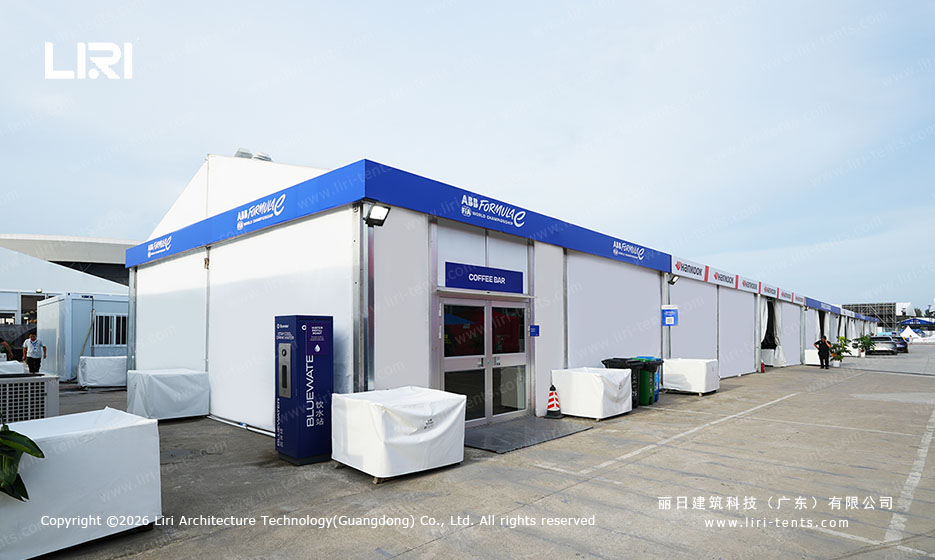
Gazebo tents are smaller, self-contained units with peaked roofs \u2014 typically 3m x 3m to 10m x 10m. They work standalone or linked in rows. Frame tents are larger clear-span structures (10m+ widths) designed for seated dinners and full-event coverage. Most wedding venues use both: gazebos for cocktail bars and lounge islands, a main frame tent for dining.
How long does an aluminum gazebo tent last?
With proper storage and cleaning between events, aluminum gazebo frames last 15-20 years. PVC fabric covers typically serve 5-8 years of regular use before UV degradation affects color and water resistance. Store covers dry and out of direct sunlight to extend lifespan.
Can gazebo tents handle wind and rain?
Properly anchored aluminum gazebo tents withstand 55-65 km/h wind loads with full sidewalls installed. For exposed sites, add wind bracing and use weight plates that exceed the minimum recommendation by 30%. Our engineering team provides wind-load calculations for specific site conditions upon request.
Do I need a permit to put up a gazebo tent?
Regulations vary by city and county. Most jurisdictions require permits for any tent exceeding 120 sq ft (about 11 sq m) if it stays up more than 24 hours. Fire codes also mandate flame-retardant certification labels visible on every fabric panel. Check with your local building department at least 4 weeks before the event.