Many couples assume a wedding tent is one big empty space, then discover the day needs two quite different settings. The ceremony is short, quiet and focused on one view. Dinner lasts for hours, with tables, music and people moving around.
So should both happen under one roof, or should you plan two separate spaces? This guide explains how each choice feels on the day, what it costs in plain terms, and which questions to ask before you order. By the end you will know what suits your guest list, your site and your budget.
What the question really means
A wedding day is not one long sitting. Guests arrive, watch the vows, have a drink, sit down to eat, then dance. Each part asks something different from the space.
Rows of chairs need a clear view and a quiet background. Tables need room for chairs to pull back, staff to walk through, and a route to the food.
One tent can hold all of that if it is big enough and laid out well. Two tents split the day into two places, so each one can be set up once and left alone. Neither answer is right for everyone. The useful question is how much space you have, how far guests are happy to walk, and whether you want the ceremony setting to stay in place for photographs.
One tent for the whole day
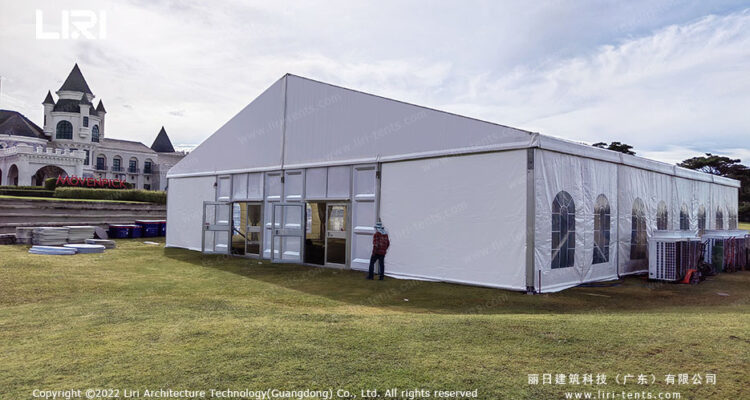
Most outdoor weddings use a single structure. Everyone arrives at one entrance, finds one seat, and stays under the same roof until the last dance. That is the biggest advantage: nobody has to cross a lawn in the rain or work out where to go next. Older guests and families with small children find it easy.
It also tends to be simpler to organise. There is one floor, one set of lights, one delivery and one team putting things up. If you are watching a budget, one larger tent often costs less than two smaller ones, because you are not paying twice for the same basic items.
The trade-off is that the room has to change during the day. Chairs in rows become tables, or the ceremony corner becomes a dance floor. Some couples use a drinks hour outside while the change happens.
Others keep the ceremony end as it is and set the meal at the far end. A guide to laying out one frame tent shows how couples divide the space with tables, a bar and a clear central aisle.
One tent works best when your site has a single wide, level area and the weather is fairly settled. If the ground slopes or a favourite tree sits in the middle, forcing everything into one rectangle can be awkward.
When a second space earns its place
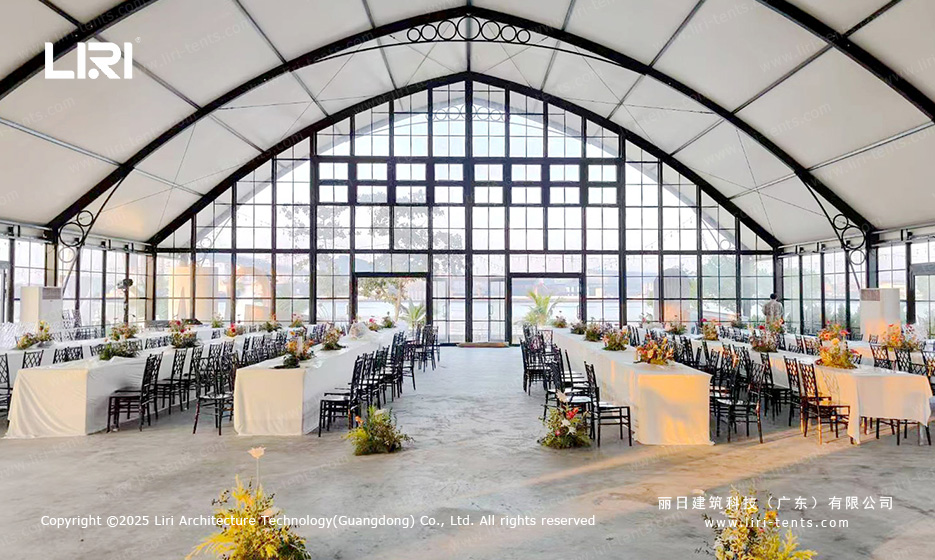
Two spaces start to make sense when the site already has two natural spots. A lawn with a view may be perfect for the vows, while a flatter area nearer the kitchen suits dinner. Instead of compromising both, you give each part its own place.
A separate ceremony space also lets the flowers, arch and seating stay untouched for photographs after the vows. In a single tent, that backdrop often has to come down while guests wait. Couples who care about the ceremony look often accept the extra walk for that reason.
The second structure does not have to be another large marquee. Small gazebo tents grouped together can cover a drinks corner, a welcome table or a quiet spot for grandparents. A covered walkway between the two keeps the day feeling joined up rather than split.
Two spaces do ask more of your guests. They need a clear path, a sign or two, and somewhere to go if it rains during the move. Think about the walk in the shoes people will actually wear. A short route across firm ground is fine; a long route over wet grass is not.

What guests actually remember
Couples plan the look of a tent. Guests remember whether they were comfortable and could find their way. A few small details do most of the work.
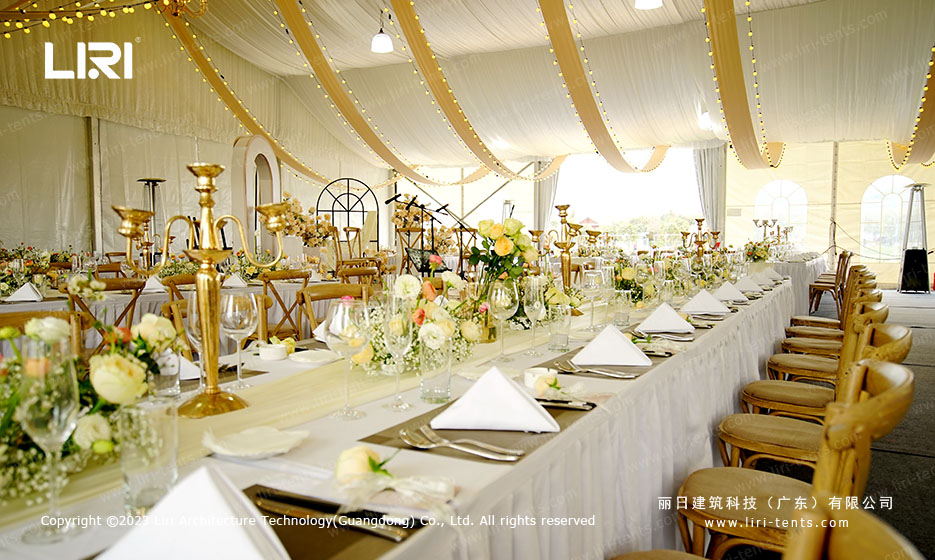
Put the entrance where people arrive, not where the photographer gets the best angle. Keep a clear route to the toilets and the bar. Leave enough room between tables so a chair can move without a queue forming behind it.
Light matters as the afternoon fades. A path between two spaces needs its own lights, even if the tents themselves are bright. Guests also notice the temperature.
One large space takes more warming or cooling than a small one, and an open-sided roof behaves differently from a solid white one. Ask how the tent will feel at the hour your meal starts, not at noon.
None of this needs technical knowledge. Picture one guest arriving, sitting, eating and leaving, then walk that route in your head. Where they hesitate is where you need a sign, a light or a wider gap.
What to decide before you order
Start with the guest count, because it sets the size of the dinner space. Our guide to how much room 100 guests need shows why a seated meal for 100 looks very different from one for 200. Once you know that number, look at the ground you have. One level area points to one tent; two separate areas point to two.
Then write down the order of the day. If the ceremony and the meal follow straight on, a single space needs a plan for the change. If there is a long drinks hour in the garden, two spaces feel natural.
Weather is the last check. A covered route, or a tent with sidewalls that can close, matters more than most decoration choices.
If you have not decided whether to own or hire the structure, that choice affects how flexible you can be. Our guide to whether to buy or rent a wedding tent explains the difference in plain terms.
A short note on safety and setup
This is not a pile of paperwork. Two practical points are worth confirming with whoever supplies the tent.
Every structure needs firm, level ground and a safe way to be fixed down, whatever the forecast says. Every cable, light and heater needs a clear route so nobody trips over it after dark. Ask those two questions early and the rest of the planning stays simple.
One tent keeps everyone together and usually costs less. Two tents give the ceremony its own setting and leave the dining space ready from the start. Look at your site, your guest list and the walk between the two, and the right answer usually becomes clear.
If you would like to talk through your own layout, tell us your guest count and what the ground looks like. We can help you compare the options.