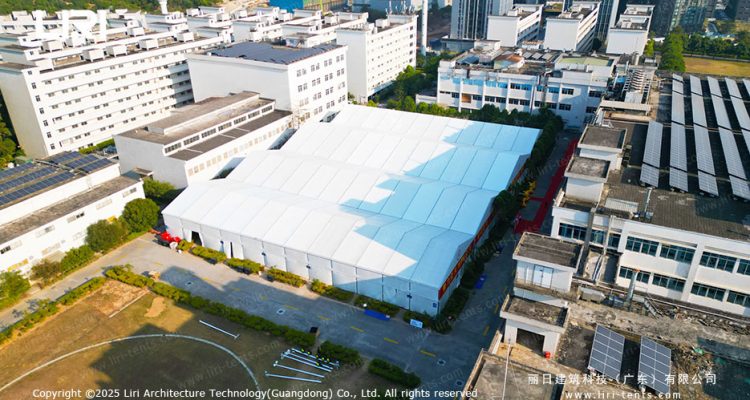
When a major optics manufacturer needed to host its annual gathering for thousands of employees, the venue choice came down to one question: where do you seat a crowd this size without booking a fixed convention center? The answer sat in a temporary structure that transformed an industrial yard into a celebration space. A large banquet tent delivered the square footage, the clear sightlines, and the technical infrastructure to match what any permanent hall offers.
Event planners often overlook temporary structures because they assume rigidity and permanence equal reliability. This project proved the opposite. Within a few days, a massive clear-span frame rose beside factory buildings, complete with climate control, theatrical lighting, and dual LED screens. By the time the first guests arrived, the space felt purpose-built, not improvised.
Clear-Span Design for Unobstructed Sightlines
The defining feature of this installation was the absence of internal columns. Traditional pole tents interrupt floor plans with center supports; this clear-span structure used aluminum box-beam trusses to carry the roof load entirely on perimeter legs. The result was an open floor stretching from wall to wall, allowing organizers to arrange banquet rounds, stage platforms, and service aisles without structural compromise.
Clear-span engineering matters when you need predictable capacity. A 20-meter width with no posts in the way meant every seat enjoyed direct sightlines to the central stage. For a multi-day event with presentations, award ceremonies, and performances, that visibility translated to guest satisfaction. Nobody strained to see over a support column or adjusted their chair to catch a glimpse of the screen.
The aluminum frame also simplified installation on an asphalt surface. Crews anchored the structure with weighted ballast systems rather than driving stakes, preserving the pavement and allowing rapid teardown once the celebration concluded. This adaptability makes modular tent systems attractive for industrial campuses where permanent construction is not an option.
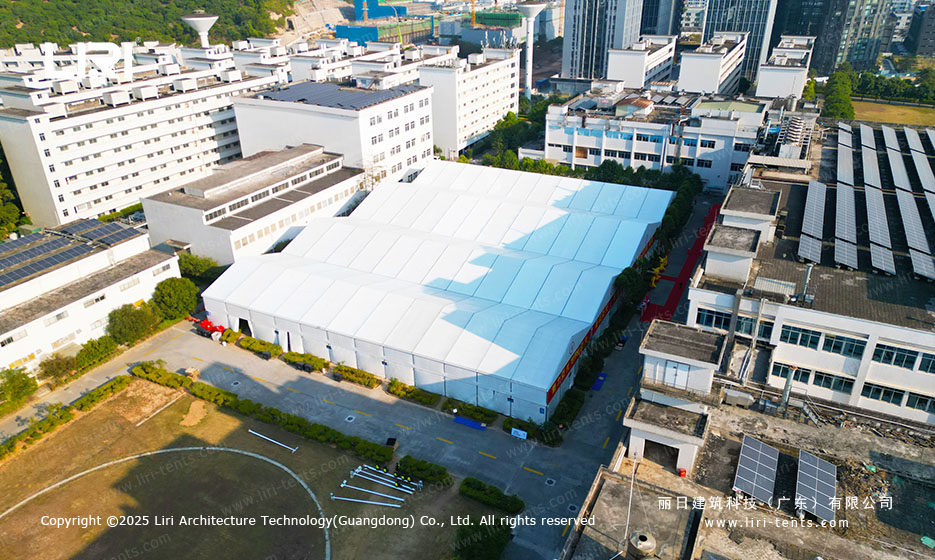
Customized Interiors for Gala Atmosphere
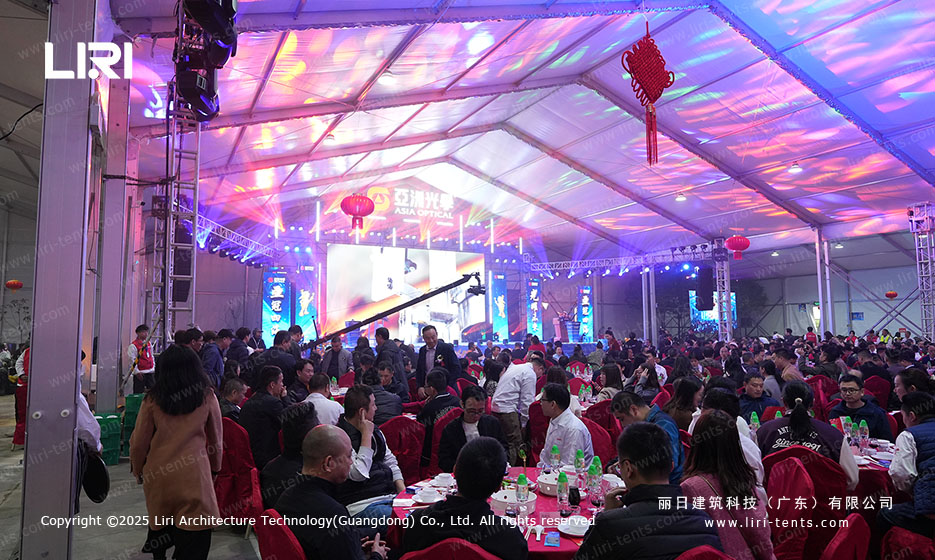
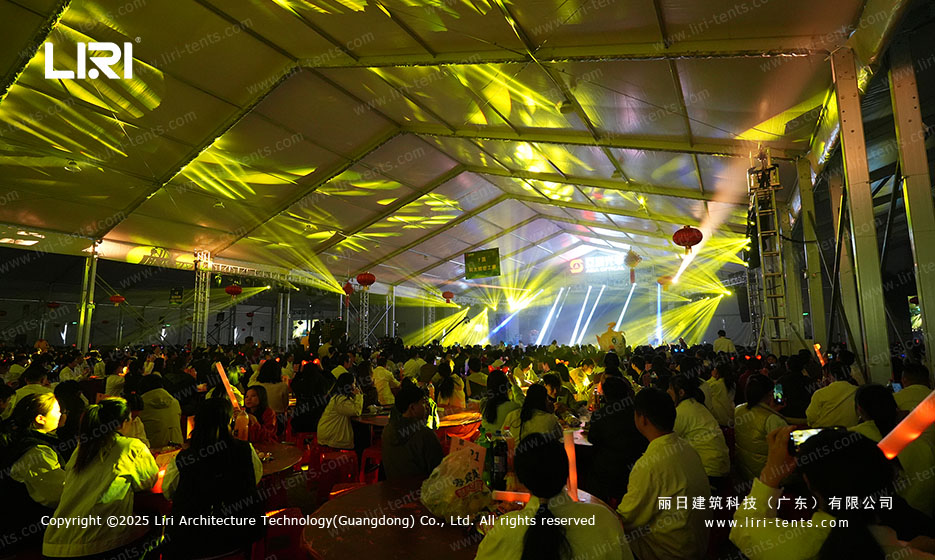
Stepping inside revealed a transformation from utilitarian shell to festive environment. Red silk lanterns hung from the trusses, introducing traditional decorative elements that signaled celebration. The ceiling grid supported moving-head fixtures and LED wash lights, creating color palettes that shifted from warm amber during dinner to vibrant magenta and cyan for the evening program.
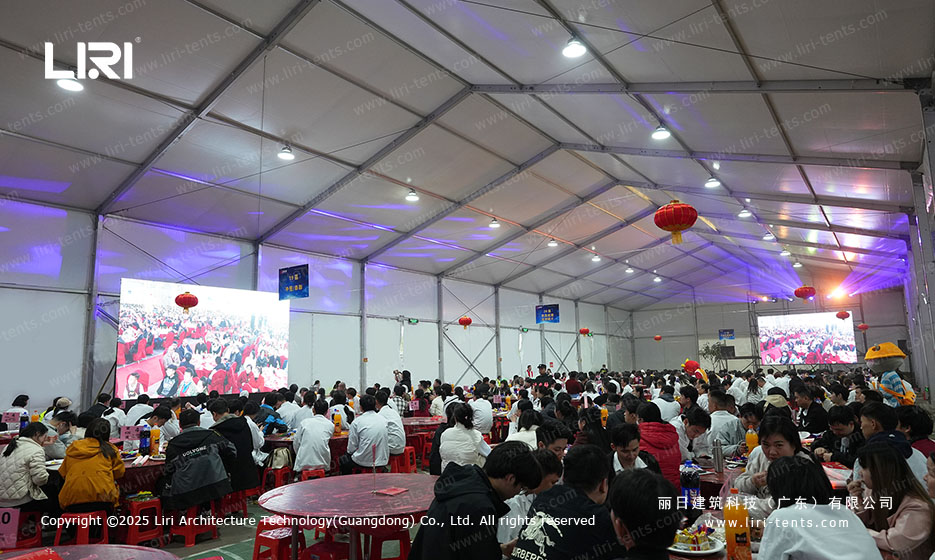
Dual LED screens flanked the main stage, ensuring visibility for attendees seated at the rear. This setup required careful coordination between the tent supplier and AV contractors. Power distribution, cable routing, and speaker suspension all integrated into the frame design rather than appearing as afterthoughts. The result was a clean interior free of exposed conduits or temporary stands cluttering sightlines.
For organizations considering a wedding tent or corporate event space, this project demonstrated how temporary structures accommodate sophisticated production values. Climate-controlled air handling maintained comfort despite occupancy in the hundreds. Flooring systems covered the asphalt with carpeted surfaces that softened acoustics and improved ambiance.
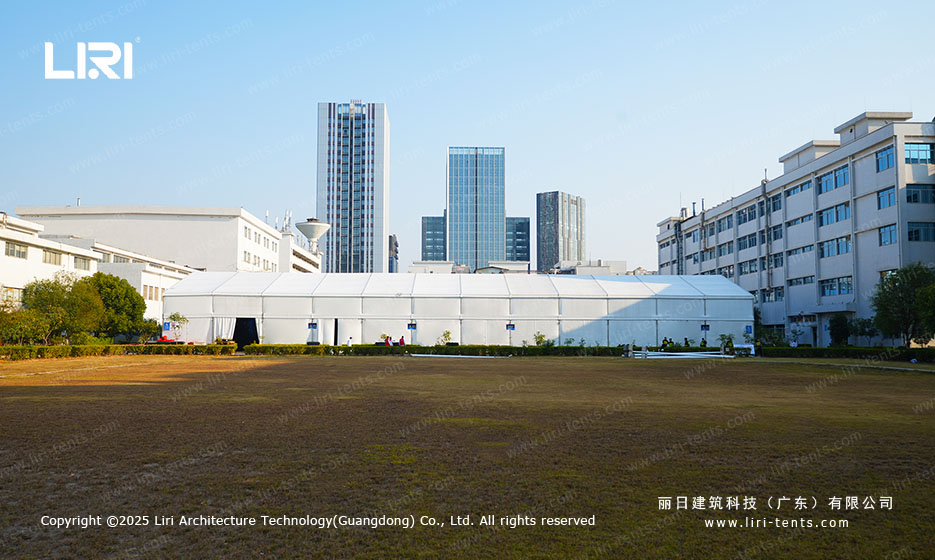
Scalable Capacity for Large Gatherings
The footprint supported round-table seating for hundreds of guests while preserving wide aisles for service staff and emergency egress. This density would challenge many hotel ballarks; the tent handled it without crowding. Caterers moved freely between tables, and the stage crew operated without interference from dining operations.
Scalability represents a core advantage of aluminum-frame marquee structures. Additional bays can extend lengthwise to accommodate growth, while width remains consistent. For this annual gathering, the modular approach meant the same basic structure could be resized for future events without starting from scratch. Organizers could plan for five hundred attendees this year and eight hundred the next, using familiar infrastructure.
The sidewall configuration also contributed to capacity management. Solid white panels provided weather protection and acoustic containment during presentations. Removable sections allowed controlled ventilation during crowded arrivals and departures, reducing queue times at entry points.
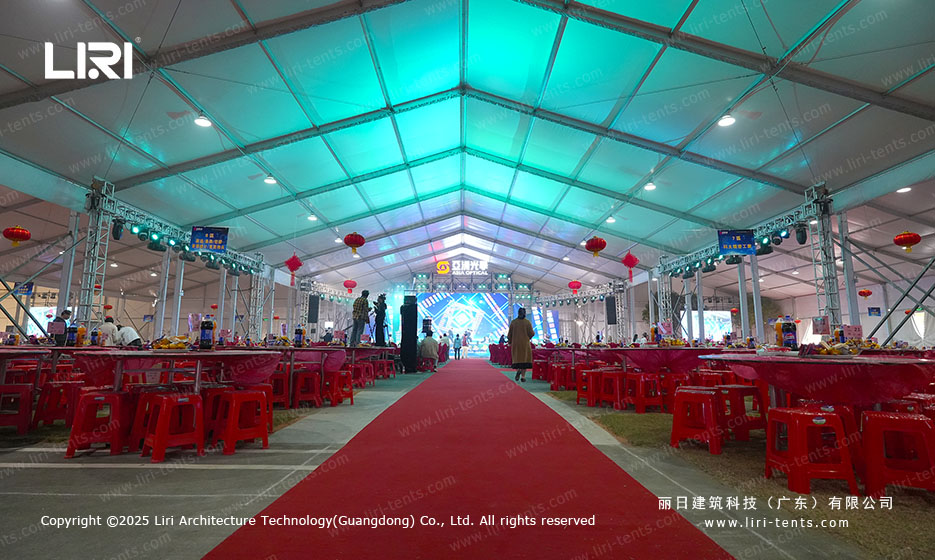
Dual-Purpose Flexibility: Ceremony and Celebration
Event flow demanded spatial adaptability. The interior had to function as a presentation venue during daylight hours, then transition to banquet and entertainment mode after dark. Lighting design enabled this transformation. Daytime sessions relied on translucent roof panels and supplementary LED fixtures for visibility. As evening approached, theatrical programming took over, washing the interior in saturated color.
This dual-purpose approach mirrors how many wedding celebrations unfold: ceremony first, reception after. The tent’s infrastructure supported both modes without reconfiguration delays. Aisle spacing that worked for seated dining also served as circulation paths during standing cocktail periods. The stage, designed for award presentations, transitioned seamlessly to musical performances with minimal crew intervention.
Flexibility extends to décor as well. The neutral white interior served as a canvas for branding, seasonal decoration, or thematic styling. For this corporate gathering, red accents and lantern motifs created a cohesive visual identity that reinforced company culture and celebration tradition.
Economic Advantages of Temporary Event Infrastructure
Cost comparisons between temporary structures and permanent venues often surprise first-time renters. When factoring in venue rental premiums, catering minimums, and date restrictions, a tented solution on owned or borrowed land frequently delivers superior value. This project occupied factory grounds, eliminating venue fees entirely. The budget redirected toward production values: lighting, catering, and entertainment.
Depreciation schedules favor temporary structures for organizations hosting annual events. Rather than sinking capital into a permanent hall that sits empty eleven months yearly, the company invested in a recurring rental relationship. The tent supplier handled engineering, installation, and removal, freeing internal facilities teams to focus on core operations.
Risk management improves as well. Weather contingencies, capacity adjustments, and last-minute schedule changes become manageable when the venue is a temporary installation rather than a fixed reservation. Cancellation policies and force-majeure clauses that plague hotel contracts simply do not apply to tented events on private property.
Technical Integration and Guest Experience
Modern corporate gatherings depend on connectivity and AV fidelity. This installation demonstrated how tent accessories extend beyond furniture to include technical infrastructure. Power distribution panels fed stage lighting, LED screens, and catering equipment without overloading circuits. Network cabling integrated into the frame supported livestreaming and social media coverage that extended the event’s reach beyond physical attendance.
Acoustic design deserves particular attention. Hard roof panels and draped sidewalls created a controlled sound environment where speeches carried clearly without echo, and musical performances achieved concert-hall presence. Guests seated at the periphery enjoyed the same audio quality as those near the stage, a consistency that permanent venues with odd geometries sometimes fail to deliver.
Climate control completed the comfort equation. Industrial-grade HVAC units maintained temperature within acceptable ranges despite occupancy spikes during arrival and meal service. For organizations considering a wedding tent in challenging climates, this project proved that temporary structures can match fixed buildings for guest comfort.
Frequently Asked Questions
#### What size tent do I need for a banquet with 500 guests?
A clear-span structure approximately 20 meters wide by 40 meters long typically accommodates 500 seated guests with stage, dance floor, and service aisles. Round-table arrangements require roughly 1.2 square meters per guest, while banquet-style seating demands slightly less. Your supplier can model exact dimensions based on your floor plan and head count.
#### Can a wedding tent support theatrical lighting and LED screens?
Modern aluminum-frame tents include engineering allowances for suspended loads. Truss systems rated for lighting, audio, and video equipment mount directly to the frame. Discuss your production requirements during the planning phase so the structure can be reinforced appropriately. Most suppliers offer integrated rigging solutions as part of their accessory catalog.
#### How long does installation take for a large banquet tent?
A structure of this scale typically requires three to five days for complete installation, including flooring, climate control, and interior finishing. Site preparation—leveling, utility marking, and foundation layout—adds time before the tent crew arrives. Schedule buffer days before your event to accommodate weather delays or last-minute adjustments.
Planning a large-scale celebration? Whether you are organizing a corporate gathering or a custom wedding reception, the right temporary structure transforms available space into a memorable venue. Contact a tent supplier to discuss your specific requirements for capacity, timing, and technical integration.