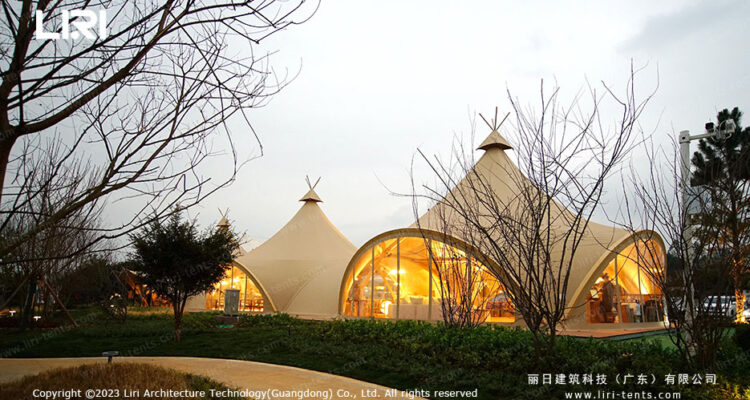
Giant Indian Tent for Wedding Reception Venues — Your Outdoor Celebration, Reimagined
Indian banquet tents have become one of the most talked-about outdoor party wedding tent options in the last few years, and it is easy to see why. They have the warmth of fabric and the strength of an aluminum frame. The khaki-colored canvas blends into natural surroundings, and the arched silhouette gives the whole setup a soft, romantic look that feels more like a garden pavilion than a temporary structure.
A quality tipi tent like this works especially well for couples who want something different from the usual white marquee. The arched lines and earth tones photograph beautifully, and the tent itself becomes part of the decoration rather than just a neutral backdrop.
Built to Handle Real Outdoor Conditions
These are not flimsy party canopies. The Indian banquet tent sits 50 cm off the ground on its frame, which does two useful things. First, it keeps rain from pooling around the base. Second, it creates a natural barrier against crawling insects — useful if your venue is a field or woodland clearing.
The aluminum frame comes with a heat-transferred wood grain finish, which looks like timber but has the rust-free lifespan of aluminum. That is a detail couples notice when they walk inside. The interior feels like a lodge, not a tent.
The side panels have large ventilation mesh windows that keep air moving even when all the walls are closed. For hot afternoons you roll the walls up. For chilly evenings you drop them down and the tent traps enough warmth to stay comfortable.
Connecting Tents to Fit Any Guest List
One of the smartest things about modular wedding structures is the ability to connect multiple units. A single Indian banquet tent comfortably seats 60 to 80 guests. Link two together and you have room for 150. Connect three in a row and you are hosting 250 people with separate zones for cocktails, dinner, and dancing.
This modularity is why event planners love these tents. You order the number of bays that match your guest count, then arrange them in a straight line, an L-shape, or even a T-shape depending on the site layout.
Real Wedding: A Vineyard Indian Tent in Napa
A couple in Napa Valley used three connected Indian banquet tents for their June wedding. The first bay was the ceremony space with hay bale seating and flower arches. The middle bay held the dinner — long farm tables under string lights. The third bay became the dance floor and lounge area with sofas and rugs. The couple said guests kept asking if the structure was a permanent building on the vineyard.
Decorating an Indian Tent: Less Is More
The tent itself does a lot of the visual work, so you do not need to over-decorate. Here is what works:
- Ceiling drapes: Run cream or ivory fabric along the arched beams. It softens the lines without hiding the tent’s shape.
- Flooring: A cassette flooring system for wedding tents creates a level surface for tables and heels. Skip this and you risk wobbly chairs on uneven ground.
- Lighting: Warm white string lights along the ridge beam, plus lanterns or candles on tables. The canvas walls glow golden from inside, which is pure magic at dusk.
- Entrance: A simple floral arch or potted olive trees at the doorway frames the entrance perfectly.
What to Ask Your Supplier
Before you book an Indian banquet tent, ask these questions:
- What is the wind rating with standard anchoring? If you are on an open field or hillside, this matters.
- Can the tent be climate-controlled? Most suppliers can add portable AC or heaters through the gable.
- Is the canvas fire-retardant certified? Reputable manufacturers use fabrics that meet NFPA 701 or BS 7837 standards.
- What is the lead time for setup? Connecting multiple bays takes a crew about two days for a mid-size installation.
FAQ
How many guests fit in one Indian banquet tent?
A single standard bay (approximately 8m × 8m) holds 60 to 80 seated guests comfortably with round tables. For 100 guests with a dance floor, plan on two connected bays. For 200 or more, three bays linked in series or in an L-shape works best.
Can Indian tents handle cold weather?
Yes. The thick canvas walls provide decent insulation, and sidewalls can be fully closed. For winter weddings, portable propane or electric heaters slot into the tent frame. The ventilation windows can be partially opened to manage condensation while keeping warmth inside.
How long does an Indian banquet tent last?
A well-maintained aluminum frame with quality canvas fabric lasts 15 to 20 years. The canvas should be cleaned and dried between uses to prevent mold. The aluminum frame requires almost no maintenance beyond bolt tightening once a season.
Is the canvas water-resistant?
Yes. Quality Indian banquet tents use PVC-coated or acrylic-coated canvas that is fully waterproof at the seams. The tent’s elevated frame (50 cm off ground) also prevents water from pooling around the edges during heavy rain.
Can I use an Indian tent on a concrete or paved surface?
Absolutely. On hard surfaces, the tent uses weight plates instead of ground stakes. This is common for urban weddings in courtyards, parking lots, or rooftop venues. Just confirm with your supplier that they have the proper anchoring kit for your surface type.