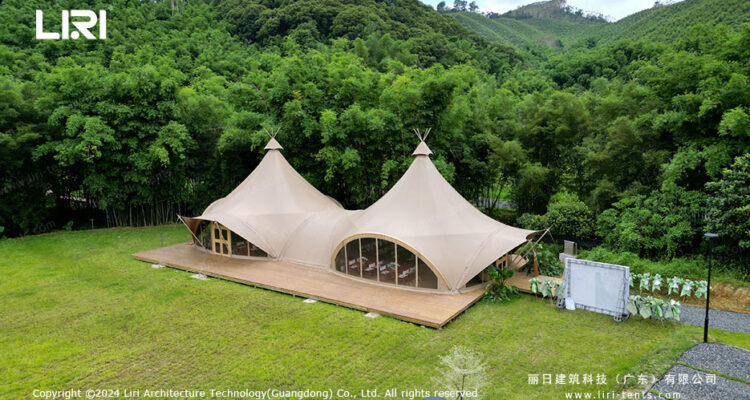
There’s a reason tipi tents show up at almost every bohemian wedding you see on Pinterest. The tall conical shape, the wooden poles reaching toward the center, the way light filters through canvas walls — it all adds up to something a ballroom can’t replicate. If you’re thinking about buying a giant tipi tent for your wedding banquet, here’s what actually matters.
What Makes a Tipi Tent Different
A tipi tent (sometimes spelled teepee) isn’t just a pointy marquee. The structure is built around a central pole system — usually four or more aluminum or wooden poles that meet at the top and create the signature peaked silhouette. The canvas drapes over the frame, and the walls can be rolled up or left down depending on the weather and the vibe you want.
Compared to a standard frame tent, a tipi feels more intimate. The sloping walls pull your eye upward. The center pole becomes a natural focal point for a chandelier, a flower installation, or hanging greenery. The floor plan tends to be circular rather than rectangular, which changes how you arrange tables and how guests move through the space.
Sizing Your Tipi for a Banquet
Tipi tents come in a wide range of sizes. Here’s a rough guide based on real wedding setups:
| Tipi Size | Seated Dinner | Standing Reception |
|---|---|---|
| 8m diameter | 40-50 guests | 70-80 guests |
| 10m diameter | 60-80 guests | 100-120 guests |
| 12m diameter | 100-120 guests | 150-180 guests |
Larger weddings often use multiple tipis linked together with covered walkways. The main tipi holds the banquet tables, a second one becomes the dance floor and bar, and a smaller third tipi works as a lounge or quiet area. This setup is common at UK and European wedding venues and creates a festival-like campus that guests love exploring.
Buying vs. Renting
If you’re a venue owner or event planner, buying makes sense — you’ll use the tent repeatedly and can customize it to match your property. A giant tipi tent from a manufacturer like Liri Tent typically costs between $8,000 and $25,000 depending on size, materials, and customization.
For a one-time wedding, renting is almost always the better call. Rental prices range from $1,500 to $5,000 for a weekend, including setup and takedown. That price usually covers flooring, lighting, and basic furnishings too. The rental company handles the heavy lifting — literally. Tipi poles are long and awkward, and professional installation matters a lot for safety and weather resistance.
When you’re comparing quotes, ask whether sidewalls, flooring, and lighting are included. Some companies quote a low base price and then add hundreds for each wall panel. Get the full number upfront.
Decorating a Tipi for a Wedding Banquet
Tipis look best when the decorations work with the tent rather than against it. The tent itself is a statement piece, so you don’t need to overdo it.
What works well:
– Hanging installations from the center pole — chandeliers, greenery, floral hoops
– Floor-level lighting — lanterns, candles, uplights along the base of the walls
– Long banquet tables arranged in a fan pattern radiating from the center
– Natural materials — wood, linen, wildflowers, woven rugs
What to skip:
– Tall centerpieces that block sightlines across the circular space
– Heavy drapery that hides the tent’s shape (the shape is the point)
– Overly formal table settings that clash with the rustic vibe
Weather and Practical Considerations
Canvas tipis handle rain well — the fabric is treated to be water-resistant, and the steep pitch means water runs off fast. Wind is a bigger concern. The tall profile catches more wind than a low-profile marquee tent. Proper anchoring with ground stakes or ballast weights is non-negotiable, especially if your venue is exposed.
For summer weddings, rolling up the sidewalls creates a breezy, open-air feeling. For cooler months, adding sidewalls and portable heaters keeps everyone comfortable. The canvas breathes better than PVC, so condensation is less of an issue than with plastic-walled tents.
FAQ
How long does it take to set up a giant tipi tent?
A crew of 3-4 people can set up a single 10-meter tipi in 4-5 hours. Multiple linked tipis take a full day or more. The ground needs to be reasonably level, and the crew needs clear access for their vehicle and equipment. Always schedule setup for at least one day before the event.
Can I put a tipi tent on concrete or a hard surface?
Yes, but you’ll need ballast weights instead of ground stakes for anchoring. Most rental companies have weight plates or water barrels for this. Let them know about the surface type when you book so they bring the right equipment.
What’s the difference between a tipi tent and a regular frame tent for a wedding?
A tipi has a peaked conical shape with a central pole system, creating a dramatic, intimate atmosphere. A frame tent has a flat or slightly peaked roof with no interior poles, offering a more traditional, open-plan space. Tipis feel rustic and festival-like; frame tents feel more like a temporary ballroom. Your choice depends on the wedding style you want.
Are tipi tents suitable for winter weddings?
With proper sidewalls and heating, yes. Many tipi wedding venues in the UK and northern Europe operate year-round. You’ll need industrial heaters and solid flooring to keep guests comfortable. Canvas insulates better than thin PVC, which helps. Budget extra for heating — it’s usually $300-$800 per heater unit depending on output.
How do I find a reliable supplier for a giant tipi tent?
Start by searching for tent manufacturers who specialize in wedding-grade structures — Liri Tent is one of the established names in aluminum frame tents and tipis. Look for suppliers who can show you photos of real weddings they’ve supplied, not just catalog images. Ask about warranty terms on the frame and canvas. If you’re renting, check reviews from other couples and wedding planners in your area.